

 English
 русский
 Español
 中文简体
中文简体
A counterweight, also spelled counter weight, is a mass used to balance another load or structure by exerting an opposing moment around a pivot. Counterweights are part of everyday engineering, from elevator systems and drawbridges to construction equipment. In tower crane construction, counterweights play a critical role: they prevent the crane from tipping under load and reduce the force required from the hoist. Understanding what a counterweight is and how it works helps project managers, crane operators, and equipment buyers make safer decisions.
Definition: A counterweight is a mass used to balance another load or structure by producing an opposite moment around a pivot.
Content
How Does a Counterweight Work?
A counterweight works by using the principle of moments, also known as the lever principle. Every object exerting a force at a distance from a pivot creates a moment. The size of the moment depends on two variables: the magnitude of the force and the perpendicular distance from the pivot to the line of action.
For a balanced system, the moment on one side must equal the moment on the other side. Engineers express this as moment = mass × distance. If a load of 4 tonnes sits at a distance of 10 metres from the crane pivot, it creates a moment of 40 tonne-metres. A counterweight of 10 tonnes placed 4 metres on the opposite side also creates 40 tonne-metres, balancing the load.
This is why counterweight blocks are heavy but also placed strategically at the end of the counter-jib. Moving the same mass farther from the pivot increases its balancing effect. Tower crane designers use this principle to keep the machine stable even when lifting maximum rated loads.
Counterweights in Tower Crane Design
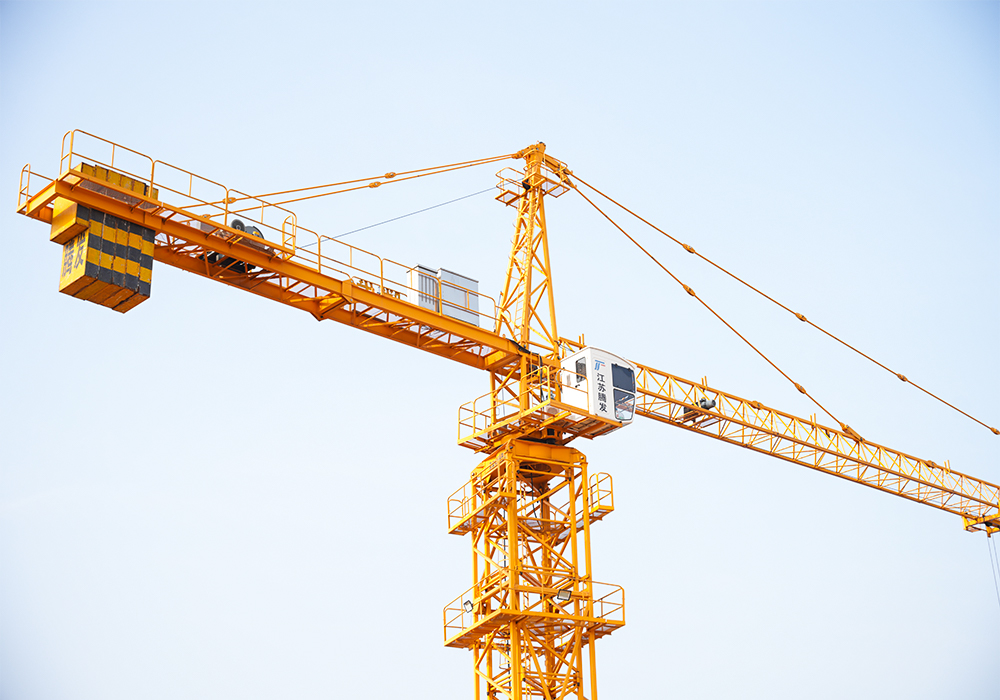
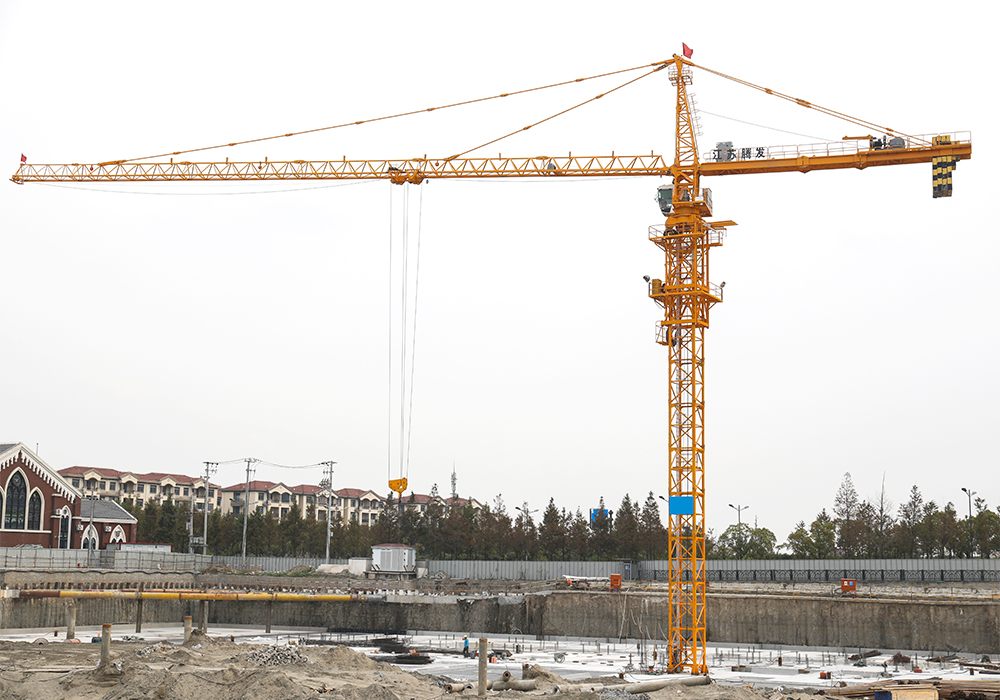
Tower cranes use counterweights in two main positions: on the counter-jib behind the tower and, in some designs, as central ballast in the tower structure. The counter-jib counterweight is usually made of concrete or steel blocks that are placed at the rear of the jib assembly. These blocks offset the load moment created by the suspended load on the working jib.
The balance arm, or counter-jib, also carries the hoist and other machinery. The combined weight of the machinery and the counterweight blocks helps shift the crane's centre of gravity back toward the mast and the supporting foundation. This is particularly important for flat-top tower cranes, which have no cathead tower to support a tie system.
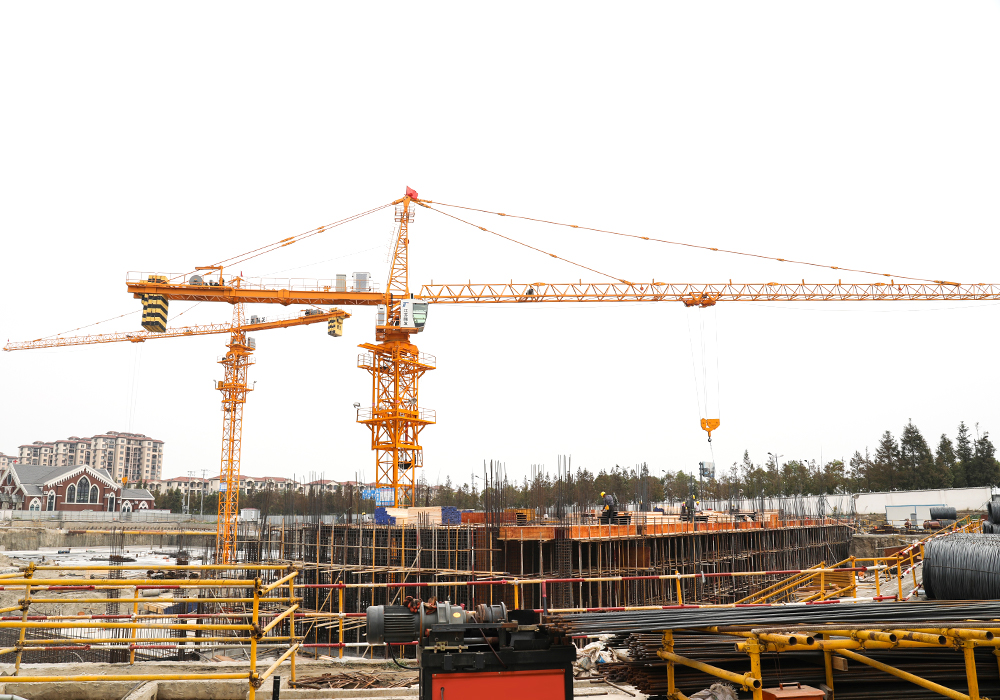
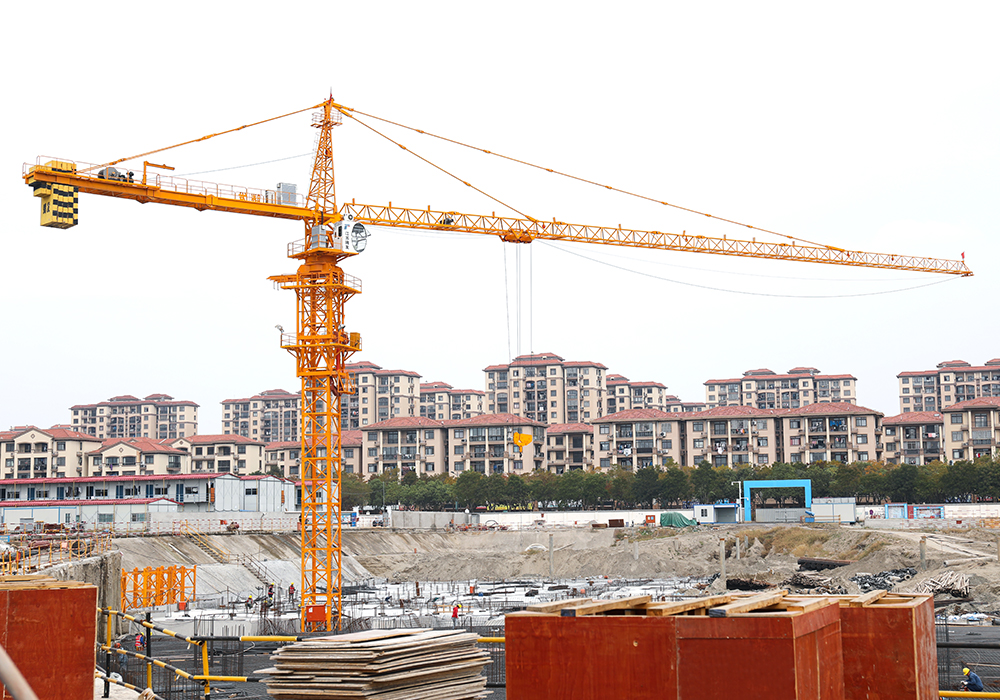
Different tower crane families handle counterweighting in slightly different ways. Topkit tower cranes typically place a large counterweight on the counter-jib, while some models also use central counterweight blocks. Luffing jib tower cranes use counterweights that can be adjusted to cope with the changing radius of the luffing jib.
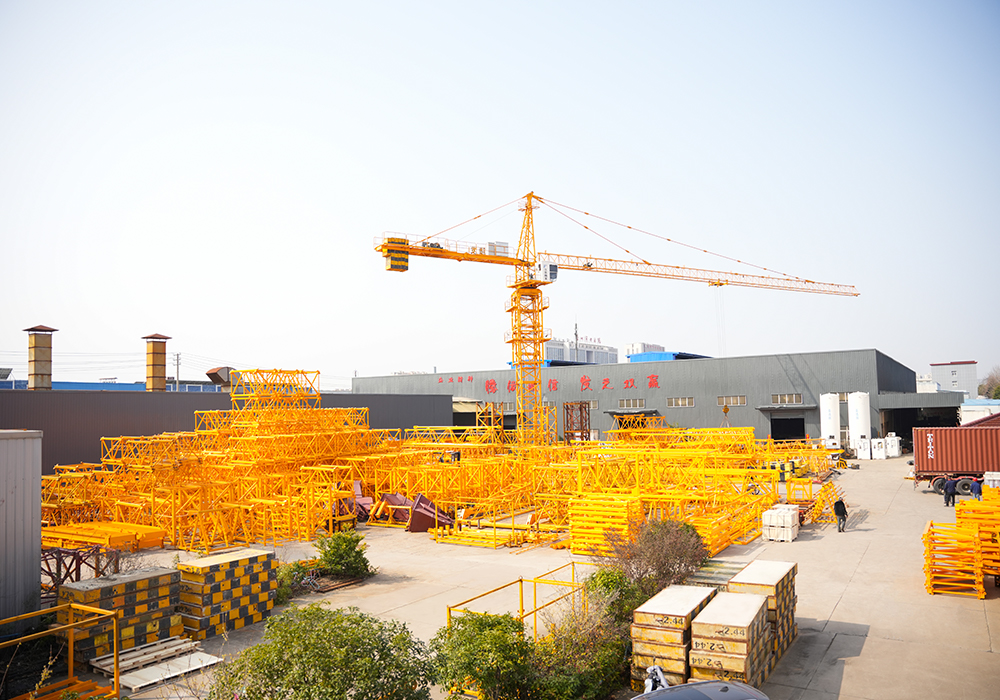
Jiangsu Tengfa manufactures both topkit and flat-top tower cranes with carefully engineered counterweight systems. For example, the balance arm of a heavy construction tower crane is designed to provide stable operation under varying load conditions.
 QTZ100(6013) Topkit Tower Crane with 6t or 8t CapacityThis topkit tower crane offers selectable maximum lifting capacity of 6 or 8 tons, with a counterweight system engineered for stable operation. Its balance arm design supports safe lifting under varying loads, making it a practical choice for heavy construction.View Product →
How Is a Tower Crane Counterweight Size Determined?
The total counterweight required for a tower crane is not a fixed number. It depends on the crane's rated load moment, the length of the jib, the hoist capacity, and the structural strength of the mast and foundation. Manufacturers calculate the maximum allowable overturning moment and then design a counterweight arrangement that keeps the crane within safe stability limits.
Key factors include:
- Maximum load moment: heavier loads or longer jibs create larger moments that must be balanced.
- Jib length: a longer jib increases the distance from the load to the mast, requiring more counterweight.
- Crane configuration: topkit, flat-top, and luffing jib cranes have different balance characteristics.
- Site conditions: wind loads and ground bearing capacity also influence the stability calculation.
- Safety margin: regulations require a reserve moment so the crane does not tip when load monitoring devices allow for dynamic effects.
In practice, counterweight blocks are modular. Operators add or remove blocks according to the lifting plan and jib length. This flexibility allows one crane model to serve multiple project configurations.
For example, a flat-top tower crane with a 60-metre jib might use a larger counterweight stack than the same model with a shorter jib. Engineers select the arrangement that matches the load chart.
| Configuration | Counterweight Role | Typical Placement |
|---|---|---|
| Topkit | Stabilize fixed jib operation | Rear counter-jib |
| Flat-top | Compensate for topless design | Rear counter-jib |
| Luffing jib | Handle variable radius | Rear machine deck |
Because counterweight design is closely linked to the overall crane structure, buyers should always follow the manufacturer's load chart instead of adding or removing blocks arbitrarily.
 QTP200(6030) Flat-Top Tower Crane, 10t Capacity, 60m JibWith a 10-ton maximum load and 60-meter jib, this flat-top crane has a rated moment of 2000 kN·m and reaches 198m in attached mode. Its counterweight must follow the manufacturer's load chart to ensure stability and prevent tipping.View Product →
Safety Checks and Maintenance for Counterweights
A counterweight only works when it is correctly installed and maintained. Loose, missing, or incorrectly positioned counterweight blocks can change the crane's centre of gravity and lead to overturning. Safety inspectors and crane operators must include counterweight inspection in their routine pre-use checks.
Important checks include:
- Visual inspection: look for cracks, spalling, or corrosion on concrete blocks.
- Bolt torque: confirm that counterweight blocks are secured with the specified high-strength bolts.
- Locking devices: make sure pins, chains, or other retaining devices are in place.
- Load chart compliance: verify that the number and position of blocks match the current lifting plan.
- Foundation condition: inspect the counterweight support structure and the mast connection for wear.
Luffing jib tower cranes require extra attention because the counterweight position may change as the jib angle changes. Operators should understand the relationship between luffing angle and the required counterweight moment before beginning a lift.
For operators working with luffing jib models, the QTD80 provides a compact example of how a rear counterweight supports variable-radius lifting.
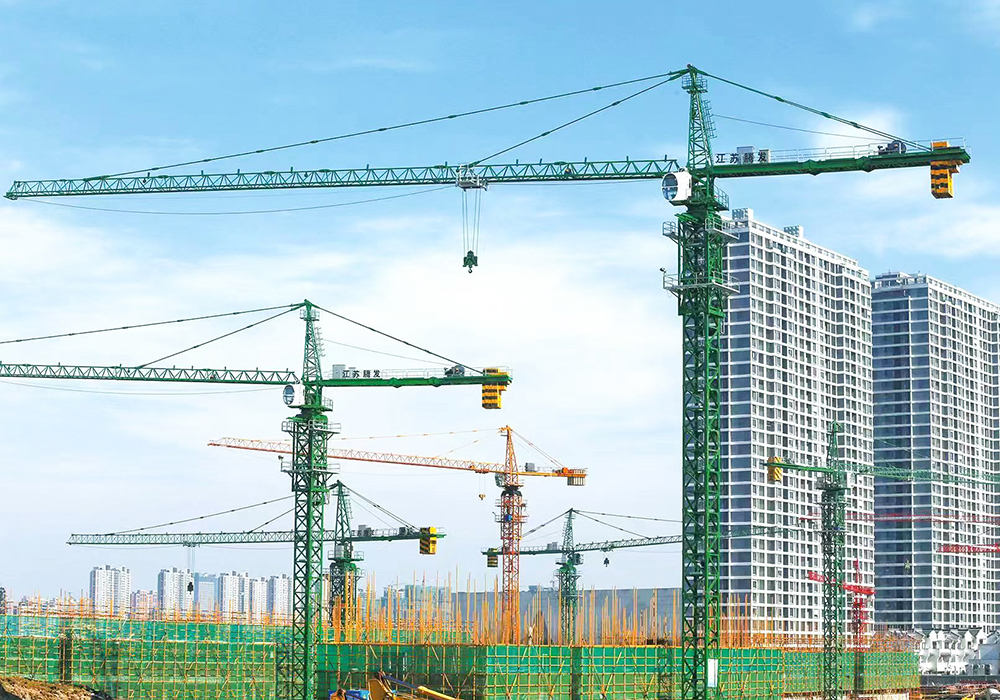 QTD80 Luffing-Jib Tower Crane, 6t Capacity, 40m JibThis luffing-jib crane lifts up to 6 tons at a 40-meter radius, with an 800 kN·m rated moment. Its rear counterweight balances variable-radius lifting, offering a compact design for operations requiring precise load positioning.View Product →
Frequently Asked Questions About Counterweights
Q1: What is a counterweight in simple terms?
A counterweight is a heavy mass placed on the opposite side of a pivot to balance the load being lifted. It makes lifting easier and prevents a machine such as a tower crane from tipping over.
Q2: Why do tower cranes need counterweights?
Tower cranes need counterweights to balance the moment created by the load on the jib. Without a counterweight, the crane would be unstable and could collapse or overturn.
Q3: What material is used for tower crane counterweights?
Most tower crane counterweights are made of dense concrete or cast steel. Concrete blocks are economical and can be cast in modular shapes. Steel counterweights are used where more mass is required in a smaller volume.
Q4: Can a counterweight be changed on site?
Yes, in many tower cranes the counterweight stack is modular. Blocks can be added or removed according to the jib length and the expected loads. However, any change must follow the manufacturer's load chart and be supervised by qualified personnel.
Conclusion
A counterweight is more than a heavy block; it is a precise engineering tool that balances forces and keeps tower cranes stable. By understanding how counterweights work, construction teams can operate equipment safely and choose cranes that match their project requirements. Whether you are evaluating a topkit, flat-top, or luffing jib crane, always verify the counterweight configuration and follow the manufacturer's specifications.