

 English
 русский
 Español
 中文简体
中文简体
Content
Cranes in Construction: Why They Are Indispensable
Construction cranes are the primary means of lifting and positioning heavy materials on building sites — from steel beams and precast concrete panels to formwork, mechanical equipment, and bulk material loads. Without them, the vertical construction of multi-story buildings, bridges, and industrial facilities would be impractical at any meaningful scale.
The type of crane selected for a project depends on the structure's height, the site's footprint, the required lift capacity, and the duration of the project. A low-rise commercial build might rely entirely on mobile all-terrain cranes. A supertall residential tower demands a tower crane that grows with the building over months or years. An infrastructure project spanning a wide area may deploy several crawler cranes simultaneously. Understanding which crane suits which condition is as important as the structural engineering itself — a poorly selected crane constrains the entire construction program.
Types of Cranes Used in Building Construction
Each crane type has a defined operational envelope — a combination of height, radius, capacity, and mobility that suits particular project conditions.
Tower Cranes
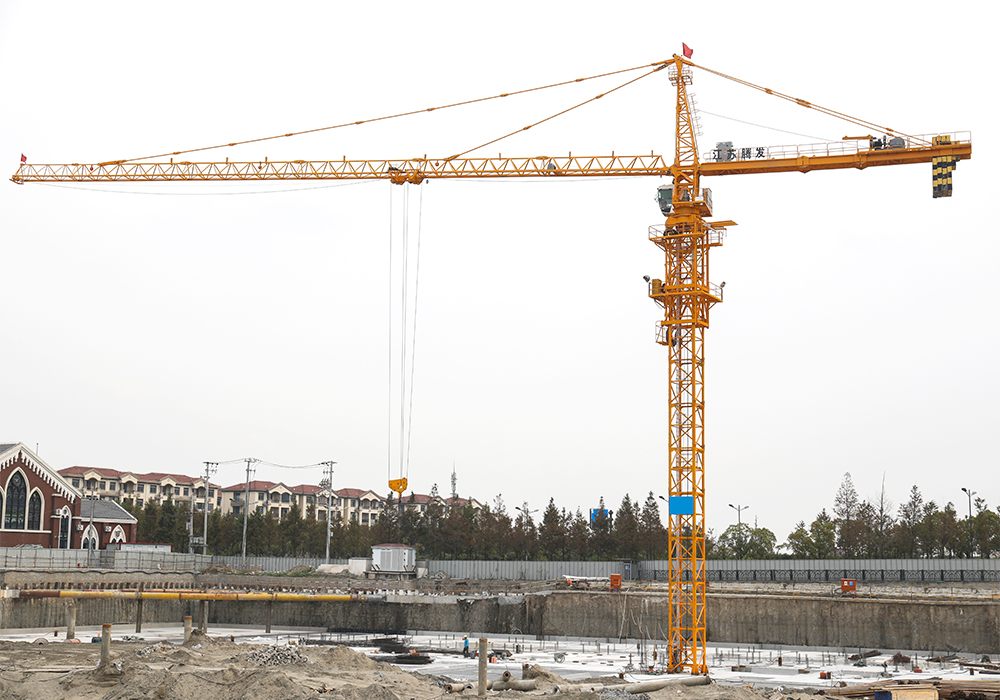
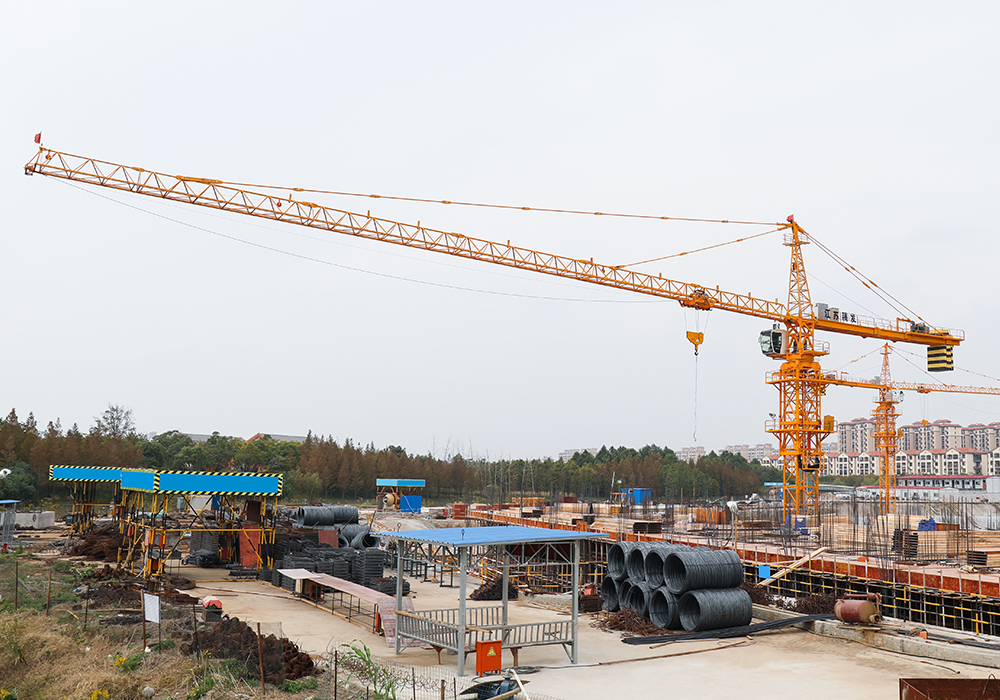
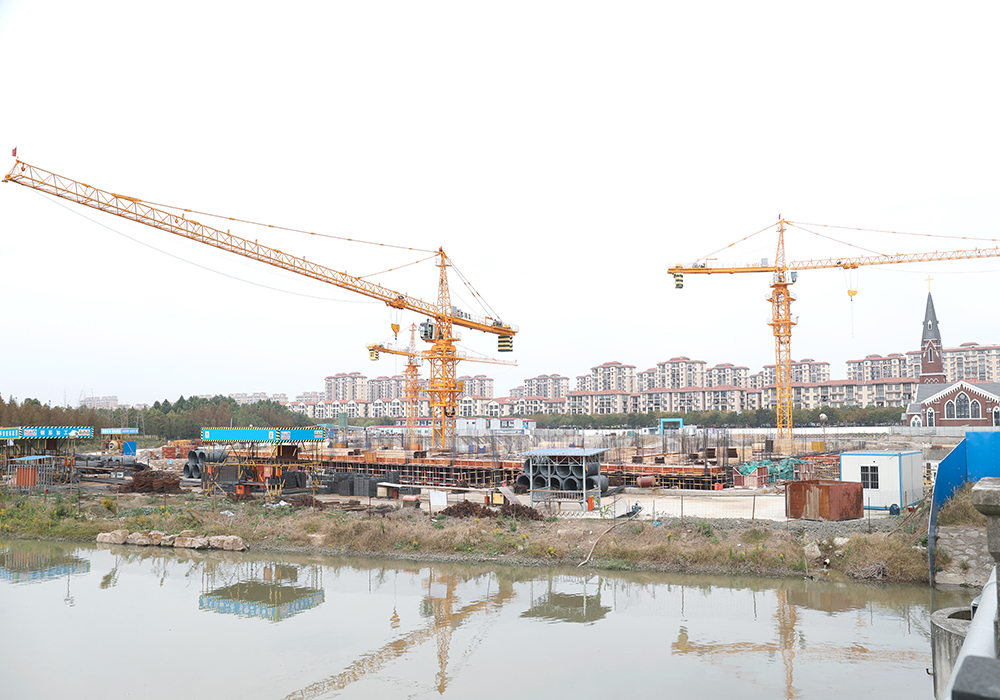
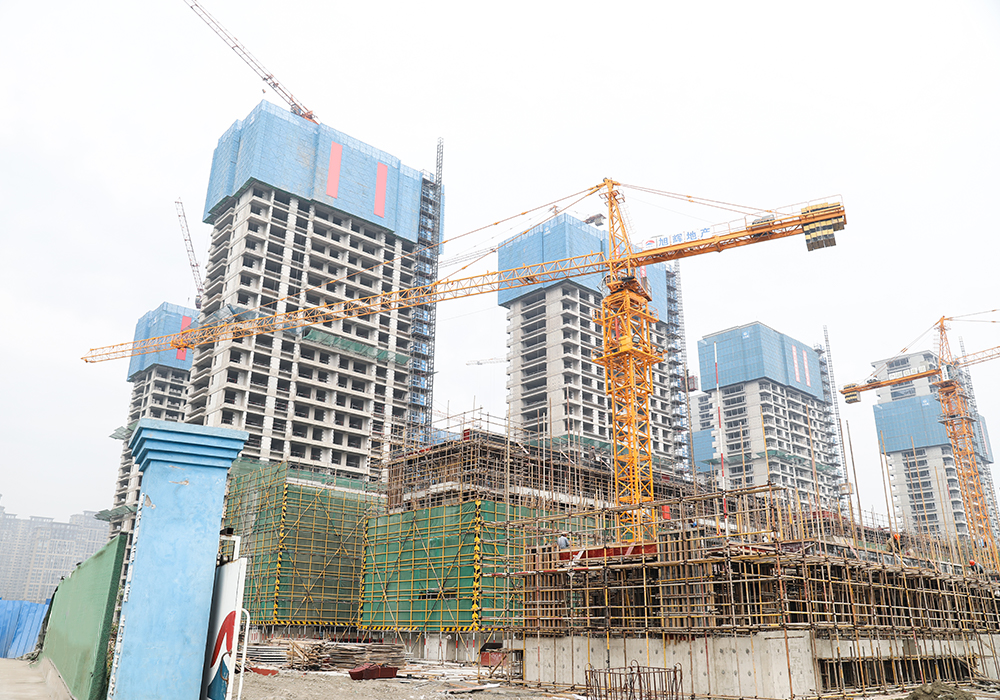
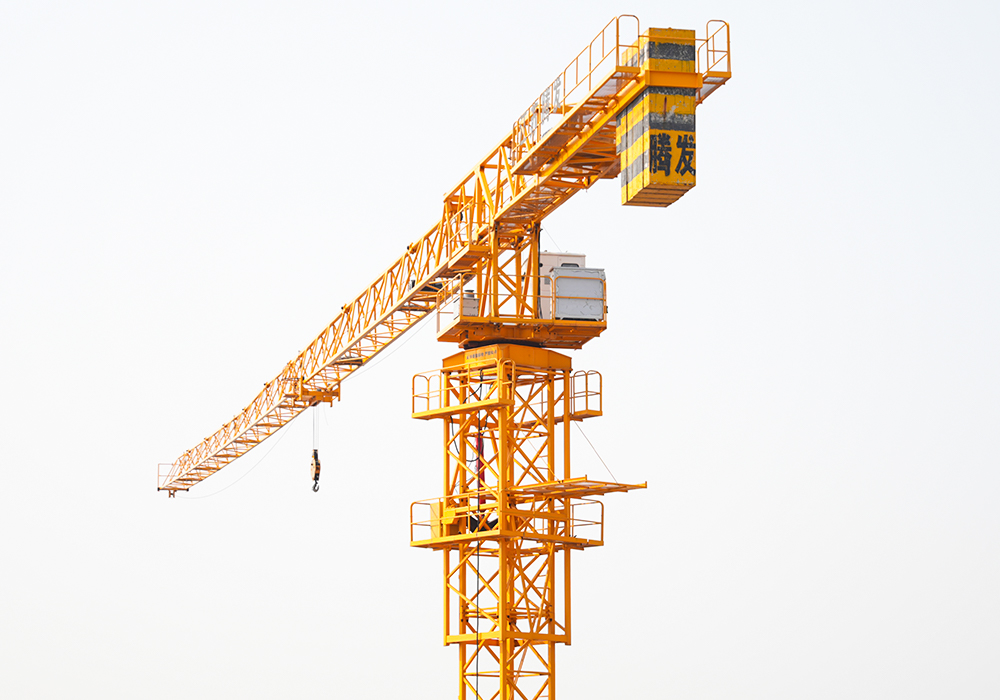
Tower cranes are the defining feature of high-rise construction sites. Fixed to a concrete foundation and capable of climbing alongside the building as it rises, they combine substantial height (routinely exceeding 100 meters) with a wide working radius (up to 80 meters on large flat-top models) and lift capacities typically ranging from 6 to 20 tonnes at the hook, though capacities decrease with radius. Their fixed position maximizes coverage over a defined site area while keeping the ground footprint minimal — a critical advantage on dense urban sites where mobile equipment cannot maneuver.
Mobile Cranes
Mobile cranes — including hydraulic truck cranes and all-terrain cranes — are mounted on wheeled carriers and can be repositioned between sites or around a site without disassembly. They are deployed for discrete, high-capacity lifts: setting precast elements, placing mechanical plant on rooftops, or erecting structural steel on low- to mid-rise projects. Modern all-terrain cranes can lift several hundred tonnes at short radius, but their capacity falls sharply with boom extension, and they require firm, prepared ground and outrigger pads to operate safely.
Crawler Cranes
Crawler cranes run on tracked undercarriages, distributing their considerable weight over a large ground contact area. They can travel under load — unlike wheeled mobile cranes, which must be de-rigged before moving — making them productive on large civil engineering sites such as bridge construction, power stations, and industrial plant assembly. The largest crawler cranes have lift capacities exceeding 3,000 tonnes and are used for reactor vessel and offshore module installation.
Luffing Jib Cranes
A variant of the tower crane, the luffing jib crane replaces the horizontal jib with one that can be raised and lowered (luffed) to vary its radius. This allows the jib to be kept nearly vertical when not lifting — a significant advantage on congested urban sites where the crane's jib cannot swing over neighboring buildings or infrastructure. Luffing cranes are standard on sites in city centers where airspace restrictions apply.
| Crane Type | Typical Max Height | Typical Capacity | Best Application |
|---|---|---|---|
| Tower crane (flat-top) | 100–300 m+ | 6–20 t | High-rise residential and commercial |
| Luffing jib crane | 100–250 m+ | 8–25 t | Constrained urban sites |
| All-terrain mobile | Up to ~120 m | 50–500 t | Discrete heavy lifts, low-rise projects |
| Crawler crane | Variable | 100–3,000+ t | Heavy civil, industrial plant, infrastructure |
How a Tower Crane Is Erected
Erecting a tower crane is a precision engineering operation that typically takes one to three days for a standard fixed-base crane, carried out by a specialist crane erection crew using a mobile assist crane. The sequence is carefully planned and follows the crane manufacturer's specific assembly manual for each model.
Stage 1: Foundation Construction
A tower crane's loads — vertical compression, horizontal shear from the jib, and substantial overturning moments — are transferred to the ground through a reinforced concrete foundation pad, typically 4–6 meters square and 1.5–2 meters deep. Anchor bolts or an embedded cruciform base frame are cast into the pad to receive the crane's mast base section. The foundation is designed by a structural engineer to the crane manufacturer's load specifications and must achieve full concrete strength before erection begins — typically a minimum of 28 days after pour, confirmed by cube testing.
Stage 2: Base Section and Initial Mast Assembly
A mobile crane — usually an all-terrain unit with sufficient capacity for the heaviest crane component, typically the slewing ring assembly or jib sections — lifts the base mast sections into position over the anchor bolts. Mast sections are bolted together sequentially, typically in 3–6 meter increments. Initial assembly brings the mast to a height sufficient to accommodate the slewing unit and jib without obstruction from ground-level equipment and site hoardings.
Stage 3: Slewing Ring and Turntable Installation
The slewing ring — a large-diameter bearing that allows the upper structure to rotate 360° relative to the fixed mast — is lifted onto the top of the assembled mast sections and bolted into position. The slewing mechanism houses the electric motor and pinion gear that drives rotation. All electrical connections and control cables are routed through the mast at this stage.
Stage 4: Cab, Jib, and Counterjib Installation
The operator's cab is mounted to the slewing assembly, followed by the counterjib (the shorter rear arm that carries the counterweight ballast) and then the main jib. On a flat-top tower crane, the jib sections are pinned together horizontally and lifted as a unit or assembled in sections depending on available crane capacity. The jib and counterjib must be installed and ballasted in the correct sequence — adding the main jib before the counterweight concrete blocks are in place creates a dangerous overturning moment toward the jib side.
Stage 5: Reeving, Load Testing, and Commissioning
Once structurally assembled, the hoist rope is reeved through the trolley and hook block, electrical systems are connected and tested, and limit switches are set for maximum hook height, minimum radius, and maximum load. A statutory load test — typically to 110% of the crane's rated capacity at maximum radius — is conducted before the crane is handed over for operational use. A competent person certifies the crane and issues a thorough examination report, which is required by regulation in most jurisdictions before the crane can lift on site.
Climbing: How Tower Cranes Grow With the Building
One of the defining capabilities of a tower crane is its ability to increase its own height as the building rises — a process called climbing or jumping. There are two primary methods.
External climbing is the standard approach for free-standing cranes. A hydraulic climbing frame — the climbing cage — is fitted around the mast just below the slewing unit. Hydraulic rams push the entire upper structure (slewing unit, cab, jib, counterjib) upward by one mast section height, creating a gap in the mast into which a new mast section is inserted and bolted. The climbing frame then retracts, and the process repeats. A single climbing cycle adds one mast section, typically 3–6 meters, and takes a trained crew two to four hours to complete safely.
Internal climbing is used when a crane is positioned inside the building's core — within a lift shaft or stairwell opening. Rather than growing the external mast, the entire crane is jacked upward through the building floor by floor, supported on temporary steel beams bearing on the concrete structure. This method eliminates the need for a tall external mast and is common on supertall towers where external mast heights would become impractical to brace. Once the building reaches its final height, the crane must be dismantled floor by floor from inside — a complex and time-consuming operation requiring a secondary external crane for assistance.