

 English
 русский
 Español
 中文简体
中文简体
Content
- 1 What Is a Tower Crane?
- 2 Tower Crane Components: Anatomy of the Machine
- 3 Types of Tower Cranes Used in Construction
- 4 How Tower Cranes Are Erected — and How They Get to the Top of Buildings
- 5 Tower Crane Specifications: Height, Capacity, and Reach
- 6 Tower Crane Operators: Role and Qualifications
- 7 Key Facts About Tower Cranes
What Is a Tower Crane?
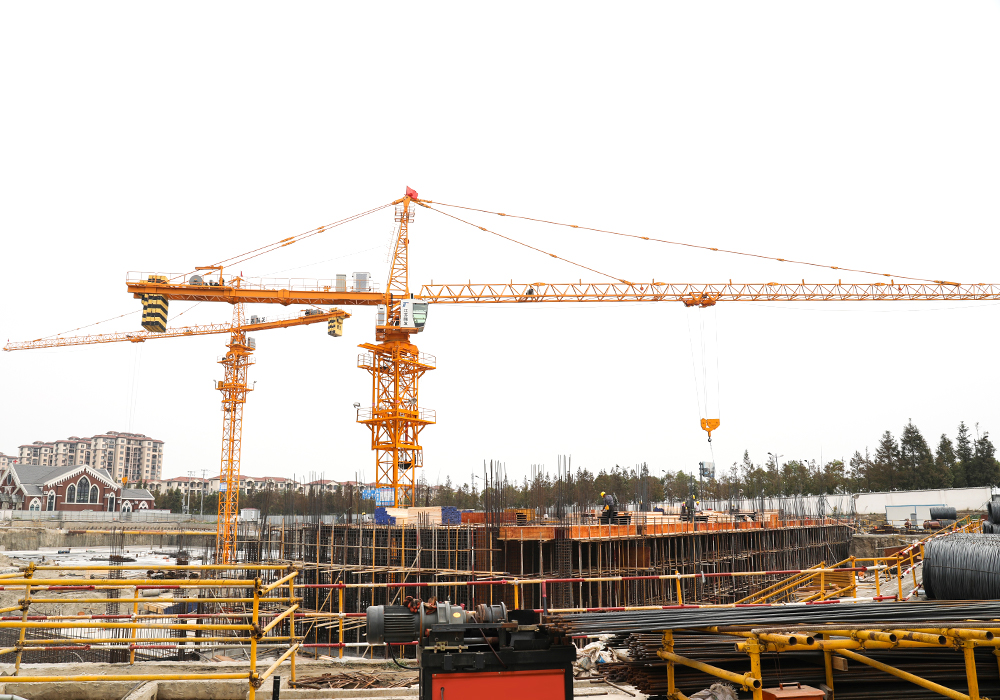
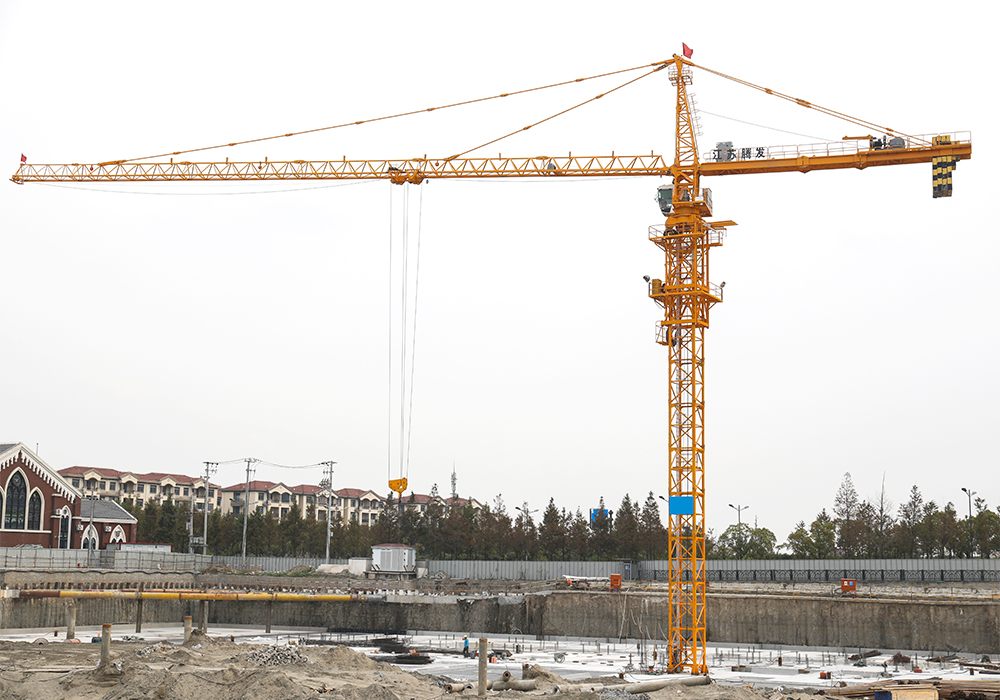
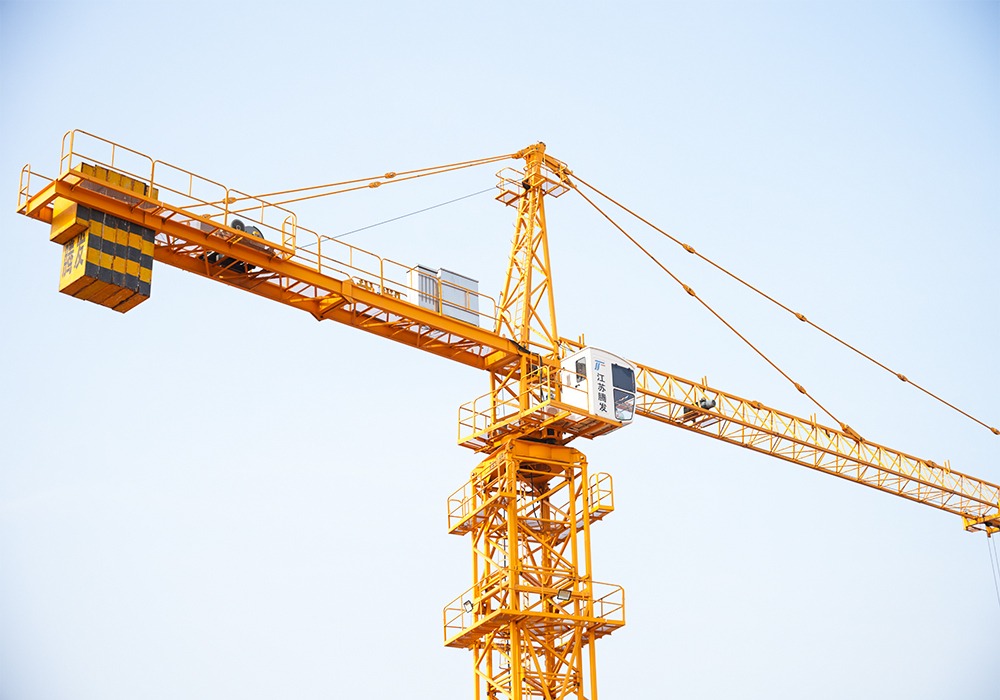
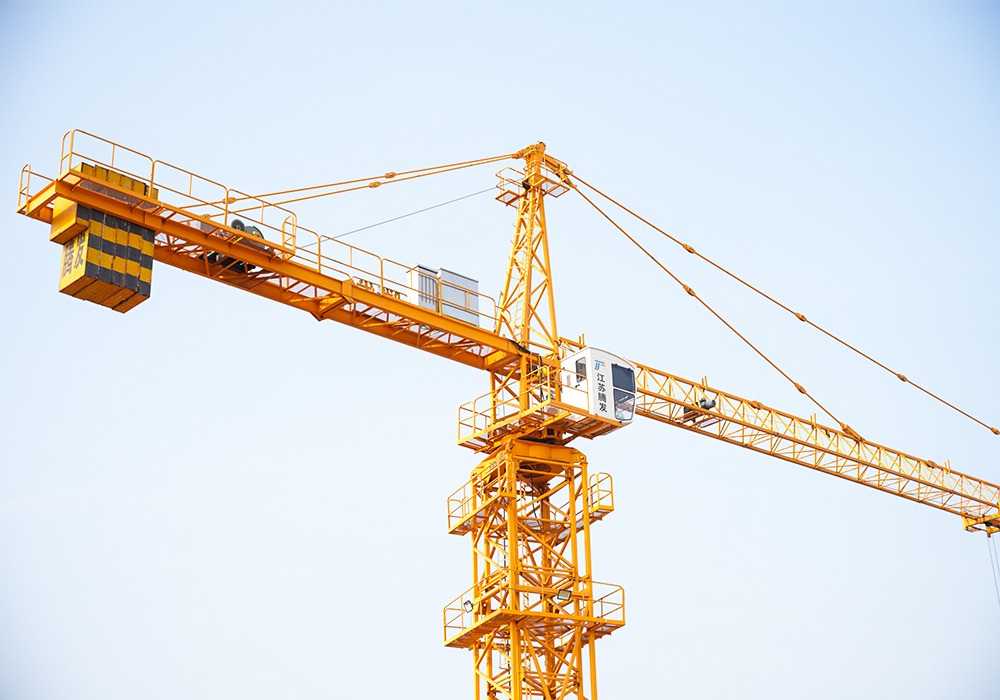
A tower crane is a fixed, high-capacity lifting machine used in construction to hoist materials, structural steel, concrete, and equipment to height — often far beyond what any mobile crane can safely reach. Unlike mobile or crawler cranes that move around a site, a tower crane is anchored to a concrete foundation pad and rises vertically alongside the structure being built, growing taller as the building climbs.
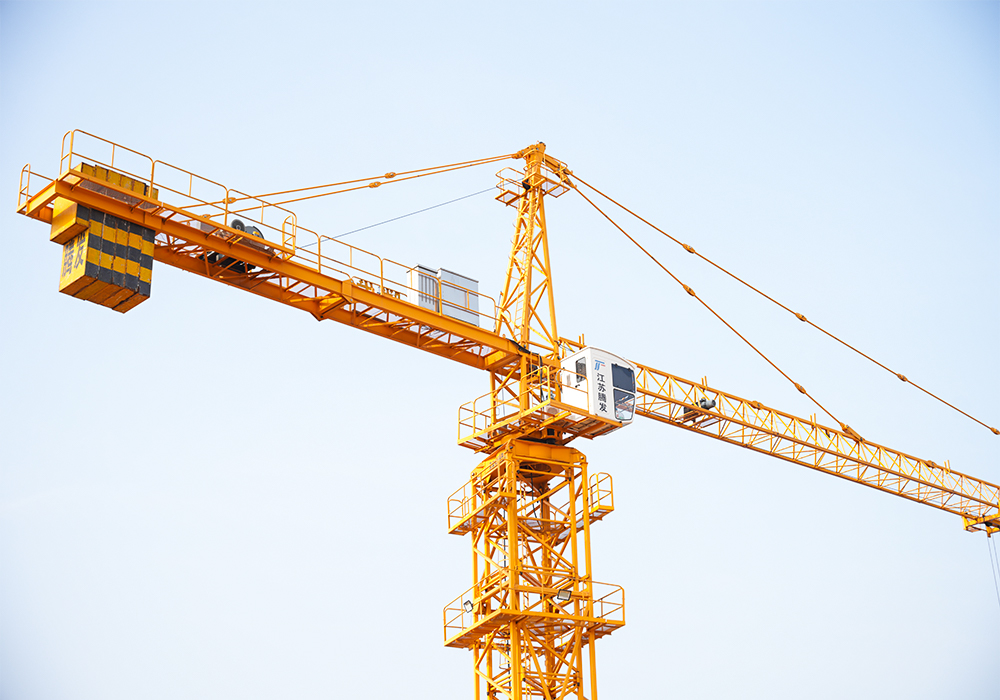
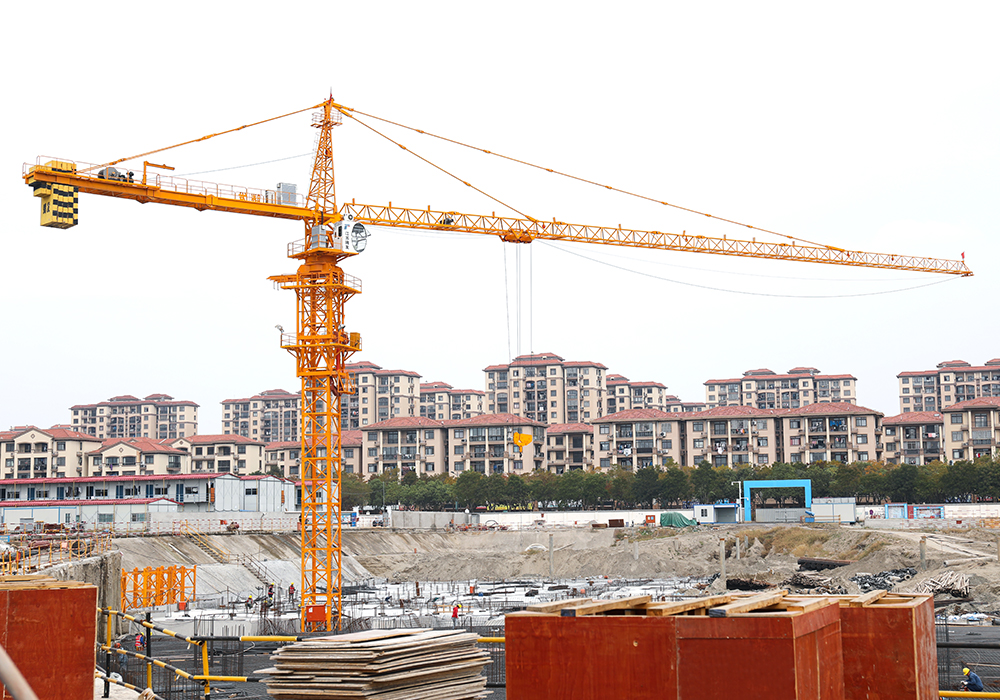
The machine is defined by its vertical mast, which carries a horizontal jib (or boom) at its top. A trolley travels along the jib, allowing loads to be positioned anywhere within the crane's working radius. Tower cranes dominate the skylines of cities under development and are the defining equipment of high-rise construction — a building of 10 stories or more is almost impossible to construct economically without one.
The first recognizable tower cranes appeared in Germany in the early 20th century. Hans Liebherr is widely credited with commercializing the modern flat-top tower crane design after World War II, and the Liebherr name remains one of the most recognized in the industry today. Since then, the machines have grown dramatically in capacity and height, becoming indispensable tools of modern urban construction.
Tower Crane Components: Anatomy of the Machine
Understanding how a tower crane works begins with its major structural and mechanical components. Each part performs a specific role in the system's ability to lift, rotate, and position loads precisely.
Foundation and Base
The crane begins below ground. A heavily reinforced concrete foundation pad — typically several metres deep and wide — is poured weeks before the crane arrives on site. Anchor bolts cast into this pad accept the crane's base section, transferring all vertical loads, overturning moments, and dynamic forces into the ground. On some projects, the base section is instead bolted to the building's structural frame, allowing the crane to climb internally as the structure rises.
Mast (Tower)
The mast is the crane's vertical spine — a lattice steel structure assembled from standardized sections, typically 3–6 metres tall each. Sections are stacked as the crane climbs, and the mast is usually tied back to the building's concrete core at regular intervals (commonly every 20–30 metres) using horizontal tie frames that prevent lateral deflection under load and wind.
Slewing Unit and Turntable
Sitting atop the mast, the slewing unit is a large ring gear and bearing assembly that allows the entire upper structure of the crane to rotate 360° around the mast. Electric slewing motors drive the rotation; modern cranes can slew at up to 0.8 rpm, controlled precisely from the operator's cab.
Jib (Working Arm)
The jib is the horizontal arm that extends from the top of the crane toward the working area. It carries the trolley and hook block. Jib lengths typically range from 40 to 80 metres, with the maximum load capacity concentrated near the mast and reducing as the trolley moves outward — a relationship called the load-radius curve that operators must always respect.
Counter-Jib and Counterweights
On the opposite side of the mast from the jib, a shorter counter-jib carries a stack of concrete or cast-iron counterweight blocks. These are sized to balance the jib structure itself; the actual load on the hook is balanced by the hoist rope geometry and the crane's computer load-management system, not the counterweights alone.
Operator's Cab
The cab sits at the junction of the jib and counter-jib, giving the crane and tower operator an unobstructed view of the working area. Modern cabs are climate-controlled and equipped with load-moment indicators, anti-collision systems, wind speed monitors, and digital load-readout screens. On very tall structures, a camera system supplements direct sightlines where the hook is out of view.
Hoist and Trolley Mechanisms
The hoist winch — housed in the machinery section near the counter-jib — spools a high-tensile wire rope through a series of sheaves to the hook block below the jib. The trolley travels horizontally along the jib on rails, positioned by a separate trolley winch. Together, these two axes of movement — vertical (hoist) and radial (trolley) — combined with 360° slewing give the crane full three-dimensional coverage of its working envelope.
Types of Tower Cranes Used in Construction
Not all tower cranes are configured identically. Several distinct types have evolved to serve different site geometries, height requirements, and load characteristics.
Hammerhead (Top-Slewing) Tower Crane
The most common crane in construction worldwide. The horizontal jib is fixed at the top of the mast and the entire upper assembly rotates. The characteristic T-shape profile is instantly recognizable on any city skyline. Hammerhead cranes suit projects where the full jib radius needs to be swept without obstruction and are available in capacities from around 4 tonnes up to 80+ tonnes at minimum radius.
Flat-Top Tower Crane
A variation of the hammerhead design in which the A-frame head structure is eliminated, leaving a low-profile flat top. This reduces the crane's overall height by 3–5 metres and allows multiple cranes to operate in overlapping airspace with reduced risk of collision — an important advantage on dense urban sites where several cranes may work simultaneously.
Luffing Jib Tower Crane
Rather than a horizontal jib with a traveling trolley, a luffing jib crane uses an angled boom whose inclination can be raised or lowered (luffed) to position loads. This dramatically reduces the crane's horizontal footprint in slewed positions, making luffing jibs the preferred choice for constrained inner-city sites where the jib would otherwise swing over neighboring properties or airspace restrictions. The trade-off is higher mechanical complexity and generally lower maximum radius than an equivalent hammerhead.
Self-Erecting Tower Crane
Smaller, trailer-mounted cranes that can fold out and erect themselves without a separate mobile crane. Self-erecting tower cranes suit low-to-mid-rise residential construction, renovation sites, and projects where a full-scale tower crane would be disproportionate. Their maximum lifting capacities are typically 4–8 tonnes, and they can be operational within a few hours of arrival on site.
| Type | Jib Style | Best For | Typical Max Capacity |
|---|---|---|---|
| Hammerhead | Fixed horizontal | Open sites, high-rise, infrastructure | 25–80 t |
| Flat-Top | Fixed horizontal, low profile | Multi-crane urban sites | 10–32 t |
| Luffing Jib | Variable-angle boom | Constrained city-centre sites | 8–25 t |
| Self-Erecting | Folding, trailer-mounted | Residential, short-duration projects | 4–8 t |
How Tower Cranes Are Erected — and How They Get to the Top of Buildings
One of the most common questions about tower cranes is deceptively simple: how does a crane build itself? The answer lies in a climbing mechanism built into the mast.
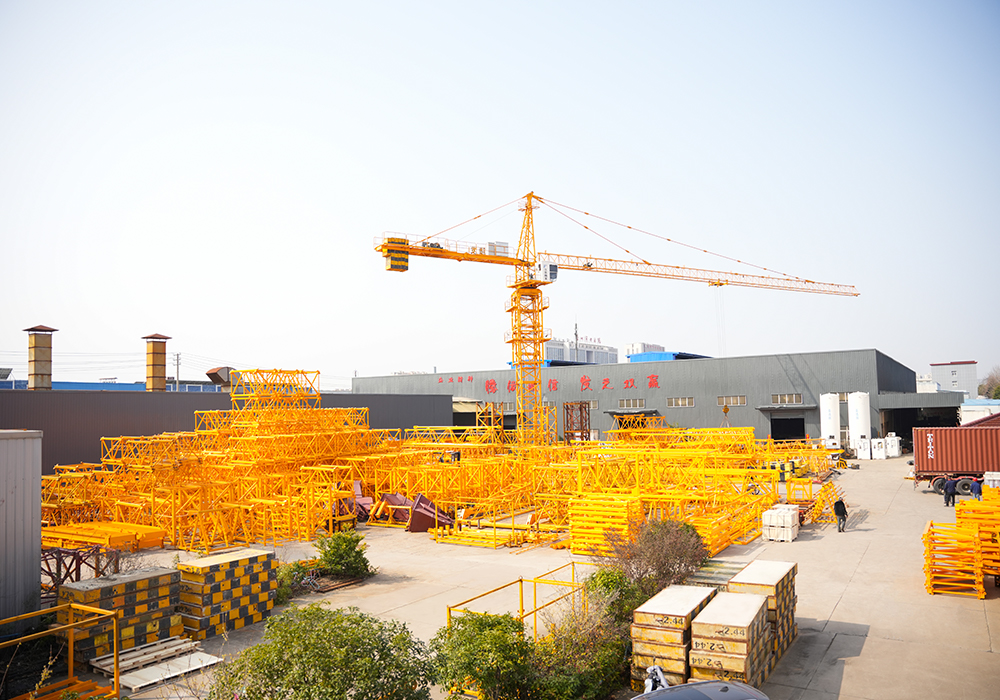
The initial assembly of a tower crane uses a smaller mobile crane — typically an all-terrain or crawler crane on a nearby pad. The mobile crane lifts and stacks the first several mast sections, then raises the slewing ring, jib, counter-jib, and counterweights into position. Once the upper assembly is in place and connected, the tower crane can operate under its own power.
From that point on, the crane adds height using a climbing frame — a hydraulic collar that fits around the mast just below the slewing unit. The climbing sequence works as follows:
- The climbing frame is pinned to the mast and hydraulic rams push the entire upper crane assembly — jib, counterweights, cab, and slewing unit — upward by one mast-section height.
- A gap opens between the top of the existing mast and the base of the upper assembly.
- A new mast section is swung into the gap by the crane itself and bolted in place.
- The climbing frame pins are relocated to the new top section, and the process repeats.
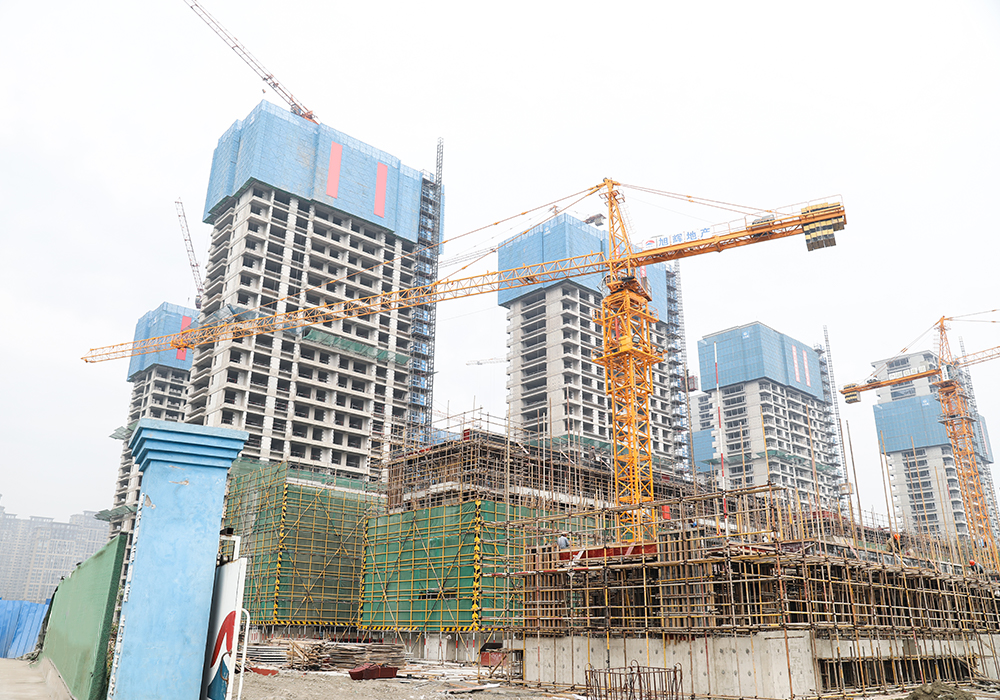
This self-climbing process allows a tower crane to gain height continuously as the building grows beneath it — without any external equipment after the initial erection. On very tall buildings, the crane may be tied to the concrete core at dozens of levels by the time the structure reaches its full height.
Internal climbing cranes — mounted inside the building's structural core — take this a step further. Rather than growing taller externally, they sit within the building's lift shaft or core opening and jack themselves upward floor by floor as the structure rises around them, eventually being dismantled from the roof by a smaller crane once the building is topped out.
Tower Crane Specifications: Height, Capacity, and Reach
The performance envelope of a tower crane is defined by three interdependent parameters: free-standing height, maximum jib radius, and maximum lift capacity at any given radius.
Most standard tower cranes have a free-standing height (without tie-backs to the structure) of 40–80 metres. With tie-backs, modern cranes can operate at heights exceeding 800 metres — a capability exploited on supertall skyscraper projects in cities like Dubai, Shenzhen, and New York.
The tallest tower crane in the world by free-standing height is the Liebherr LTM 11200-9.1 used in conjunction with purpose-built tower systems on projects such as the Jeddah Tower in Saudi Arabia (currently under construction and planned to exceed 1,000 metres). Dedicated supertall construction projects often require custom-engineered crane systems rather than off-the-shelf equipment.
Maximum lift capacity at tip (the end of the jib) for standard cranes is typically 3–8 tonnes, while maximum capacity at minimum radius (close to the mast) can reach 25–80 tonnes on heavy-lift models. The load-moment rating — the product of load and radius — is the governing structural constraint that operators must never exceed.
Tower Crane Operators: Role and Qualifications
Crane and tower operators are among the most skilled and safety-critical roles on any construction site. An operator sits 50–100+ metres above the ground for shifts of 8–12 hours, lifting loads that can weigh tens of tonnes and positioning them to within centimetres of their target — often with only radio communication and a camera feed to guide them.
In most jurisdictions, tower crane operators must hold a formal certification — in the United States, the NCCCO (National Commission for the Certification of Crane Operators) credential is the industry standard. In the UK, the CPCS (Construction Plant Competence Scheme) card is required on regulated sites. Training typically involves written examinations on load charts, rigging, and regulations, combined with practical assessment on live equipment.
Operators do not work alone. A banksman or rigger on the ground coordinates lifts by radio, signals load movements, and ensures the hook zone is clear before any lift is made. On complex sites with multiple cranes operating in overlapping airspace, a lift supervisor may coordinate all crane movements to prevent collision.
Key Facts About Tower Cranes
- A standard tower crane foundation pad typically weighs 200–400 tonnes and must cure for 7–10 days before the crane is erected on it.
- Tower cranes are designed to withstand wind speeds of up to 140–160 km/h in operational mode and higher in storm (out-of-service) mode, when the jib is released to weathervane freely.
- The hook on a large tower crane travels at approximately 100–150 metres per minute when hoisting at reduced load, slowing to 20–30 m/min at maximum load.
- At any given time, an estimated 125,000 tower cranes are in operation worldwide, with roughly 70% of them located in China.
- Lattice boom cranes — specifically crawler cranes and lattice boom truck cranes — are the two crane types that typically use a lattice boom rather than a solid telescoping boom, giving them superior lift capacity at long radii.
- Dismantling a tower crane from a completed high-rise requires a smaller mobile or rooftop crane to disassemble the top sections — the reverse of the initial erection sequence.