

 English
 русский
 Español
 中文简体
中文简体
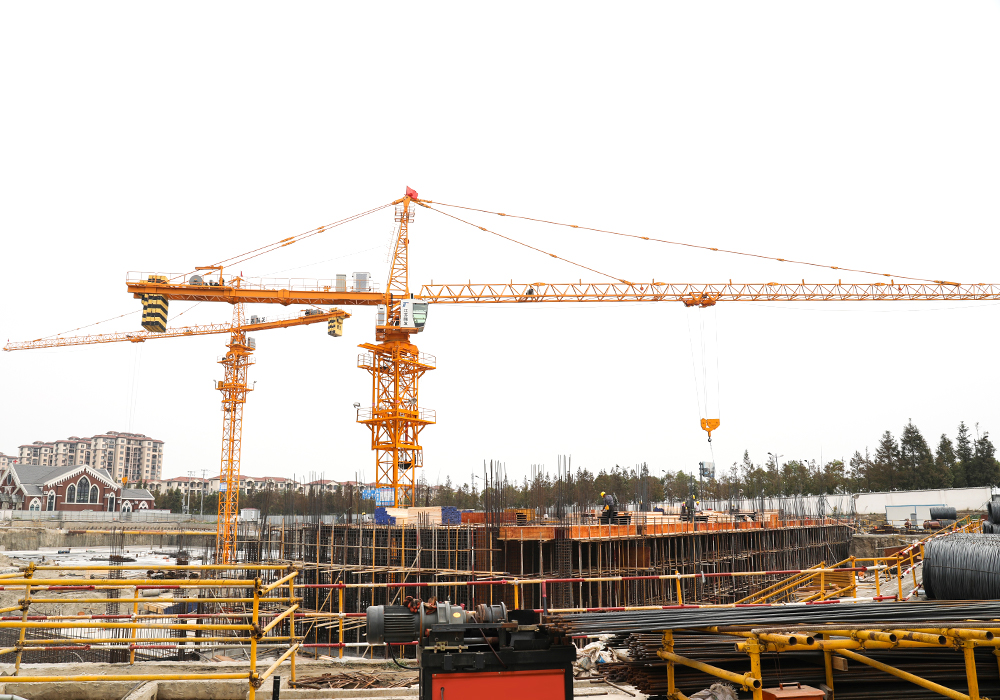
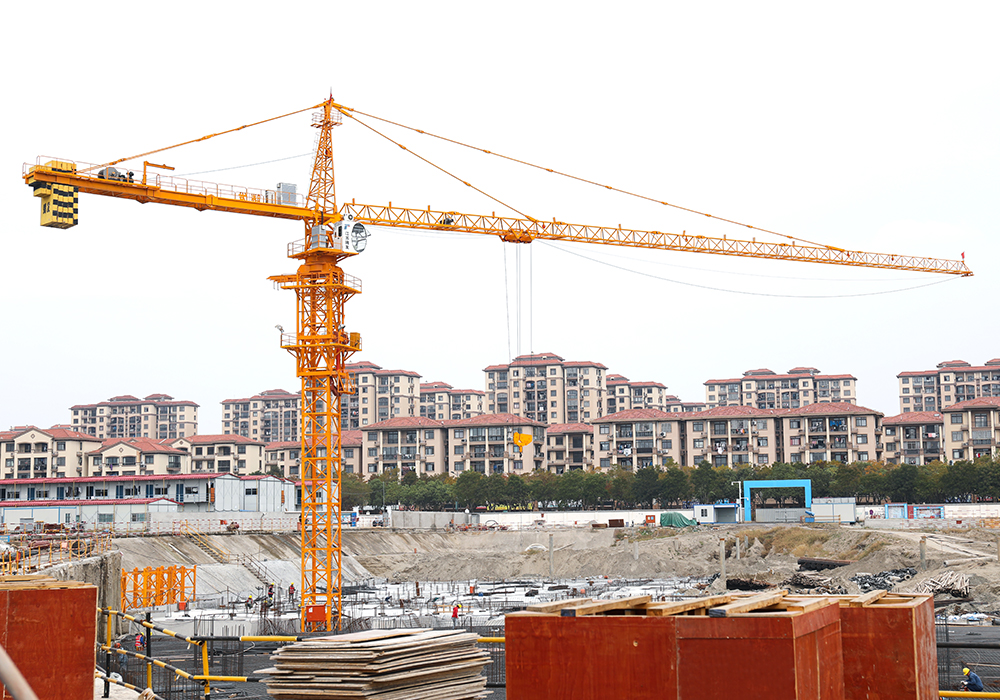
On a modern high-rise site, tower crane delivery usually means a convoy of flatbed trucks carrying steel mast sections, slewing units, hydraulic cylinders, and electrical cabinets. The first question a project manager asks is not whether the crane will be constructed, but how fast the crew can complete the how are cranes constructed procedure and put the machine to work. The answer matters because every day the crane sits idle delays the entire construction schedule.
Content
- 1 How Are Cranes Constructed: The Three-Stage Method
- 2 Stage One: Constructing the Foundation
- 3 Stage Two: Constructing the Mast with a Mobile Crane
- 4 Stage Three: How the Crane Climbs and Grows
- 5 Installing the Slewing Unit, Jib, and Counter-Jib
- 6 Safety Devices, Commissioning, and Load Testing
- 7 Choosing a Crane Structure That Fits the Site
- 8 Frequently Asked Questions
How Are Cranes Constructed: The Three-Stage Method
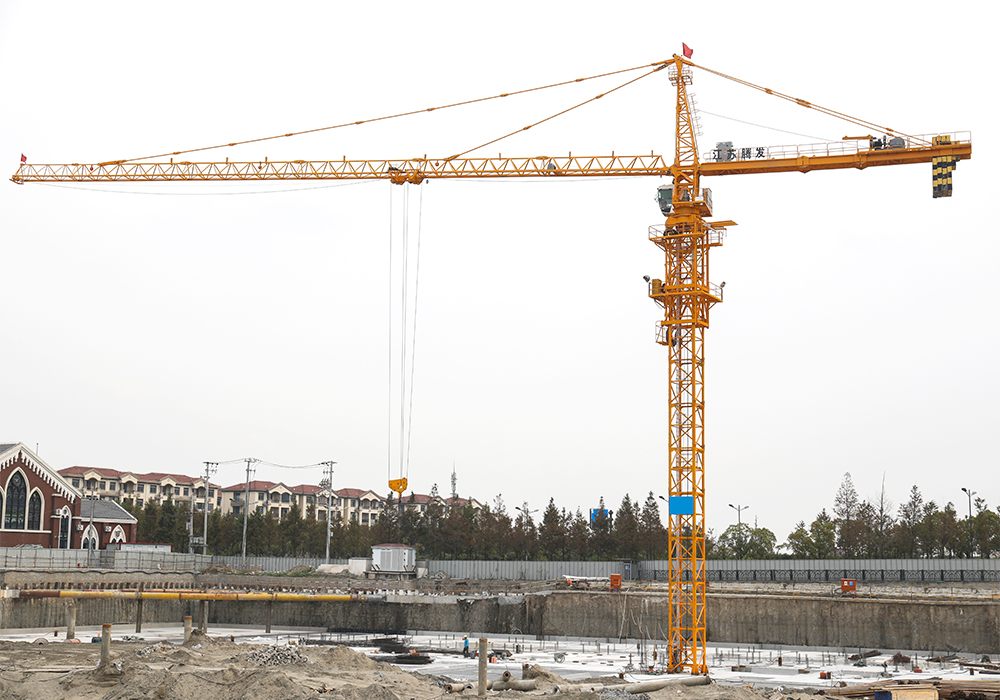
Every tower crane is built in exactly three stages. First, a reinforced concrete foundation is poured and cured to carry the crane's falsework. Second, a mobile assist crane assembles the initial mast sections, slewing unit, jib, and counter-jib. Third, the tower crane uses its own climbing frame to add mast sections as the building rises. This split between external assembly and self-climbing is why a tower crane can reach heights far beyond what a mobile crane could ever support.
Stage One: Constructing the Foundation
The foundation is the most critical part of tower crane construction because every load path in the machine converges at the base. A 6-ton topkit crane with a 60m jib can impose a base moment of more than 1,000 kN-m on the foundation. That is why the foundation is engineered for the crane's working reactions, not just its empty weight.
The base is prepared in one of three ways: a separate concrete footing, a reinforced concrete slab with a ballast block, or a steel frame anchored to a concrete pile cap. Regardless of the type, the ground bearing capacity must be verified by a geotechnical survey, and the soil must achieve at least 150 kPa before the foundation is placed.
- Anchor bolts: high-strength, grade 8.8, with precise positioning within +/-3mm
- Rebar: high-tensile steel, designed for the design lifting moment
- Concrete grade: C35/C40 with high early strength for faster curing
- Partial loading allowed after 7 days; full design load after 28 days
Stage Two: Constructing the Mast with a Mobile Crane
The first 20-40 meters of the mast are assembled by a mobile assist crane, which handles the steel sections while they are still low enough for a wheeled crane to reach. This temporary crane is sized between 50-150 tons, depending on the mast height and the weight of the upper structure that needs to be lifted later.
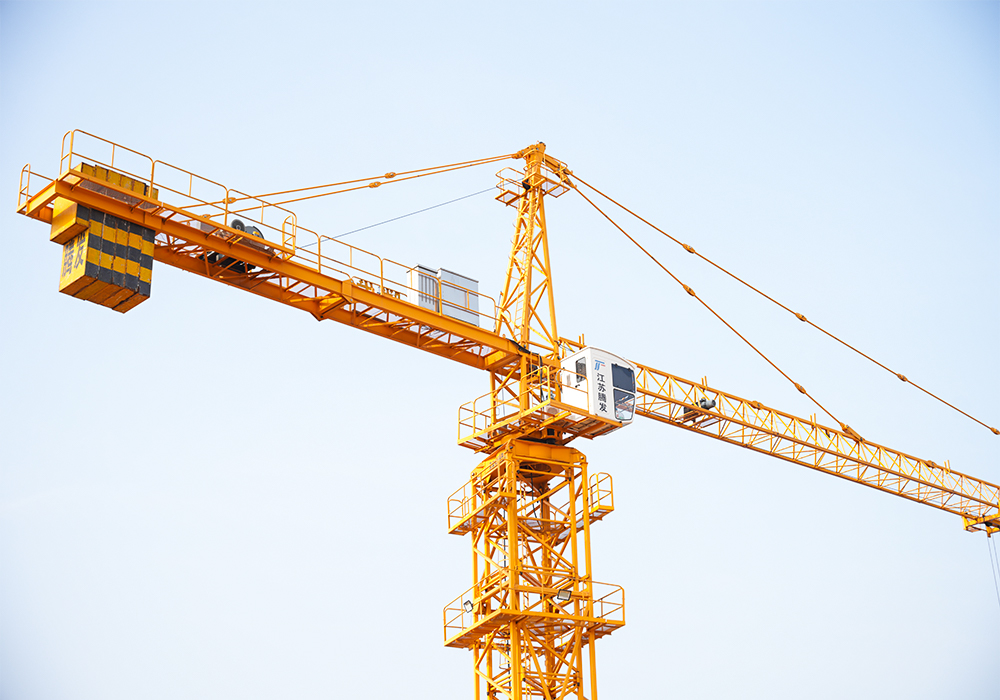
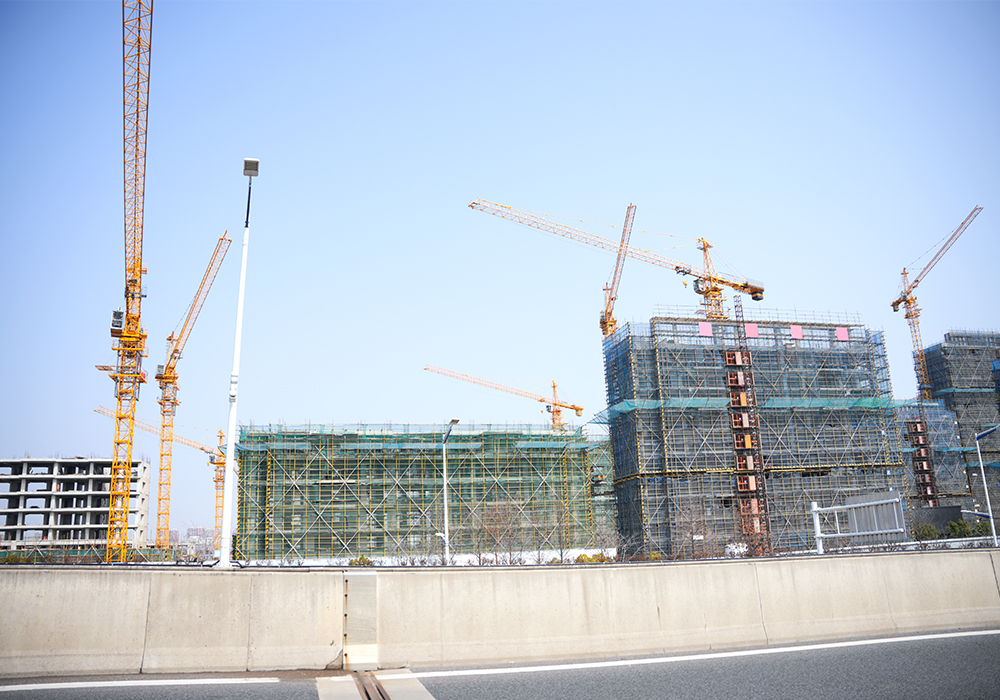 QTZ80 Topkit Tower Crane with 6t Capacity and 36-60m Jib LengthsThe QTZ80 series offers 6-ton lifting capacity with jib lengths from 36 to 60 meters, suitable for early mast assembly and heavy lifts. Its versatile configurations support efficient erection and precise vertical alignment.View Product →
Standard mast sections are modular steel lattice boxes, typically 3 meters long, connected with high-strength bolts or steel pins. The mast must be plumb within a tolerance of 1:500, and every bolt must be torqued according to the manufacturer's specification. A mistake in verticality at the base becomes a serious misalignment at 100 meters.
A proficient crew can bolt three to five mast sections per hour. At that rate, a 30-meter mast is completed in a single shift, and the mobile crane can then prepare to lift the slewing unit and jib.
Stage Three: How the Crane Climbs and Grows
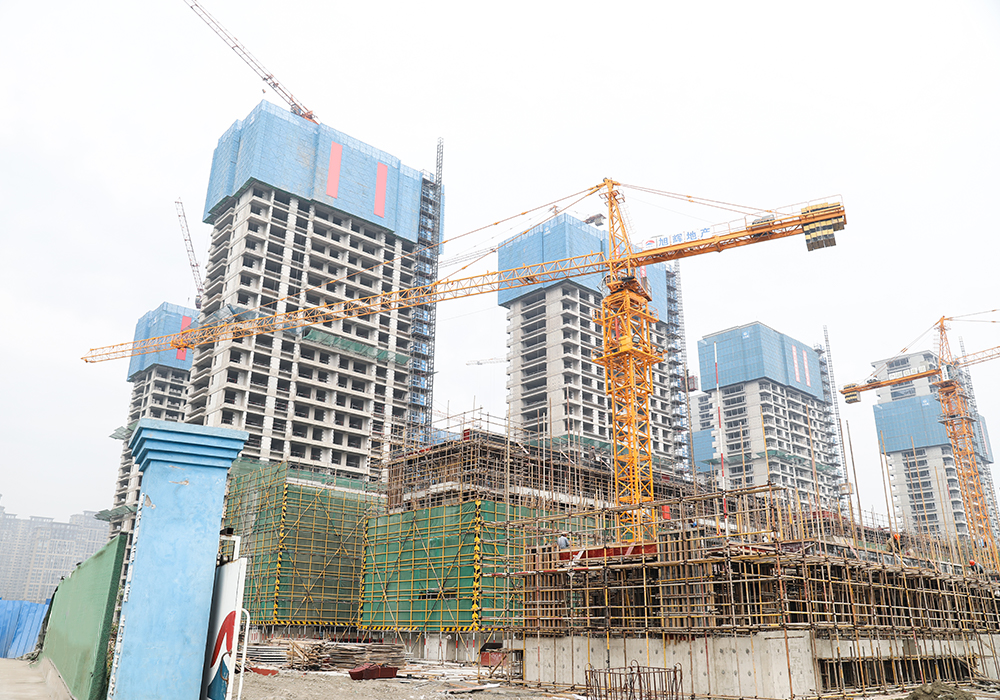
The tower crane raises itself by climbing a hydraulic frame around the mast. This process, often called self-climbing, is what allows the crane to grow with the building without a mobile crane. The climbing sequence is repeated every time the building rises by one mast section.
- Anchor the climbing frame to the mast with sliding blocks.
- Release the upper structure from the mast and transfer its load to the hydraulic frame.
- Hydraulic cylinders push the upper structure up by one mast section (about 3 meters).
- Slide a new mast section into the open space and bolt it to the mast below.
- Re-anchor the upper structure and move the climbing frame up for the next cycle.
Tower crane mast sections made of Q355B or Q460C steel are the standard for modern tower cranes, and the climbing frame is designed to handle the full weight of the upper structure plus the new mast section during the shift.
The entire climb takes 30-45 minutes once the crew is experienced. That speed matters because the crane must clear the top of the building before concrete can be poured at the next level.
Installing the Slewing Unit, Jib, and Counter-Jib
The slewing unit, jib, and counter-jib are usually assembled on the ground and lifted into place by a mobile crane before the tower crane starts climbing. This is the most visible part of the construction sequence and is often completed within a single working day.
The slewing mechanism consists of a turntable, a slewing motor, and a reduction gearbox that rotate the upper structure. The jib is assembled in sections from the base of the slewing unit outward, with pinned connections between each section. The counter-jib is placed opposite the jib and fitted with precast concrete counterweights to balance the crane's lifting moment.
For a flat-head crane, the upper structure is simpler because there is no tower top or tie bars. This reduces the crane's own height and makes the jib installation faster. For a topkit crane, the apex and tie bars are added before the jib is connected, which adds about half a day to the erection schedule.
Safety Devices, Commissioning, and Load Testing
A tower crane will not enter service until its safety devices are installed, calibrated, and verified through a commissioning load test. This step protects the crew, the building, and the crane itself.
- Load limit switch: prevents operation beyond rated capacity
- Moment limit switch: prevents overloading at the tip of the jib
- Height limit switch: stops the hook at the upper travel limit
- Slew limit switch: prevents uncontrolled rotation
- Anemometer: alerts the operator to high wind conditions
- Anti-collision system: required for group tower crane operations
After the load test, a certified inspector reviews the commissioning report, checks the foundation bolts, verifies the electrical system, and signs off on the crane's operating log. Only then can the crane be used for construction work.
Choosing a Crane Structure That Fits the Site
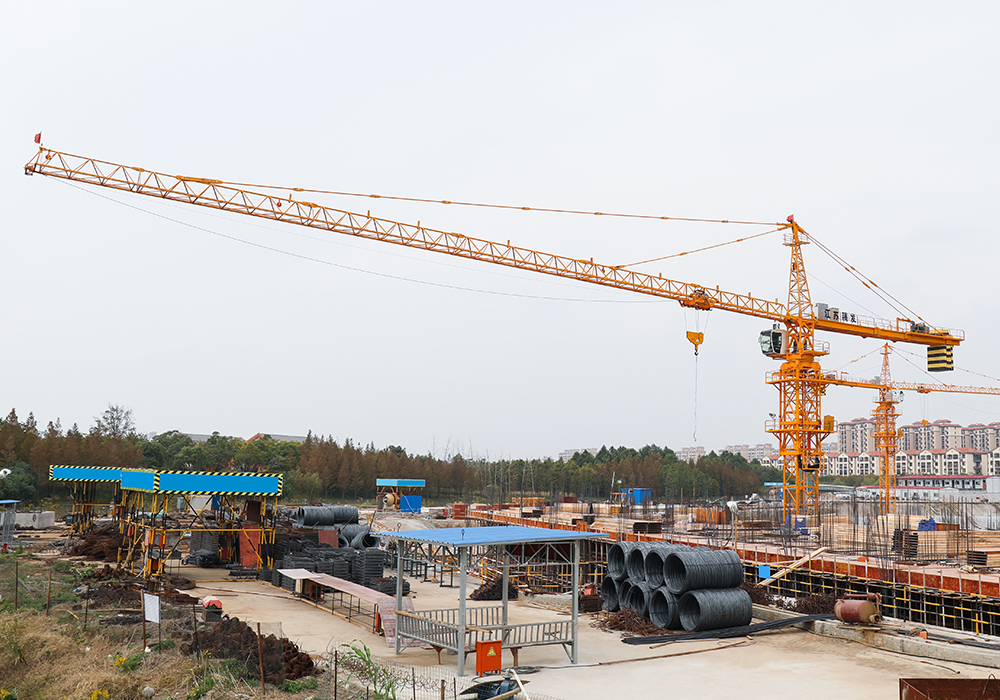
The crane structure you choose changes the erection sequence and determines how the machine handles site constraints. Topkit, flat-head, and luffing jib cranes are the three dominant configurations.
| Feature | Topkit | Flat-head | Luffing jib |
| Tower top & tie bars | Yes | No | No traditional top |
| Jib movement | Trolley on horizontal jib | Trolley on horizontal jib | Pitchable jib boom |
| Mast height potential | High | Very high | Medium |
| Best site condition | General high-rise | Dense sites, group cranes | Narrow urban sites |
| Erection time | 2-3 days | 2-3 days | 3-4 days |
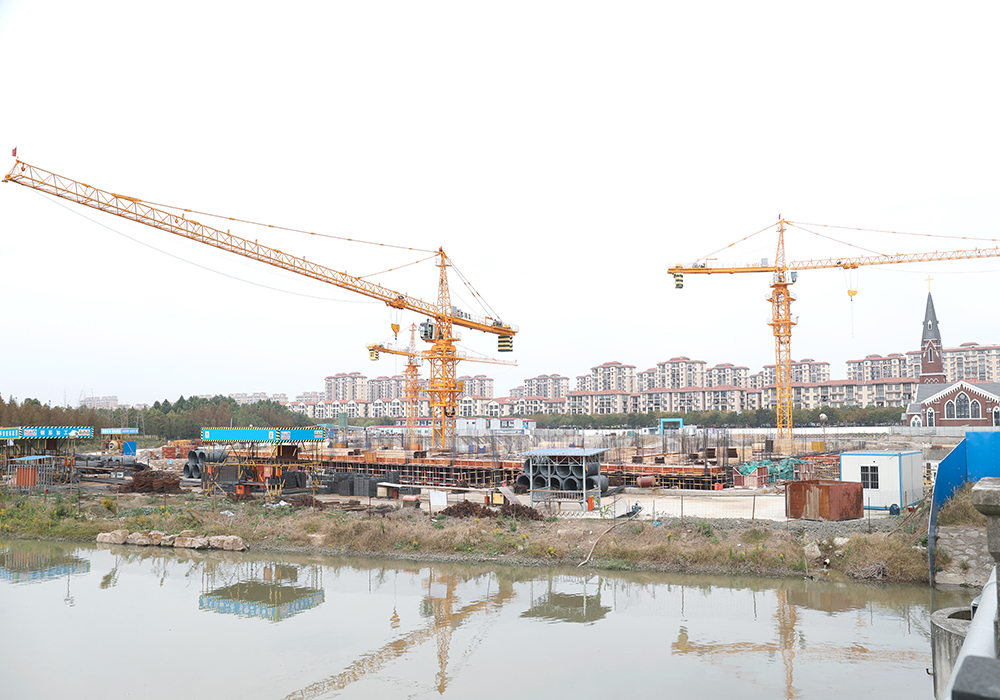
For a site with multiple tower cranes operating in close proximity, a flat-head crane can reduce the risk of tower top collision. For a building set near the edge of a busy street, a luffing jib crane allows the operator to swing the boom out of the way without oversailing the road.
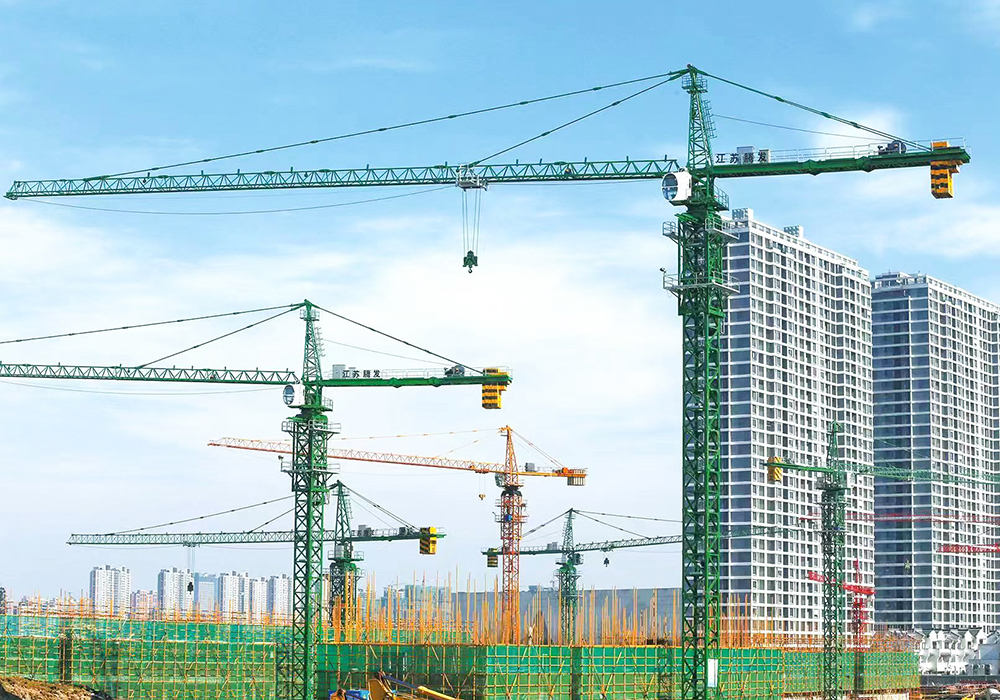 QTD80 Luffing-Jib Tower Crane with 6t Capacity and 40m JibThe QTD80 luffing-jib crane is ideal for tight sites, allowing the boom to luff without oversailing roads. With 6-ton capacity and 40m radius, it minimizes collision risks in multi-crane environments.View Product →
Making that choice early matters because the erection plan, the climbing anchoring points, and even the foundation design all depend on which crane structure you buy.
Frequently Asked Questions
How long does it take to construct a tower crane?
A full tower crane erection takes 3-5 days, excluding foundation curing. The mobile crane phase is one to one and a half days, and the slewing and jib installation takes one to two days. Climbing the crane to its full working height adds time, usually several days to several weeks depending on the building schedule.
Does the tower crane build itself from the ground up?
No. A mobile crane assembles the first 20-40 meters of mast and the upper structure. After that, the tower crane raises itself by climbing its hydraulic frame and adding mast sections. That is why the process is sometimes called self-erecting, but it still needs external support for the initial assembly.
How many mast sections can a crane climb in one day?
A typical crew can climb 8-12 mast sections per day, depending on the crane model, the climbing frame design, and the site conditions. Each climb takes 30-45 minutes, so a full day of climbing can add 30-40 meters of mast height.
What is the riskiest part of the crane construction process?
Foundation preparation is the riskiest step because any error in anchor bolt positioning or concrete strength creates a structural defect that cannot be corrected after the crane is assembled. That is why geotechnical surveys and foundation inspection are mandatory before the first mast section is placed.