

 English
 русский
 Español
 中文简体

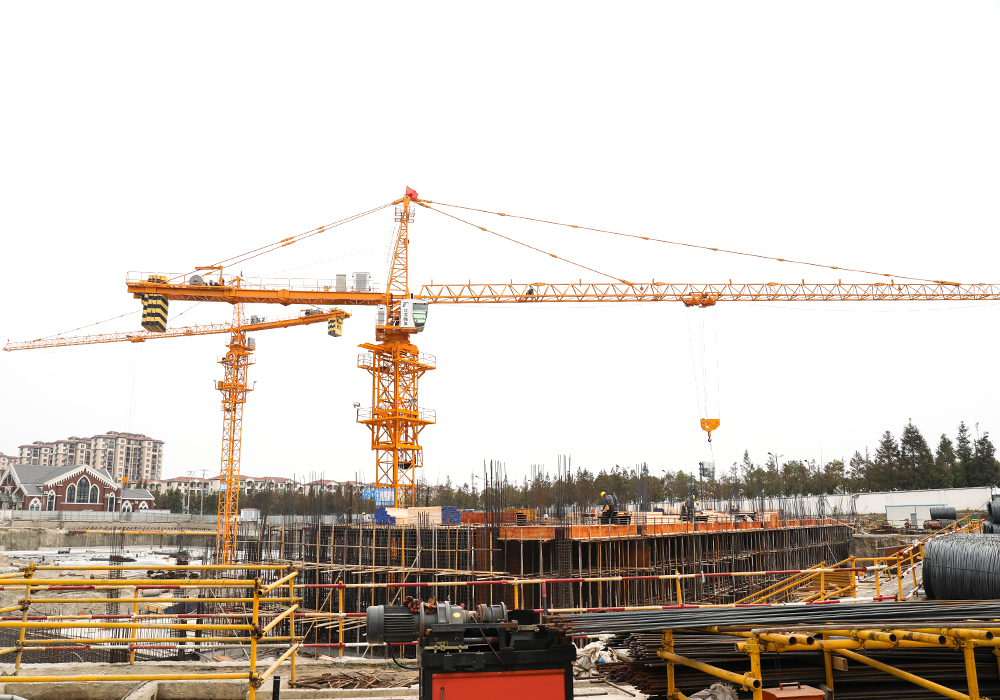
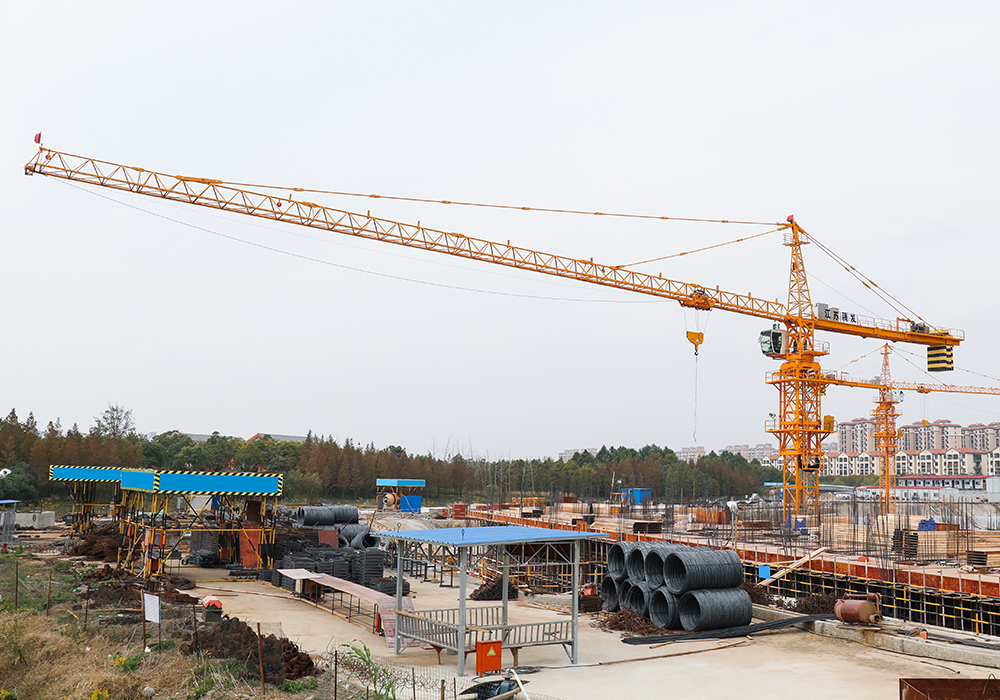
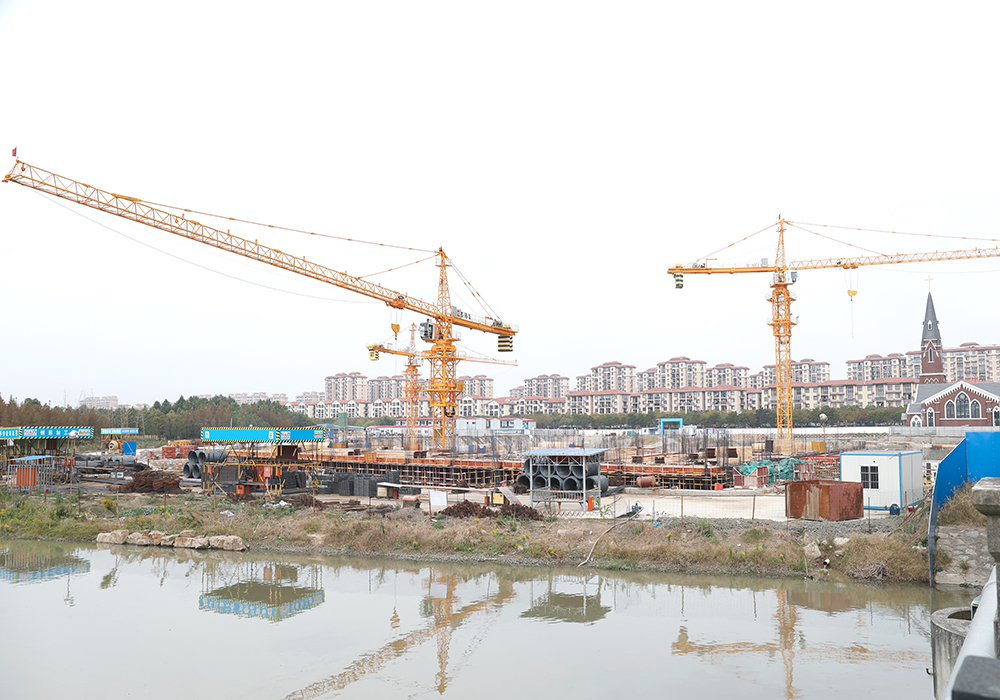
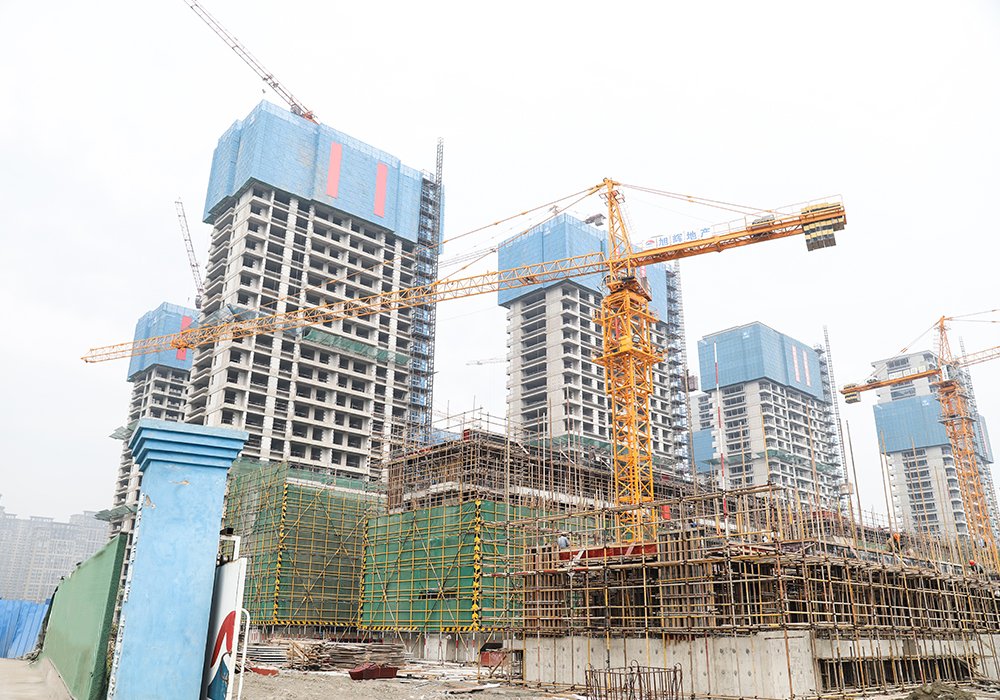
On any multi-crane job site, the choice between a flat-head and a topkit (hammerhead) tower crane can determine how safely and efficiently the project runs. With multiple tower cranes working in the same airspace, factors like jib clearance, climbing speed, anti-collision planning, and hook capacity become critical.
Manufacturers such as Jiangsu Tengfa Construction Machinery Co., Ltd. offer both flat-head tower cranes and topkit tower cranes, so the question is not about brand quality but about matching machine architecture to site constraints. This article provides a technical comparison to help project managers, equipment buyers, and rental companies decide which design performs better when several cranes are erected on one site.
Content
Understanding Flat-Head Tower Cranes
Flat-head tower cranes, also known as topless cranes, eliminate the traditional A-frame tower top and cathead. The jib is connected directly to the tower mast through a slewing unit, and the trolley travels along the underside of the jib to change radius.
- No tower top or pendants at the apex, which reduces the total height under hook significantly.
- Jib sections can be added or removed without flying a crane for tie ropes or pegs.
- Compact unitized mast sections are well suited for row-by-row installation on congested floors.
For multi-crane sites, the most valuable advantage is clearance. Because there is no top structure above the jib, multiple flat-head cranes can be positioned closer together horizontally, and their slewing radius can overlap with fewer collision risks during erection. The design also simplifies climbing with internal jacking frames, reducing the time needed to raise the crane as floors advance.
From an operational cost perspective, flat-top models often use standard components and shared mast sections, which eases spare-parts management. However, a flat-head crane may have a slightly lower maximum load at the jib tip compared with a topkit of the same nominal capacity, and the jib itself must be designed with extra rigidity to keep deflection safe.
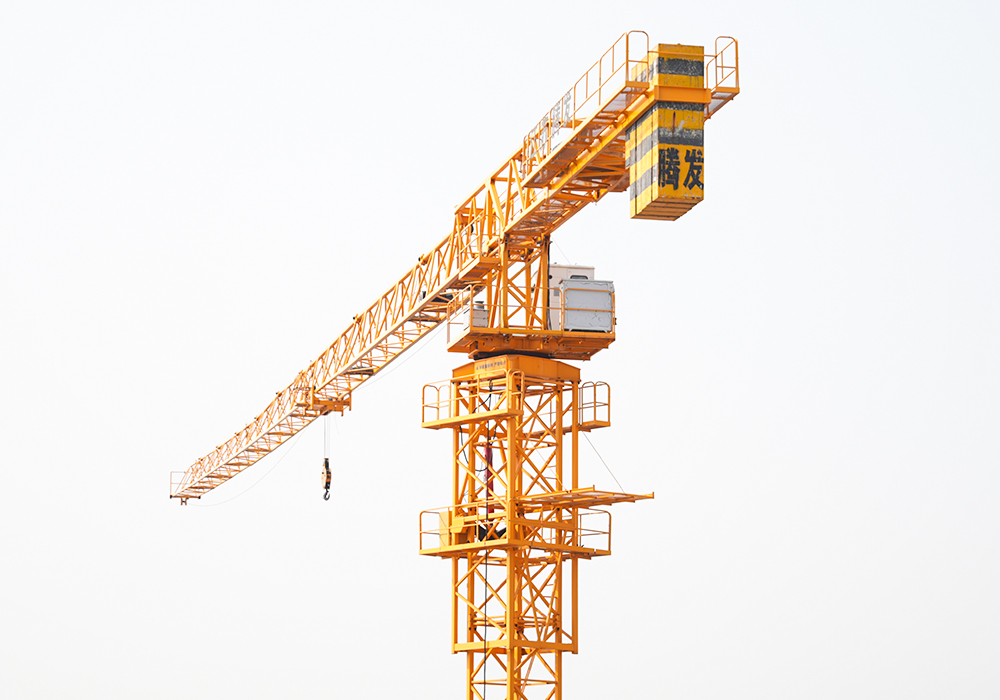 QTP125(6016) Flat Top Tower Crane, 8t Capacity, 60m JibReview this flat-top model if you need easier spare-parts management and simpler climbing in dense crane setups, while still offering 8 tons and a 60-meter reach for high-rise attached work.View Product →
Understanding Topkit Tower Cranes
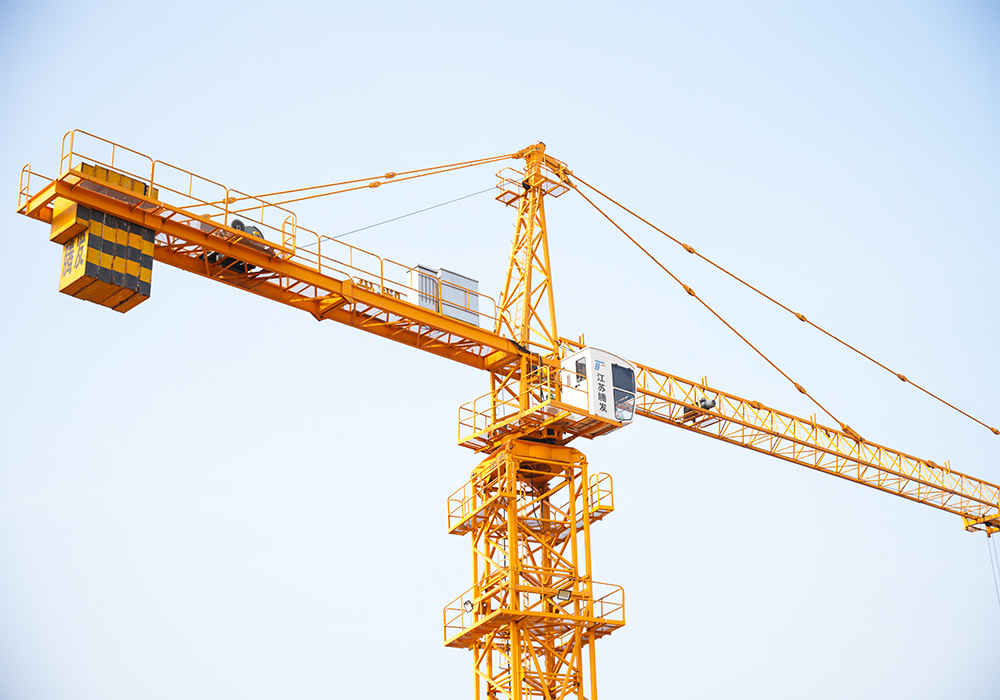
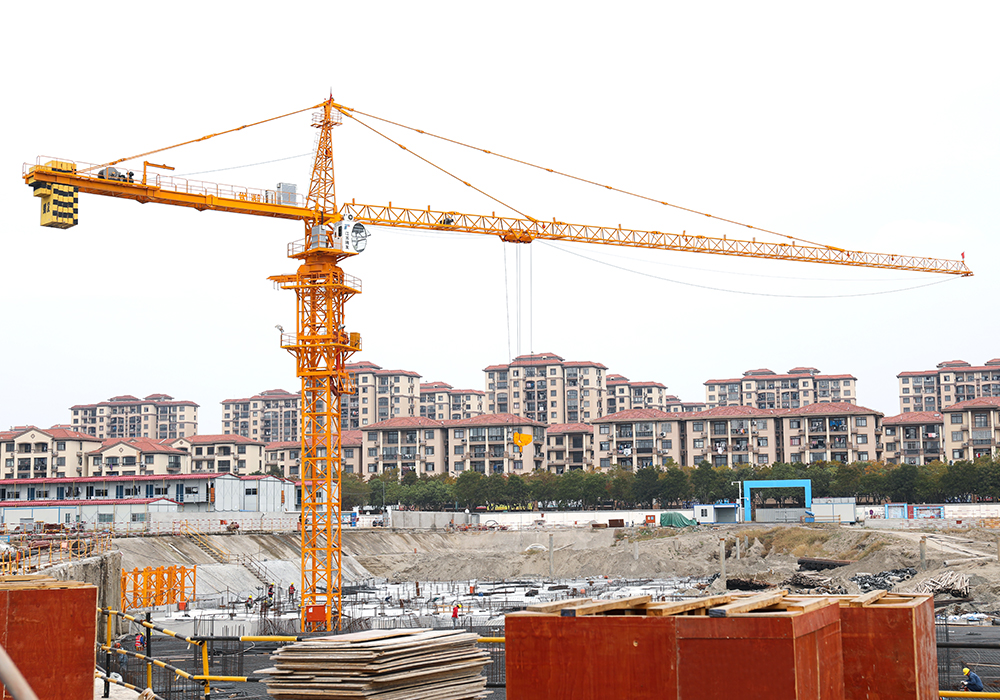
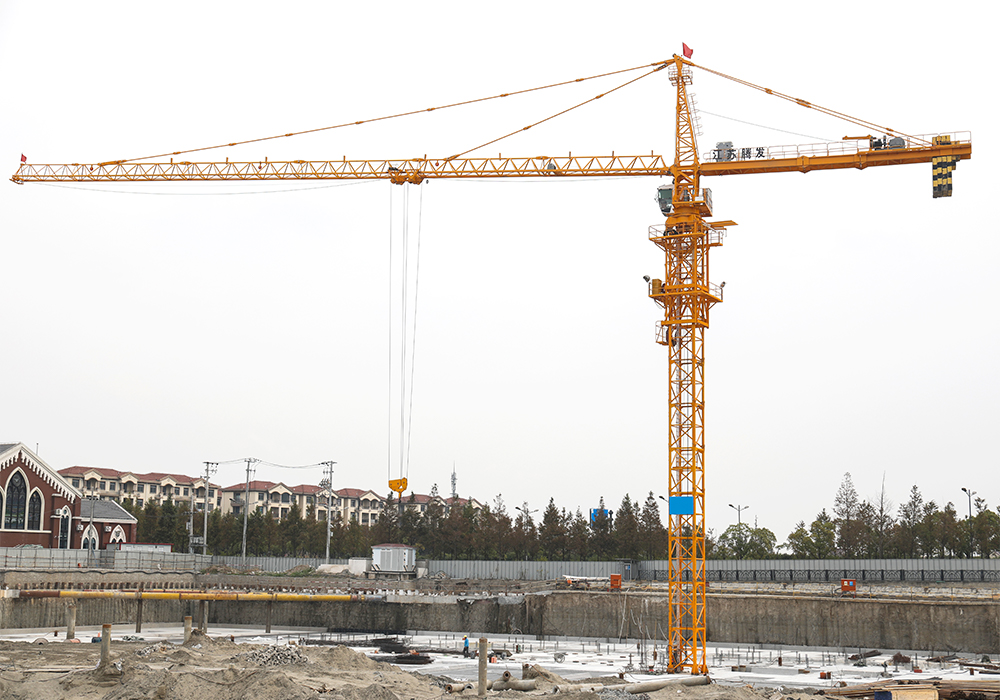
Topkit tower cranes preserve the classic tower-top design with a peak at the apex, a slewing unit, and a jib held by tie rods from the top. This configuration gives the jib a relatively stable support triangle and often permits larger lifting capacities near the jib tip.
On a multi-crane site, the topkit offers a proven load path and predictable deflection behavior. The tower-top frame also allows for a more rigid transfer of moment loads from the jib to the mast, which is why many heavy-lifting projects still specify topkit cranes.
- Higher jib stiffness at long radius makes it easier to place heavy precast elements.
- Traditional erection sequence is familiar to most erectors, reducing training requirements.
- The tower top creates a larger obstruction zone, so boom-to-boom clearance must be checked carefully on dense sites.
However, the topkit’s main challenge is the top structure itself. Installing and removing the tower top and tie bars takes extra crane time, and when nearby cranes need to pass above or below, the top section can become a physical obstruction. As the building rises, the entire topkit assembly must be climbed with the jacking frame, which is generally slower than a flat-head in dense multi-crane environments.
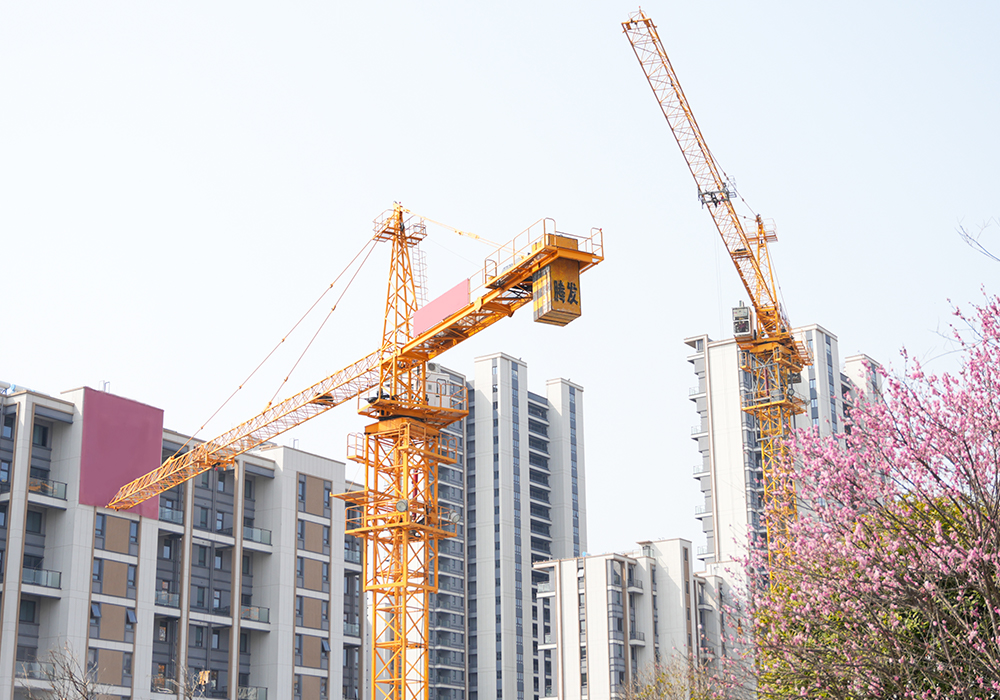 QTZ125(6015) Topkit Tower Crane, 10t Capacity, 60m JibThis topkit crane gives a 10-ton maximum lift at a 60-meter radius, making it a strong candidate when comparing topkit versus flat-top trade-offs for sites that prioritize tip load performance.View Product →
Flat-Head vs Topkit: Direct Comparison for Multi-Crane Sites
To decide between the two, it helps to see technical trade-offs side by side. The table below summarizes the main factors that affect multi-crane job sites.
| Factor | Flat-Head | Topkit |
|---|---|---|
| Top structure | None above jib | A-frame tower top with tie rods |
| Clearance under jib | Lower total height | Higher total height |
| Erection time | Faster, modular jib assembly | Slower due to top and ties |
| Climbing / jacking | Quick and straightforward | More steps, heavier top |
| Jib rigidity | Requires stronger jib section | Naturally stiffer at tip |
| Hook capacity at tip | Good, but often lower than topkit | Generally higher for same class |
| Anti-collision planning | Easier with tighter slewing zone | Needs extra clearance for top |
| Transport and storage | More compact components | Longer tie bars and top parts |
| Maintenance access | Simpler under-jib access | Climbing access to top needed |
| Typical best fit | Dense urban, multiple cranes | Open site, high single-crane output |
Beyond the table, three practical considerations matter most on multi-crane sites: clearance, climbing frequency, and load flexibility.
Clearance and Anti-Collision
When jibs overlap or project teams want to avoid tower-top interference, flat-head cranes win. Their lack of a tower top lowers the machine’s collision profile and lets adjacent cranes be placed at a smaller center-to-center distance without the top sections hitting each other. This is especially valuable in mixed-crane areas where a luffing jib must rotate inside a tight envelope.
Climbing and Dismantling
Multi-crane sites often climb several cranes in sequence. Flat-head cranes are quicker to climb because sections are added at the top of the mast without dismantling tie bars. Topkit cranes require the top assembly to be removed or re-pinned during each raise, increasing crane downtime. If your site schedule depends on rapid vertical progress, flat-head units reduce interruption time.
Load and Rigidity
Topkit cranes still hold an edge in raw tip capacity and structural stiffness. For projects that need frequent heavy lifts at long radius, a topkit may reduce the number of crane picks required. Yet modern flat-head designs are now engineered with reinforced jibs and optimized steel sections, narrowing the gap significantly.
For more project-specific detail, see our practical selection guide for topkit and flat-head cranes.
Which Is Better for Multi-Crane Job Sites?
The honest answer depends on site density, project schedule, and lifting profile. In urban redevelopment or tower clusters where five or more cranes operate in the same airspace, flat-head cranes usually offer a better safety margin and faster climbing. Their compact top profile aligns with anti-collision systems and reduces the risk of tower-to-tower contact during swing.
Rule of thumb: If your cranes must pass close to each other or you expect repeated climbing, choose flat-head. If your bottleneck is hook load at long radius, choose topkit.
Conversely, if the job site has generous open space and the priority is maximum single-crane productivity with heavy lifts at the end of the jib, a topkit crane may still be the right machine. Many contractors use a mixed fleet: topkit units for main towers and flat-head units for smaller or tighter locations.
Tengfa supports both strategies with a full line of flat-head tower cranes and topkit tower cranes, along with the spare parts needed to keep them operating. The decision should be based on a site-by-site layout study that includes jib length, radius coverage, crossing limits, and erection sequence.
How to Choose the Right Crane for Your Multi-Tower Project
Use the following checklist when comparing flat-head and topkit cranes for a multi-crane site:
- Count the number of tower cranes and their working radii; map all potential overlaps.
- Calculate the maximum lifting requirement at the farthest delivery point.
- Estimate how many times each crane will need to be climbed during the project.
- Check whether the tower top of a topkit can be kept below the neighboring crane’s minimum hook path.
- Compare erection and dismantling time, including tie-in operations on tall buildings.
- Evaluate transportation and on-site storage constraints for jib sections and tower-top parts.
If the layout is tight and several cranes must rise together, emphasize clearance and fast climbing. If the load chart at long radius is the deciding factor, consider the topkit’s structural advantages. In either case, work with a manufacturer that can provide detailed specifications and site support, not just a machine price.
Frequently Asked Questions
Q1: Are flat-head tower cranes always safer than topkit cranes on multi-crane sites?
No. Safety depends on layout, anti-collision devices, operator skill, and maintenance. Flat-head cranes are often easier to position because they have no tower top, but topkit cranes are equally safe when clearances are properly planned.
Q2: Can a topkit crane be converted to a flat-head crane later?
Some manufacturers share mast and slewing components between the two designs, but the jib, tie system, and structural sections are different. In practice, a tower crane is selected as either flat-head or topkit and should not be converted on site.
Q3: Which crane type is better for renting out to contractors?
Rental fleets often prefer flat-head cranes because they adapt easily to confined urban sites and offer faster installation and dismantling cycles. However, rental companies also stock topkit units for contractors who request familiar traditional machines or need higher tip capacity.
Q4: How does the choice affect shipping and container loading?
Flat-head jib sections and mast sections are generally easier to package in standard containers. Topkit tie rods and the tower-top assembly require longer or open-top transport, which can add logistics cost.
Choosing between flat-head and topkit tower cranes for a multi-crane job site is ultimately a question of site geometry, lifting demand, and schedule. Flat-head cranes tend to excel in dense environments where clearance and rapid climbing are at a premium, while topkit cranes provide time-tested rigidity and strong tip loads for open projects. By evaluating your crane layout against these factors, you can select a fleet that keeps the project moving safely and productively.
Contact Tengfa today for model specifications, load charts, and a tailored recommendation for your next multi-crane project.