

 English
 русский
 Español
 中文简体
中文简体
Luffing jib tower cranes are popular on high-rise and congested projects because they combine compactness with excellent wind resistance. But what is a luffing jib tower crane, and how does it handle high-wind conditions? This article explains the design, operating principles, wind-resistance mechanisms, and selection factors for this important type of crane.
Content
What Is a Luffing Jib Tower Crane?
A luffing jib tower crane is a tower crane with a jib that can be pivoted upward or downward. Instead of moving a trolley along a horizontal boom, the crane changes its working radius by changing the angle of the entire jib. Luffing simply means raising or lowering the boom angle, so the hook can be brought closer to the mast or moved farther out.
This design is ideal for sites where space is tight. When the jib is raised, the crane occupies a smaller slewing envelope; when it is lowered, the operator can reach a greater radius. The ability to change the jib angle also allows the load to be landed close to the mast, which is useful when lifting around obstacles or over the top of a building.
How the Crane Changes Its Reach
The luffing mechanism consists of a dedicated winch, wire ropes, and a sheave system at the top of the mast. The winch pulls the jib up or lets it down under control. When the winch shortens the rope system, the jib pivots upward and the minimum radius is reduced. When the winch plays out rope, the jib lowers and the radius increases.
This movement is different from a flat-top or hammerhead crane, where the trolley, not the boom, changes the radius. For contractors who need to clear adjacent buildings, the luffing jib tower crane provides a useful degree of geometric flexibility. For example, Jiangsu Tengfa Construction Machinery's QTD80 luffing jib tower crane has a maximum lifting capacity of 6 tonnes and a 40 m jib, making it a compact and controllable option for constrained projects.
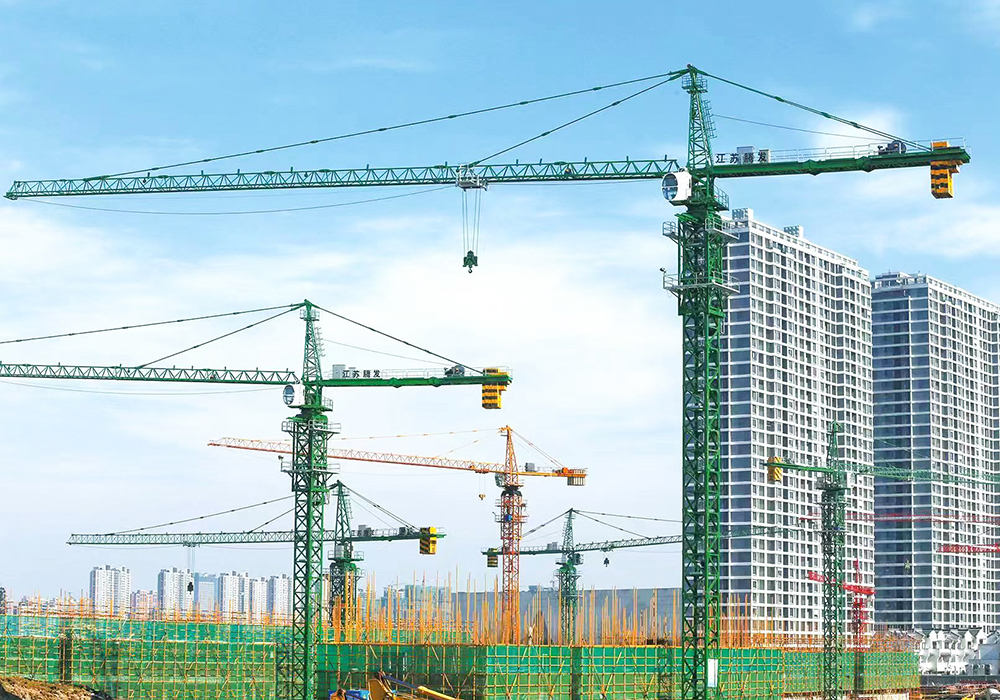 QTD80 Luffing-Jib Tower Crane with 6t Capacity and 40m JibThis compact luffing-jib crane offers 6 tonnes capacity and a 40 m jib, making it suitable for constrained sites. Its adjustable jib angle helps reduce wind exposure and overturning moment, addressing the tower crane wind risk discussed here.View Product →
How Does a Luffing Jib Tower Crane Handle High-Wind Conditions?
High wind is one of the greatest risks for tower cranes. The luffing jib crane has a key advantage: it can reduce wind exposure by changing the jib angle. When wind speed rises, the operator luffs the jib to a steeper angle. This lowers the projected area of the jib and shortens the horizontal lever arm of the load and jib structure relative to the mast. The result is a lower overturning moment from the load and a smaller wind-pressure surface, which reduces stress on the mast and foundation compared with a horizontal jib left at full reach.
Another important behavior is the out-of-service stow position. In high winds, the crane can be placed in a protected configuration by raising the jib to its maximum angle, raising the hook block, and securing the load. Some models permit the slewing brake to be released so the crane can rotate partially and align with the incoming wind, similar to a weathervane. This reduces the peak force acting on the structure. Always follow the manufacturer's instructions for the specific crane model.
In a luffing jib crane, the jib angle is the most effective variable for reducing wind-induced loads.
Working and Out-of-Service Wind Speeds
Each crane has wind-speed limits for normal operation and for storm conditions. The values depend on the crane model, mast height, tie-in arrangement, and ballast. The table below shows typical reference levels used on construction sites.
| Operating State | Typical Wind Speed Limit | Recommended Action |
|---|---|---|
| Normal lifting | Up to 20 m/s (72 km/h) | Follow load chart and monitor the wind meter |
| High-wind warning | Above 20 m/s (72 km/h) | Stop lifting, secure the hook, and luff the jib |
| Storm / out of service | Above 42 m/s (151 km/h) | Place crane in stowed position and follow site storm plan |
These numbers are typical, not universal. Site engineers must refer to the crane manufacturer's approved load charts and wind-speed documentation for the exact limits.
Why the Luffing Jib Performs Well in Windy Conditions
A horizontal jib acts like a long sail, creating a large force at the end of a long lever arm. By raising the jib, a luffing tower crane shortens that arm and lowers the total wind load. This makes the crane more stable during gusts and reduces the load transferred to the foundation or building ties.
The design also helps during moderate wind. The operator can adjust the jib angle to reduce load swing, approach the landing zone at a better angle, and keep the jib clear of nearby structures when the crane is idle. For high-rise and coastal projects, this combination of structural and operational benefits makes the luffing jib type a dependable choice. Jiangsu Tengfa's QTD125 luffing jib tower crane, for example, provides 8 tonnes of lifting capacity with a 45 m jib, offering a balanced profile for demanding windy sites.
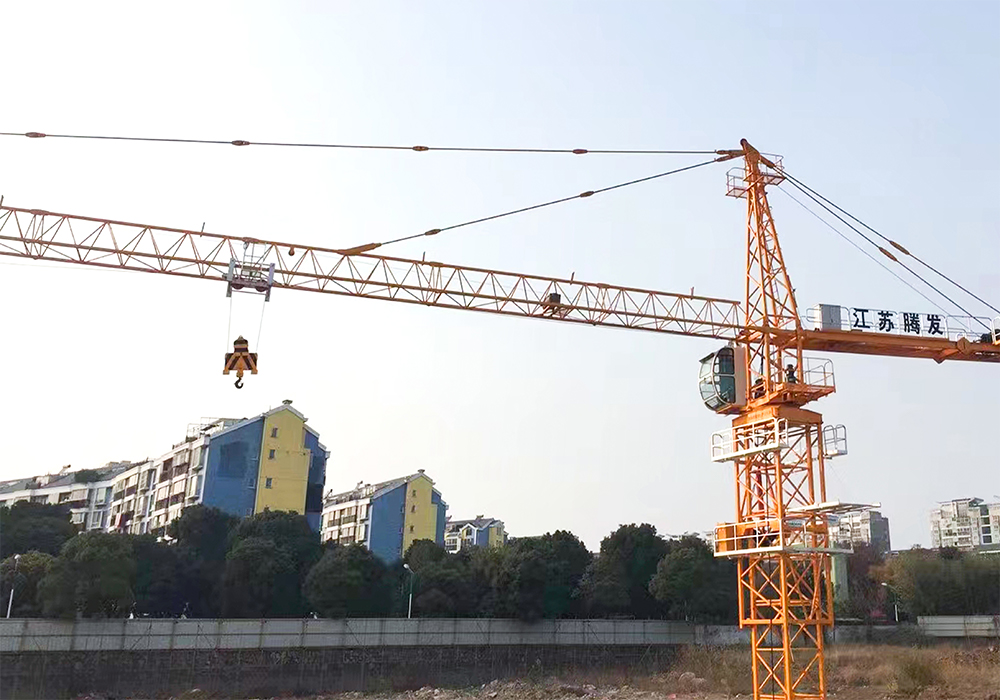 QTD125 Luffing-Jib Tower Crane with 8t Capacity and 45m JibWith 8 tonnes capacity and a 45 m jib, this model balances lifting power and wind resilience. Its luffing jib can be angled to lower wind loads and load swing, ideal for high-rise and coastal projects demanding dependable performance.View Product →
Design and Manufacturing Features That Support Wind Resistance
Geometry alone does not make a crane wind-resistant. The structural design and manufacturing quality must allow the mast, jib, slewing ring, and foundation to handle high loads without excessive deflection or fatigue. The following features deserve close attention:
- High-strength steel: The main structural members need controlled toughness and reliable weldability so they can absorb repeated wind loads without cracking.
- Precise luffing winch: The winch and brake system must hold the jib firmly at the selected angle, even when gusts change the load on the boom.
- Complete safety equipment: Wind speed sensors, load moment limiters, overspeed protection, and slewing limiters help the operator avoid dangerous conditions.
- Surface protection: Durable paint or zinc coating extends the life of the steel in humid and salt-laden air.
Manufacturing quality is just as important as the design. Jiangsu Tengfa Construction Machinery Co., Ltd. is a national high-tech enterprise with an A-class special equipment manufacturing license. The factory uses automatic welding robots, CNC machining centers, and automatic spraying lines to ensure consistent structural joints and surface protection. With an ISO9001 quality management system and strict raw-material control, the company aims to deliver luffing jib tower cranes that perform predictably in severe wind conditions.
Choosing a Luffing Jib Tower Crane for High-Wind Projects
When selecting a luffing jib crane, site-specific wind conditions must guide the decision. A larger capacity is not always the best answer; the crane must also be able to stow safely in the strongest wind expected on the site.
Evaluate the Site Wind Environment
Look at local wind records, building height, and surrounding terrain. Taller towers usually require tie-in levels at certain heights to limit mast deflection and allow the luffing jib to be stowed without excessive vibration.
Check the Stowed Wind Speed Rating
Manufacturers publish a maximum out-of-service wind speed for each crane configuration. This rating accounts for jib angle, ballast, tie-ins, and brake status. Compare this value with the regional storm wind speed before final selection.
Review the Safety and Control System
A modern luffing jib tower crane should include a wind-speed indicator, load moment limiter, anti-collision support, and emergency operational features. Reliable documentation and a responsive supplier also reduce risk during commissioning and operation.
Jiangsu Tengfa offers a range of luffing jib tower cranes, from the compact QTD80 to the larger QTD160. For projects that need more lifting power, the QTD160 luffing jib crane provides 10 tonnes of capacity with a 50 m jib while still allowing the operator to reduce the wind profile by luffing the boom upward. To understand the full specification and safety considerations, read our luffing jib tower crane specifications, selection, and safety guide.
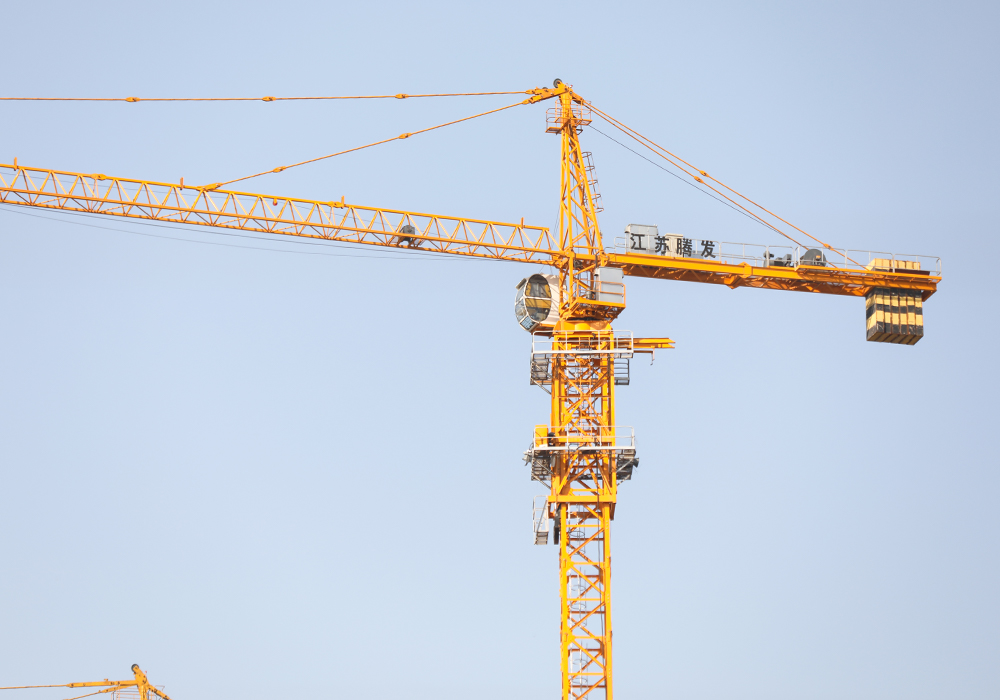 QTD160 Luffing-Jib Crane with 10t Capacity and 50m JibProviding 10 tonnes capacity and a 50 m jib, this larger luffing-jib crane handles heavy lifting while its adjustable boom helps reduce wind profile. After reviewing wind speed limits, this model offers the power needed for demanding sites.View Product →
Frequently Asked Questions About Luffing Jib Tower Cranes
Q1: Can a luffing jib tower crane work during strong winds?
No. Every crane has a maximum working wind speed, typically around 20 m/s for many models. Once the wind exceeds this limit, lifting must stop and the crane should be configured for out-of-service conditions.
Q2: Does raising the jib really reduce wind load?
Yes. Raising the jib reduces the projected area exposed to the wind and moves the center of wind pressure closer to the mast. This lowers the overturning moment and improves stability.
Q3: How is a luffing jib crane different from a horizontal jib crane in high wind?
A horizontal jib crane keeps a long boom exposed to the wind, while a luffing jib crane can raise its boom to a steep angle. This geometric difference is the main reason luffing jib cranes are preferred for windy and confined sites.
Final Thoughts
A luffing jib tower crane is a valuable machine for projects where space is limited and wind conditions are challenging. Its ability to change the jib angle gives operators a direct way to reduce wind loads, protect the crane during storms, and operate safely in dense urban environments. By combining careful site analysis, the right model, and a reliable manufacturer, contractors can harness these advantages with confidence.