

 English
 русский
 Español
 中文简体
中文简体

Content
Construction Tower Crane Types
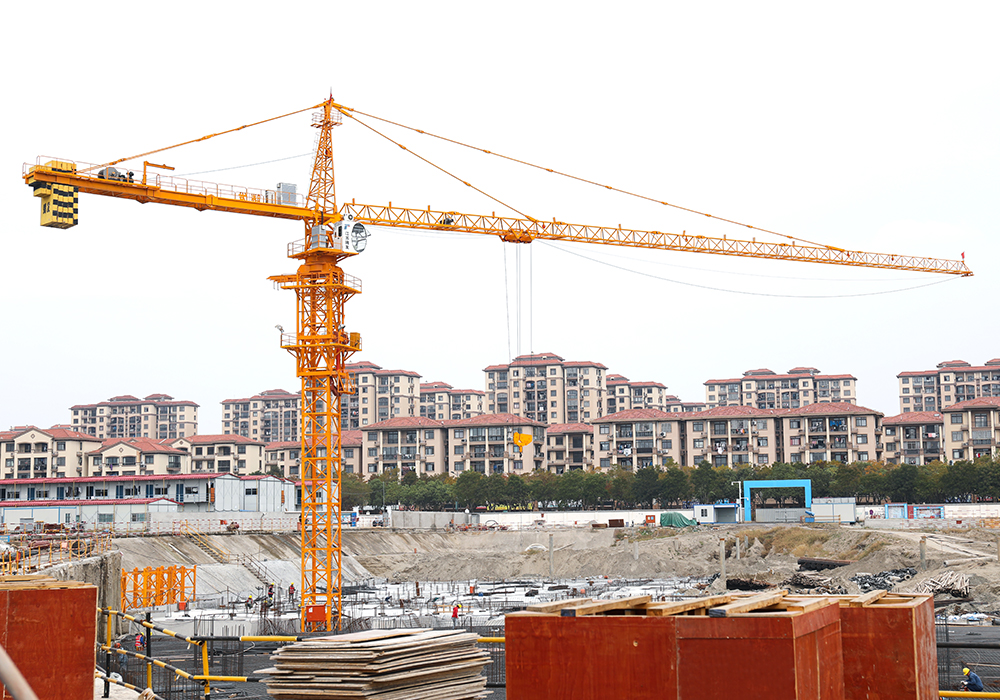
Tower cranes used in construction fall into several main categories, distinguished primarily by their base configuration and how they're mounted or supported on the job site. The main types include free-standing, tied-in (attached to the building), climbing (moving up inside the building as it rises), and rail-mounted cranes, each suited to different building heights, site constraints, and project sequencing needs.
| Type | Configuration |
|---|---|
| Free-standing tower crane | Anchored to a fixed base, unsupported by the building, used for lower-to-mid height projects |
| Tied-in tower crane | Anchored to the base plus secured to the building structure at intervals as it rises, for taller buildings |
| Climbing tower crane | Positioned inside the building core, climbing upward internally as construction progresses |
| Rail-mounted (travelling) tower crane | Mounted on rails, allowing horizontal movement along a fixed track across a large site |
| Self-erecting tower crane | Compact design that erects itself without external assist cranes, used on smaller sites |
Tower Crane Working Principle
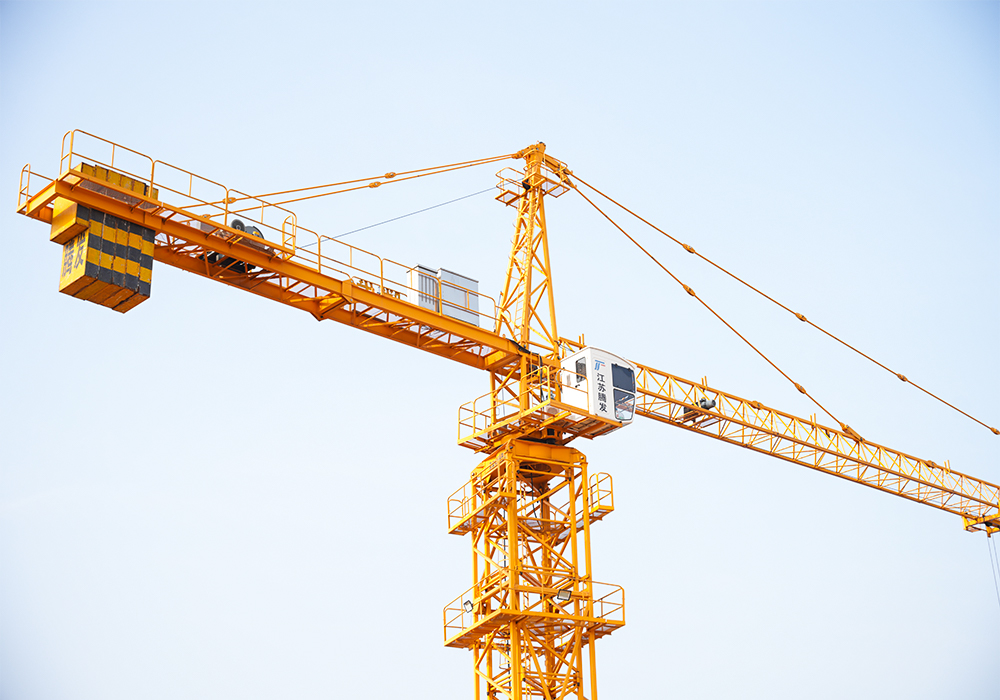
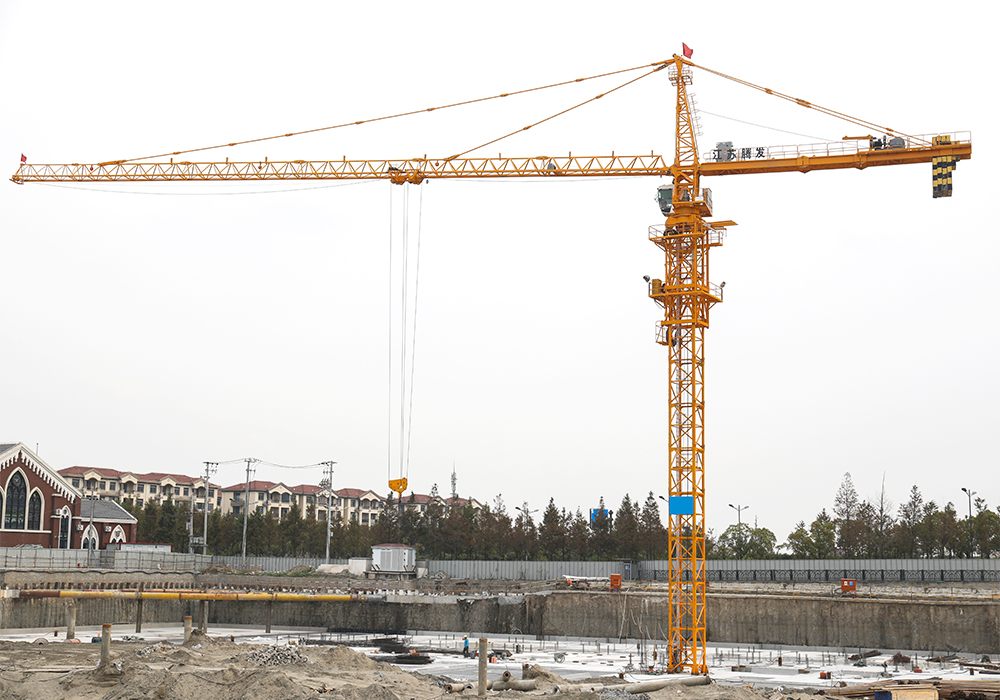
A tower crane operates on straightforward mechanical principles applied at a large scale: a vertical mast provides height and structural support, a horizontal jib provides reach, and a counter-jib with counterweights balances the load being lifted on the working side. The trolley runs along the jib to adjust the load's radius from the mast, while the hoist mechanism raises and lowers the load itself using a wire rope and hook block system.
Balance is the core principle
The crane's stability depends on the counterweight system on the counter-jib balancing the moment created by the load on the working jib — this balance, combined with the mast's own structural integrity, is what allows a tower crane to lift heavy loads safely at significant height and horizontal distance.
The entire upper assembly — jib, counter-jib, and operator cab — rotates around the mast via a slewing mechanism, allowing the crane to position loads anywhere within its circular working radius without needing to relocate the crane base itself.
How a Tower Crane Works: Key Systems
- Hoisting mechanism: raises and lowers the load via wire rope, controlled from the operator cab
- Slewing mechanism: rotates the entire jib assembly around the mast to position loads at different angles
- Trolleying mechanism: moves the trolley along the jib to adjust the load's horizontal distance from the mast
- Climbing mechanism (for climbing cranes): raises the crane's own mast sections as the building height increases
Tower Crane Structure and Components
| Component | Function |
|---|---|
| Base/foundation | Anchors the crane and transfers all loads to the ground |
| Mast (tower) | Vertical structural section providing crane height |
| Slewing unit | Rotating mechanism connecting the mast to the upper assembly |
| Jib (working jib) | Horizontal arm carrying the trolley and load |
| Counter-jib | Shorter opposite arm holding counterweights and machinery |
| Counterweights | Balance the load moment on the working jib side |
| Operator cab | Control station where the operator runs all crane functions |
| Hook block | Attaches the load to the hoist wire rope |
How Tower Cranes Are Installed and Operated
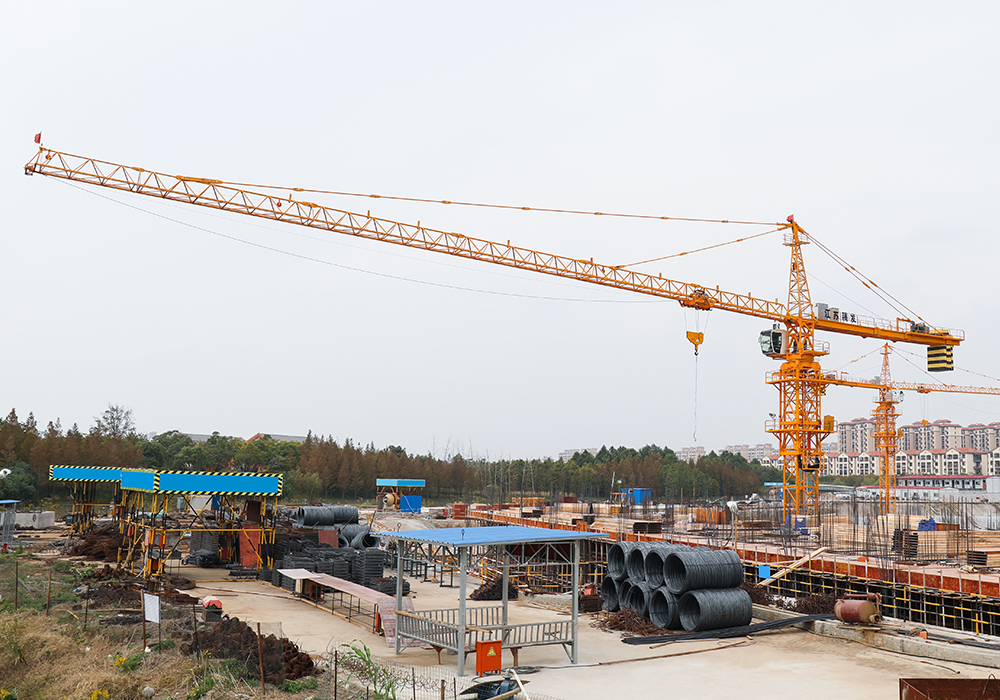
Installation begins with a reinforced concrete foundation designed to handle the crane's full base loading, sized according to the specific crane model's weight and maximum load moment. The crane is then erected in stages, typically using a mobile crane to lift and assemble the base, initial mast sections, and slewing unit, followed by the jib and counter-jib assembly and counterweight installation.
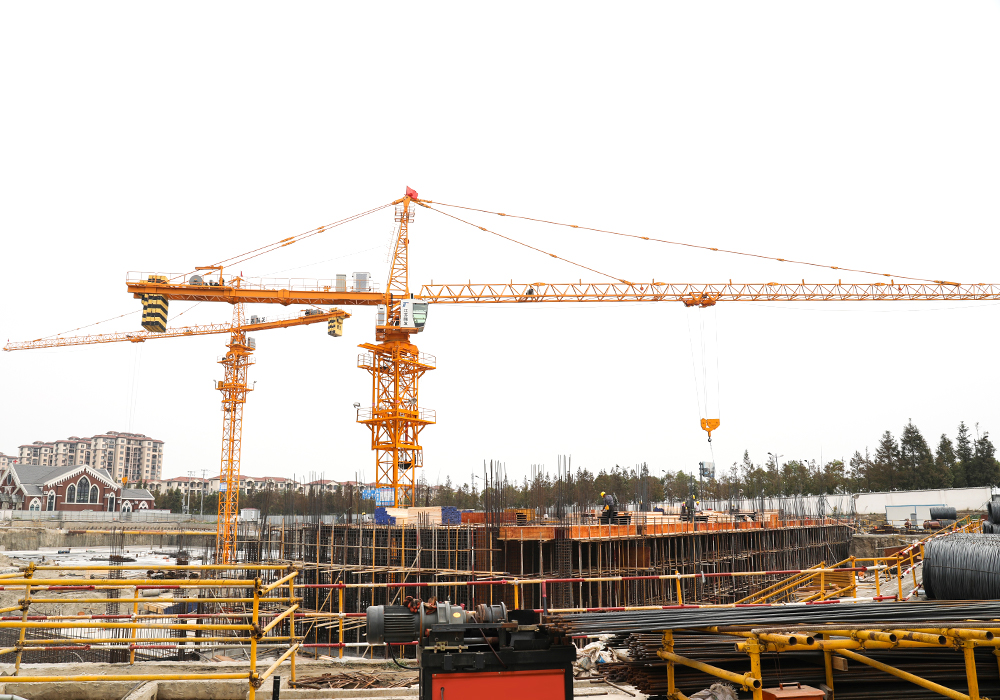
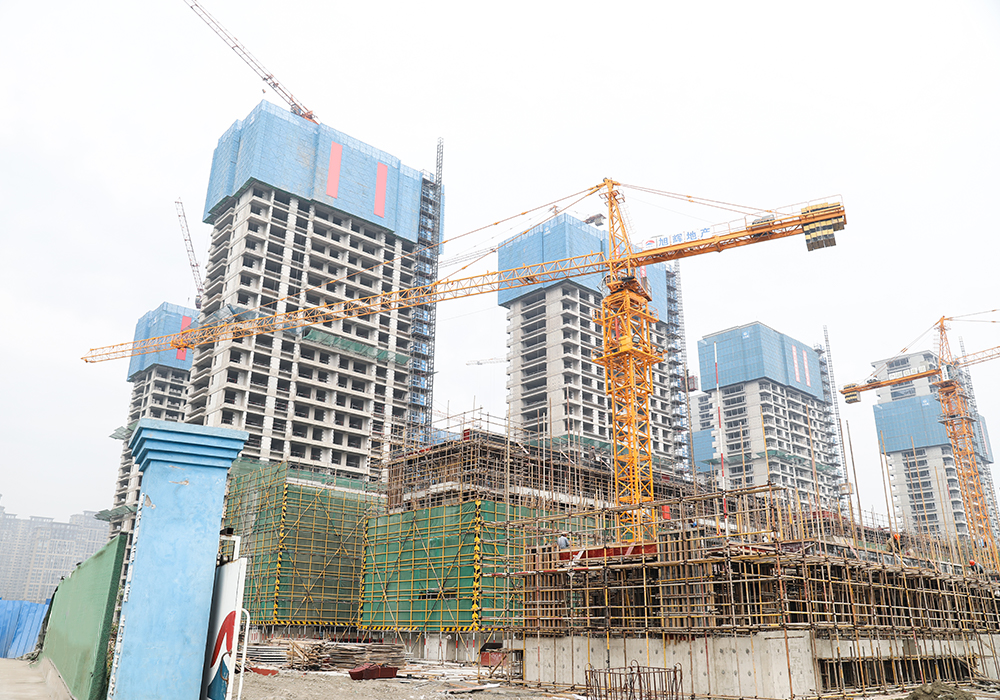
For tall buildings, additional mast sections are added progressively as construction height increases — either by tying the crane into the building structure at intervals (tied-in configuration) or by using an internal climbing mechanism that raises the crane within the building core itself. Operation requires a certified operator working from the cab at height, often coordinated with ground-based signal personnel or radio communication to safely position loads that the operator may not have a direct line of sight to.
Tower Crane Applications in Construction
- High-rise residential and commercial building construction
- Bridge construction and heavy infrastructure projects
- Industrial plant construction requiring heavy component lifts at height
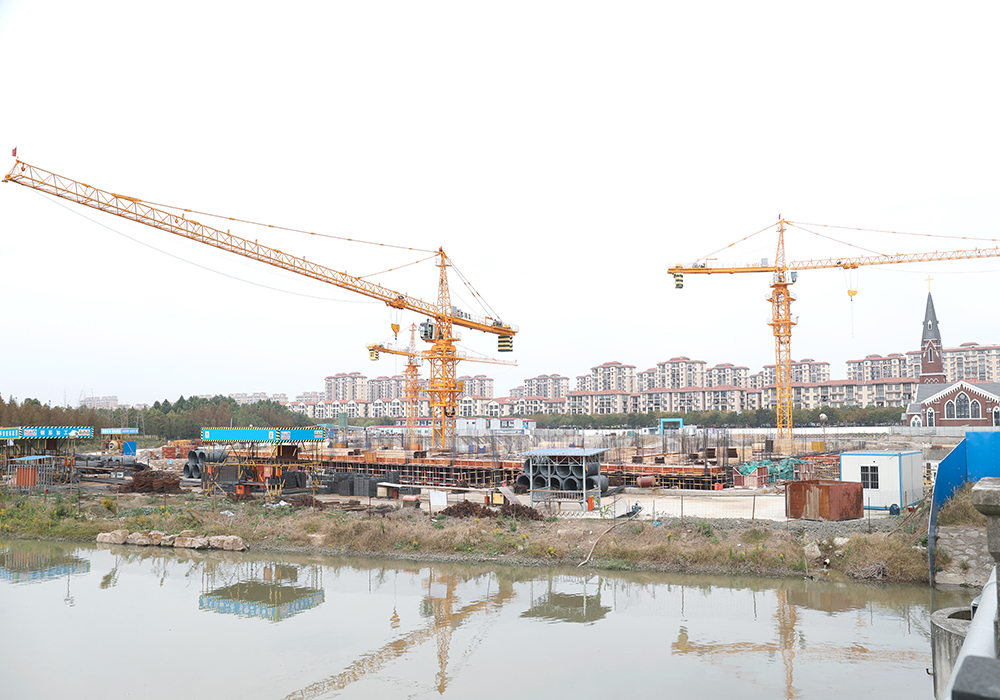
- Large-scale mixed-use and mid-rise developments where reach and lifting capacity outweigh mobile crane limitations
Tower Crane Lifting Capacity
Tower crane lifting capacity isn't a single fixed number — it varies based on the load's horizontal distance (radius) from the mast, following an inverse relationship where maximum lifting capacity occurs at minimum radius, and capacity decreases progressively as radius increases. This relationship exists because of the increasing moment (rotational force) the load places on the crane structure as it moves further from the mast, even though the load's actual weight hasn't changed.
Manufacturers publish load charts specific to each crane model and jib configuration, showing maximum permissible load at each radius increment — operators and site planners reference these charts continuously to confirm a specific lift is within the crane's safe capacity at the required distance, rather than relying on a single generalized capacity figure for the crane as a whole.
Tower Crane vs Mobile Crane
| Factor | Tower Crane | Mobile Crane |
|---|---|---|
| Height capability | Very high, suited to high-rise construction | Limited by boom length, generally lower maximum height |
| Mobility | Fixed in place once erected | Can relocate around the site or between job sites |
| Setup time | Longer, requires foundation and multi-stage erection | Faster, generally ready to work shortly after arrival |
| Lifting capacity over the full project duration | Consistent, dedicated to the site for the project's duration | Often deployed for specific heavy lifts rather than continuous use |
| Best suited for | High-rise, long-duration projects with sustained lifting needs | Shorter-duration projects, lower-height builds, or supplemental heavy lifts |
Many large construction projects use both crane types together — a tower crane handling continuous material and formwork lifting throughout the build, supplemented by a mobile crane for specific heavy or oversized lifts, such as setting large precast elements or mechanical equipment, that fall outside the tower crane's most efficient operating range.