

 English
 русский
 Español
 中文简体
中文简体
Content
- 1 How to Choose a Tower Crane
- 2 Tower Crane Selection Guide: Step by Step
- 3 Factors to Consider When Choosing a Tower Crane
- 4 Tower Crane Capacity Selection
- 5 Tower Crane Height and Lifting Requirements
- 6 Tower Crane Specifications Explained
- 7 Tower Cranes for High-Rise Construction
- 8 Tower Crane Rental vs Purchase
- 9 Tower Crane Safety Requirements
How to Choose a Tower Crane
Choosing the right tower crane starts with three core requirements: maximum lifting height, required load capacity at the furthest working radius, and site space constraints for both the crane's footprint and its erection/dismantling process. Getting these fundamentals right before considering other factors like crane type or rental terms avoids the costly problem of specifying a crane that can't actually complete the project's heaviest or furthest lifts.
Beyond these core requirements, site logistics play a significant role in the final decision — access for the assist crane needed during erection, proximity to neighboring structures that might restrict the crane's swing radius, and any local regulations around crane operation near property lines or public roadways all factor into which crane type and specific model actually fit the project.
Tower Crane Selection Guide: Step by Step
- Determine required lifting height based on the tallest point of the finished structure plus clearance for the crane itself
- Identify maximum load weight and the radius at which it needs to be lifted, since these two figures together determine minimum required capacity
- Assess site space for the crane's base footprint, swing radius, and the access needed for erection and dismantling equipment
- Select crane type — free-standing, tied-in, climbing, or self-erecting — based on building height and site constraints
- Confirm foundation requirements can be met at the planned crane location given local soil conditions
- Evaluate rental vs purchase based on project duration and whether future projects would benefit from crane ownership
Factors to Consider When Choosing a Tower Crane
| Factor | Why It Matters |
|---|---|
| Maximum hook height | Must exceed the building's final height with adequate clearance |
| Load chart capacity | Must cover the heaviest anticipated lift at its required radius |
| Jib length | Must reach all areas of the site requiring material or equipment placement |
| Site footprint and access | Determines feasible crane type and erection method |
| Foundation/soil conditions | Affects foundation design and, in some cases, crane type feasibility |
| Project duration | Influences the rental vs purchase decision and crane type selection |
Tower Crane Capacity Selection
Capacity selection requires working backward from the project's heaviest anticipated lift and the radius at which it needs to occur — not simply picking a crane with a high maximum capacity rating, since that maximum typically only applies at the crane's minimum radius, close to the mast. Reviewing the full load chart for a candidate crane, rather than just its headline maximum capacity figure, is essential to confirm it can actually handle the specific combination of weight and distance the project requires.
It's also worth building in margin beyond the single heaviest planned lift, since construction sequencing sometimes shifts and unplanned heavy lifts can arise — selecting a crane with capacity precisely matched to only the known heaviest lift leaves no flexibility if project requirements change during construction.
Tower Crane Height and Lifting Requirements
Height requirements go beyond simply matching the building's final height — the crane's hook needs enough clearance above the tallest point being constructed to maneuver materials and equipment into place, which typically adds a meaningful margin above the raw building height figure. For very tall buildings, the crane's own mast height (independent freestanding height) may not reach the required elevation, requiring either a tied-in configuration secured to the building structure at intervals, or a climbing crane that rises within the building core as construction progresses.
Tower Crane Specifications Explained
- Maximum freestanding height: the tallest the crane can operate without additional building support
- Maximum jib length: determines the crane's working radius and site coverage
- Maximum load capacity: the heaviest load the crane can lift at minimum radius
- Load chart (capacity by radius): shows exactly how much the crane can lift at each specific working radius
- Slewing speed: how quickly the jib assembly rotates, affecting overall lifting cycle efficiency
- Hoisting speed: how quickly the hook raises and lowers loads, also affecting cycle time
Tower Cranes for High-Rise Construction
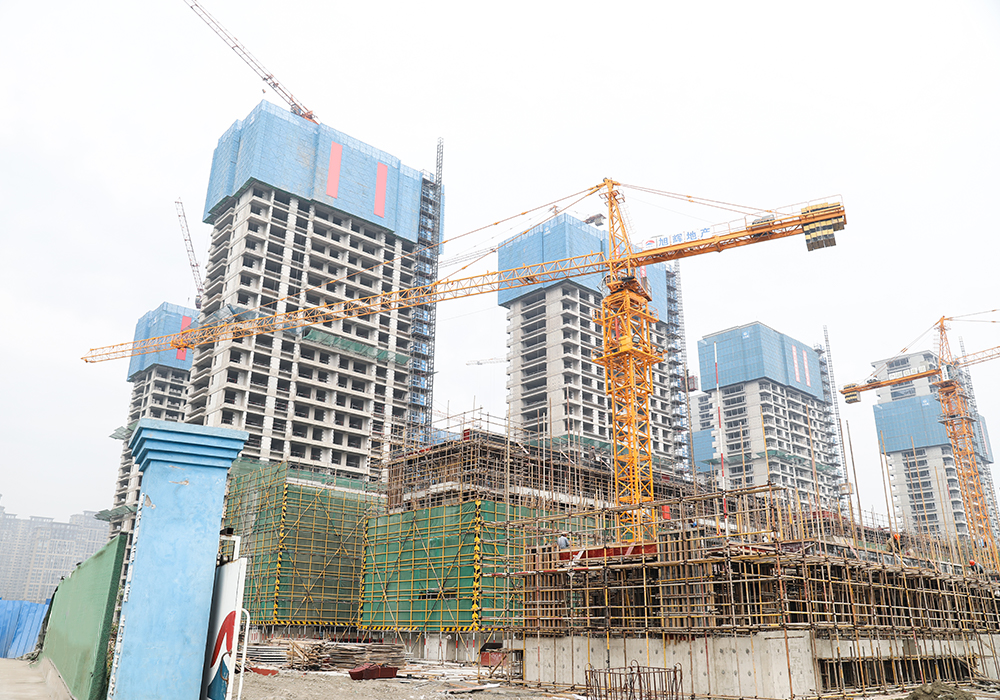
High-rise projects place the greatest demands on tower crane selection, since the combination of extreme height, long project duration, and the need for sustained, high-frequency lifting throughout construction rules out several lower-capacity or lower-height crane options outright. Climbing or tied-in tower cranes are typically the standard choice for high-rise construction, since freestanding height alone usually can't reach the full height of a genuinely tall building without additional structural support from the building itself.
High-rise projects also typically require more careful planning around crane removal at project completion, since a climbing or tied-in crane installed early in a very tall building's construction needs a planned dismantling sequence — sometimes requiring a second, smaller crane, or a specialized dismantling procedure — that should be considered during initial crane selection, not left as an afterthought.
Tower Crane Rental vs Purchase
| Factor | Rental | Purchase |
|---|---|---|
| Upfront cost | Lower, spread across the rental term | Higher, significant capital investment |
| Best suited for | Single projects or infrequent crane needs | Contractors with ongoing, continuous crane utilization |
| Maintenance responsibility | Often handled or supported by the rental company | Falls entirely on the owner |
| Flexibility | Can select different crane models for different projects | Fixed to the owned crane's specifications across projects |
The decision typically comes down to utilization: contractors with a steady pipeline of projects needing similar crane specifications can often justify ownership through reduced long-term cost per project, while contractors with occasional or highly variable crane needs generally find rental more practical, both financially and in terms of matching crane specifications precisely to each individual project's requirements.
Tower Crane Safety Requirements
Tower crane safety spans equipment condition, operational procedures, and personnel qualification, all of which need to be addressed together rather than treating any single factor as sufficient on its own. Regular inspection and maintenance of structural components, wire ropes, and mechanical systems is essential, since a tower crane operates continuously under significant structural stress over long project durations, making wear and fatigue a genuine ongoing concern rather than a one-time installation consideration.
- Certified, trained operators with specific qualification for the crane type and model in use
- Regular structural and mechanical inspections throughout the crane's time on-site, not just at initial erection
- Wind speed monitoring and defined operational limits, since high winds significantly affect crane stability and load control
- Clear load chart compliance, ensuring lifts never exceed the crane's rated capacity at the working radius in use
- Defined communication protocols between operator and ground signal personnel for loads outside direct operator visibility
- Compliance with local regulatory requirements for crane erection, operation, and dismantling procedures