

 English
 русский
 Español
 中文简体
中文简体
Content
- 1 Tower Crane Erection and Dismantling Process
- 2 Tower Crane vs Mobile Crane: Which One Fits the Job
- 3 Hammerhead Tower Crane: Features and Applications
- 4 Luffing Jib Tower Cranes for Urban Construction
- 5 Self-Erecting Tower Cranes: Advantages and Uses
- 6 Tower Crane Lifting Capacity and Working Range
- 7 Tower Crane Safety Requirements and Precautions
- 8 Tower Cranes in High-Rise Building Construction
- 9 How to Select the Right Tower Crane for a Project
Tower Crane Erection and Dismantling Process
A tower crane goes up in stages, not all at once. The base section is anchored first, either bolted to a concrete foundation or mounted on a travelling chassis, and the mast climbs in short sections from there using a climbing frame or an external climbing collar depending on the building height.
Typical Erection Sequence
- Foundation preparation and base section installation
- Mast section stacking to the initial free-standing height
- Slewing unit, cab, and counter-jib assembly
- Jib assembly and counterweight balancing
- Progressive mast climbing as the structure rises, with tie-ins to the building where required
Dismantling reverses this sequence, but it is often the more delicate operation because it usually happens in a tighter, more built-up site with less room for a mobile crane to assist. Sequencing errors during dismantling are a leading cause of tower crane incidents, which is why most jurisdictions require a written method statement and a licensed supervisor to sign off on every stage before work proceeds.
Tower Crane vs Mobile Crane: Which One Fits the Job
The choice usually comes down to project duration, site footprint, and how high the lifts need to go. A tower crane is a fixed installation that stays on site for the length of the project, while a mobile crane drives in, performs a set of lifts, and drives out.
| Factor | Tower Crane | Mobile Crane |
|---|---|---|
| Setup time | Days to weeks | Hours |
| Site footprint | Small, fixed base | Large, needs ground clearance |
| Lifting height | Grows with the building | Limited by boom length |
| Best fit | Long-duration, high-rise builds | Short-term, one-off lifts |
In practice, many mid-rise and high-rise projects use both: a mobile crane handles the initial tower crane erection, and the tower crane then takes over as the main lifting equipment for the rest of the build.
Hammerhead Tower Crane: Features and Applications
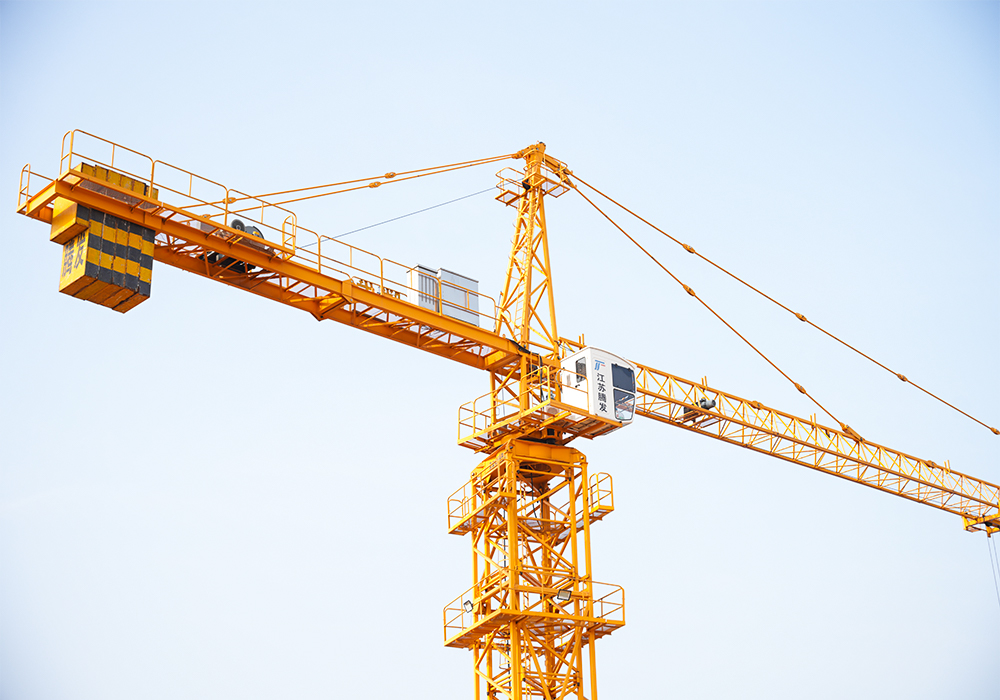
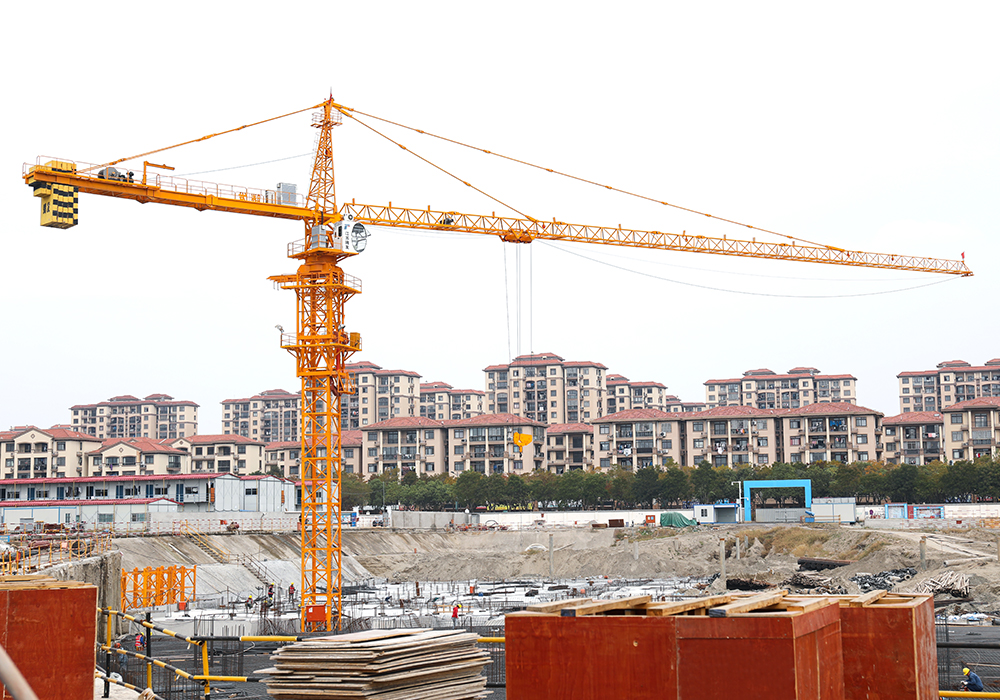
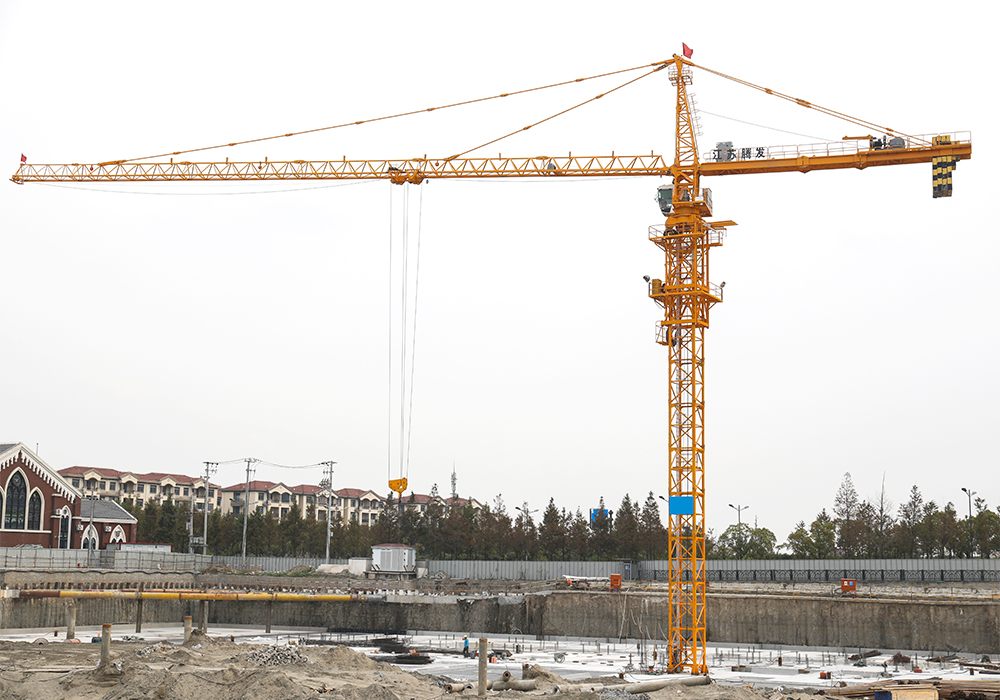
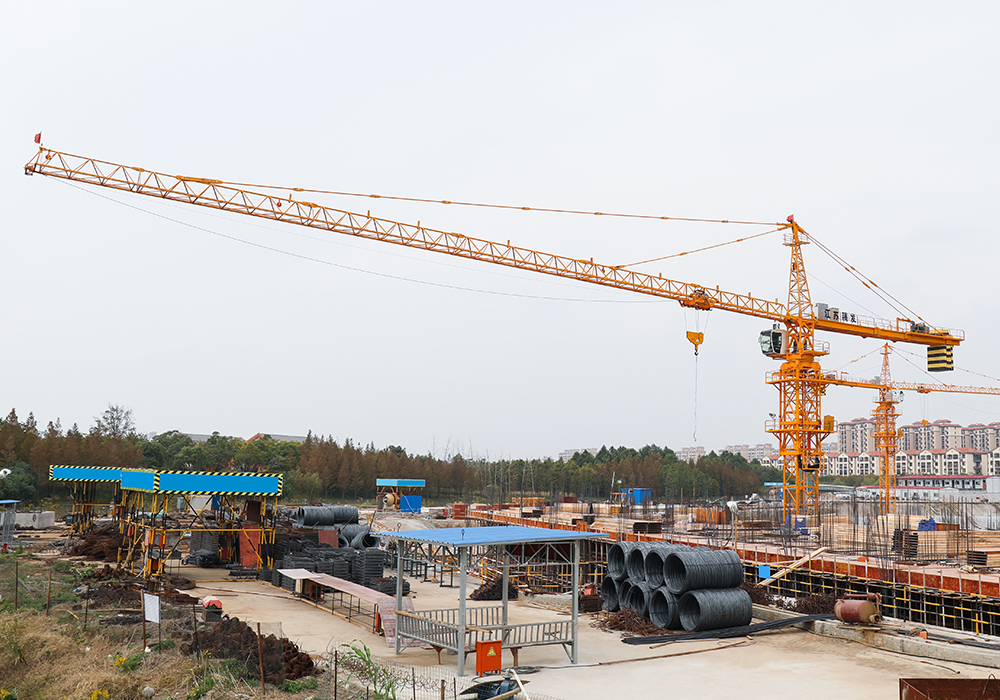
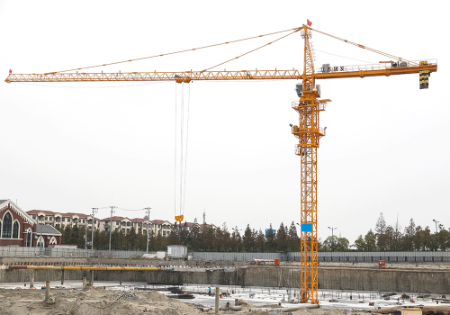
The hammerhead, or flat-top, tower crane is the shape most people picture when they think of a tower crane: a horizontal jib and counter-jib sitting on top of the mast, with the trolley running the length of the jib to move loads in and out rather than up and down.
- Fixed jib angle keeps the working radius predictable across the whole reach
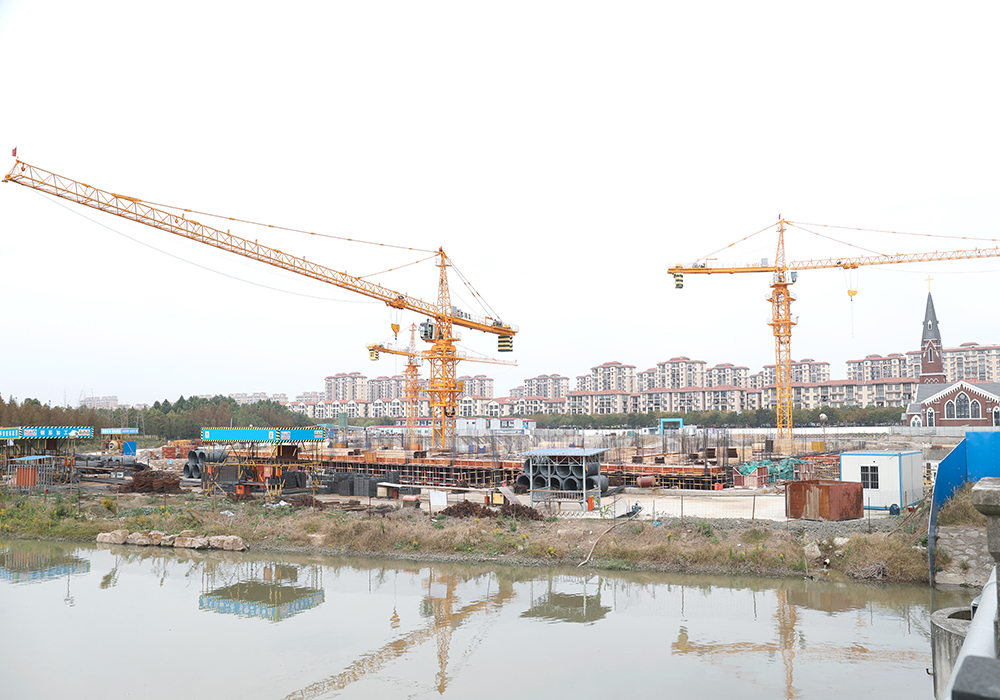
- Flat-top designs without the traditional A-frame make it easier to place multiple cranes close together on dense sites
- Higher hook heights and longer jib lengths than most luffing jib models
- Well suited to open sites where the jib can swing freely over neighboring structures
Hammerhead cranes are the default choice for large commercial and residential developments with open surroundings, since their fixed-angle jib delivers more consistent lifting capacity across the working range than a luffing design of comparable size.
Luffing Jib Tower Cranes for Urban Construction
A luffing jib crane raises and lowers its jib angle instead of swinging a fixed horizontal arm, which lets the operator keep the load close to the mast. That single feature solves the biggest problem on tight urban sites: overswing into neighboring buildings, streets, or other cranes.
Where Luffing Jib Cranes Make Sense
- Dense downtown sites bordered by streets, existing structures, or airspace restrictions
- Multi-crane projects where jib overlap between neighboring cranes has to be minimized
- Sites near flight paths or with height restrictions on outward jib reach
The tradeoff is capacity: a luffing jib crane typically lifts less at maximum radius than a hammerhead crane of the same mast height, so the choice comes down to whether site constraints or raw lifting reach matter more for a given project.
Self-Erecting Tower Cranes: Advantages and Uses
Self-erecting tower cranes fold out of their own transport configuration using a hydraulic system, without needing a mobile crane to assist. They're a different category entirely from hammerhead and luffing jib cranes, aimed at smaller, faster-moving jobs.
- Erection typically takes hours rather than days, cutting mobilization costs on short projects
- No separate mobile crane needed for setup or teardown
- Compact footprint fits residential, low-rise commercial, and infrastructure sites with limited space
- Lower maximum height and capacity compared to climbing tower cranes, which limits them to low- and mid-rise work
For contractors moving between multiple small sites in a season, the setup speed alone often outweighs the reduced height and capacity, since the crane can be relocated and back in operation within a day.
Tower Crane Lifting Capacity and Working Range
Lifting capacity on a tower crane is never a single number. It's a curve: maximum capacity sits near the mast and drops off as the trolley or jib angle moves the load further out. A crane rated for 12 tonnes at the mast might only handle 2 to 3 tonnes at its maximum working radius.
Two figures matter most when matching a crane to a project:
- Maximum capacity — the heaviest single load the crane can lift at its shortest working radius
- Tip load — what the crane can lift at maximum jib reach, which is usually the more relevant figure for day-to-day material handling
Matching these figures to the heaviest and furthest lift on the project — not just the average lift — is what prevents a crane from being under-specified partway through construction.
Tower Crane Safety Requirements and Precautions
Most tower crane accidents trace back to a small number of recurring causes: overloading, poor ground or foundation conditions, wind exceeding operating limits, and inadequate operator training. None of these are hard to prevent on paper, which is why enforcement matters more than the rules themselves.
Core Safety Practices
- Daily pre-operation inspection of wire ropes, brakes, limit switches, and slewing mechanisms
- Wind speed monitoring, with defined thresholds for suspending lifts and securing the jib
- Load charts posted and followed for every lift, not just the heaviest ones
- Certified operators and riggers, with clear signal communication protocols
- Scheduled structural inspections of the mast and foundation, especially after climbing operations
Regulatory bodies in most major markets require a documented inspection and maintenance log for each crane, and this record is typically what insurers and site auditors ask for first after any incident.
Tower Cranes in High-Rise Building Construction
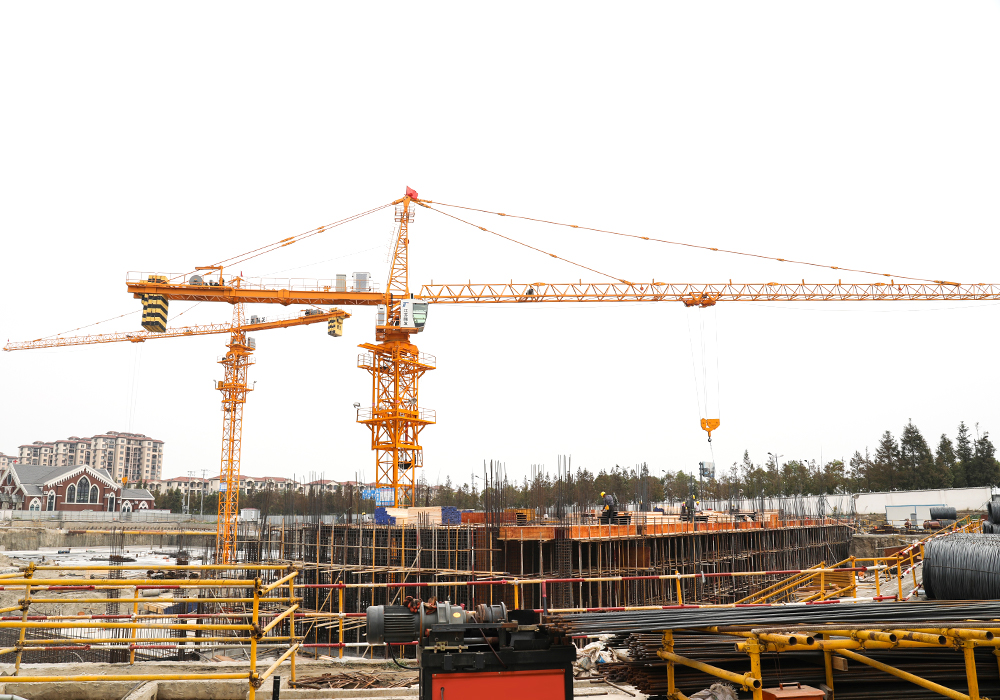
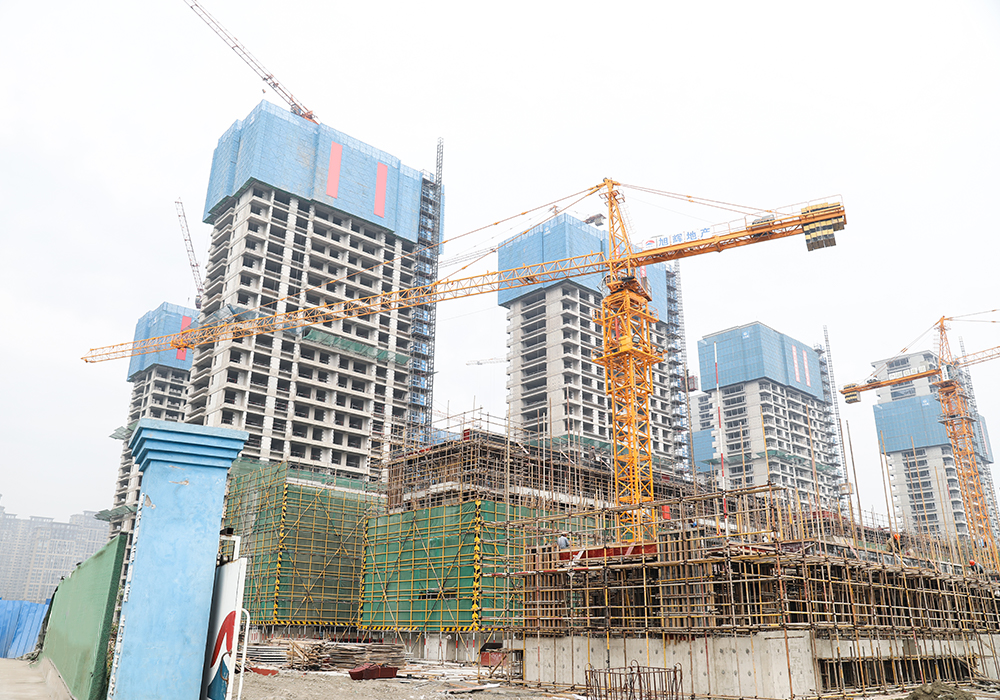
On a high-rise project, the tower crane isn't just lifting equipment — it's often the pacing item for the entire schedule, since formwork, rebar, and structural elements all move through the crane before floors above ground level can proceed.
Internal climbing cranes, which climb inside the building's core using a climbing frame anchored to completed floors, are common on very tall buildings because they don't need a tie-in to the outside of the structure. External climbing cranes, tied to the building's exterior at intervals, remain the more common choice for standard high-rise work where floor plates allow for a core opening or perimeter tie.
Crane placement on high-rise sites is usually decided before the foundation design is finalized, since the crane's base loads and tie-in points feed directly into the structural engineering of the building itself.
How to Select the Right Tower Crane for a Project
Selection comes down to matching crane type and specification to four project variables, in roughly this order of priority:
- Site constraints — available footprint, proximity to other structures, and airspace restrictions, which often rule out hammerhead cranes in favor of luffing jib models
- Building height and duration — short, low-rise projects favor self-erecting cranes; long, tall projects favor climbing hammerhead or luffing jib cranes
- Heaviest and furthest lift — the tip load and maximum capacity requirements drawn from the heaviest precast, steel, or mechanical component on the project
- Foundation and ground conditions — soil bearing capacity and existing basement structures can rule out certain base configurations entirely
Getting this sequence backwards — picking a crane on capacity alone before checking site constraints — is one of the more common and costly planning mistakes on construction projects, often forcing a late substitution after the crane is already on order.