

 English
 русский
 Español
 中文简体
中文简体
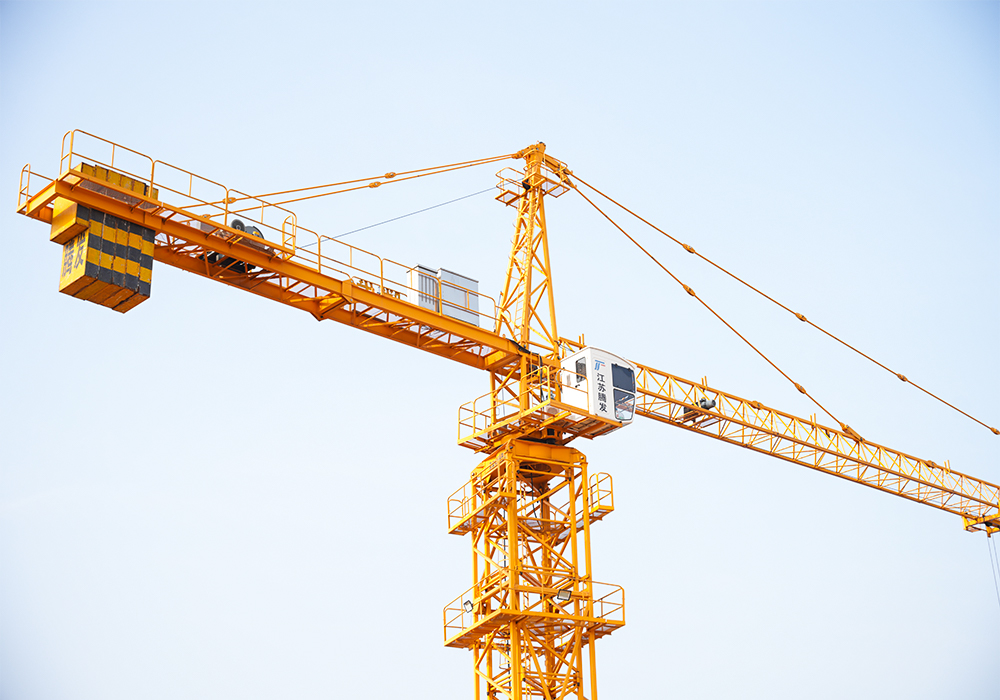
Tower cranes are erected through a combination of mobile crane assembly and a self-climbing process that allows them to rise alongside the buildings they help construct. The initial base, mast sections, slewing unit, and jib are assembled at ground level using a mobile crane. Once the crane reaches a certain height, a hydraulic climbing frame lifts the top section, and new mast sections are inserted—enabling the crane to grow one mast section at a time. This sequence answers the most common questions about how these machines appear on top of skyscrapers and how they reach working heights well above 300 meters.
Content
How Are Tower Cranes Erected?
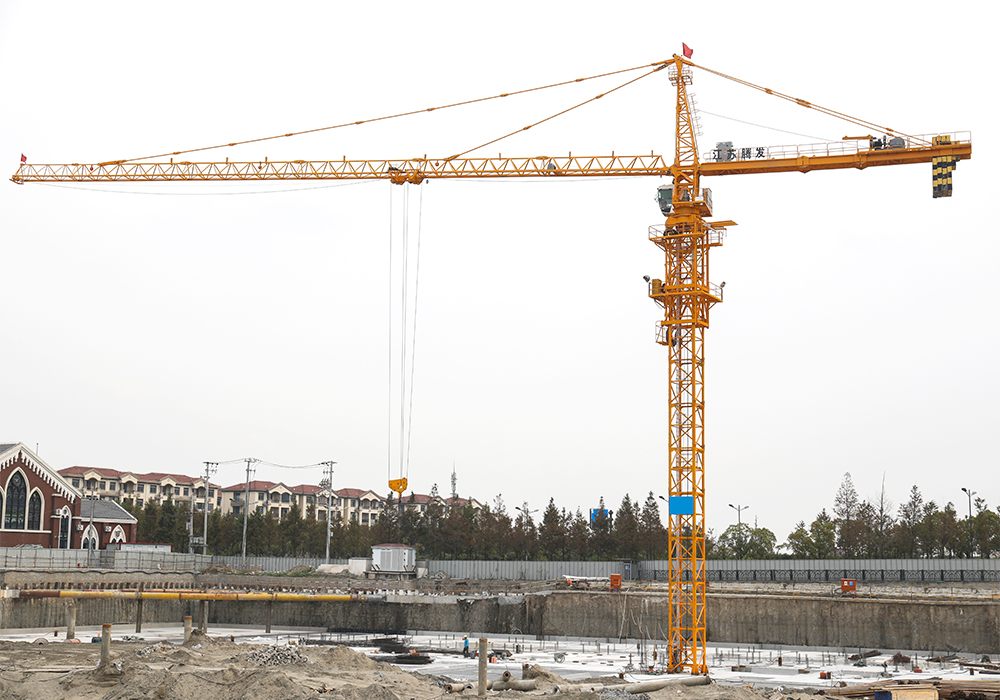
The erection of a tower crane always begins with a firm foundation—a reinforced concrete pad or pile caps designed to support the crane's full working moment. A mobile crane then lifts the base section, followed by several standard mast sections, the slewing platform, the operator's cab, the counter-jib, and the main jib. At this stage, the crane stands at its initial free-standing height, typically between 40 and 80 meters depending on the model and mast configuration.
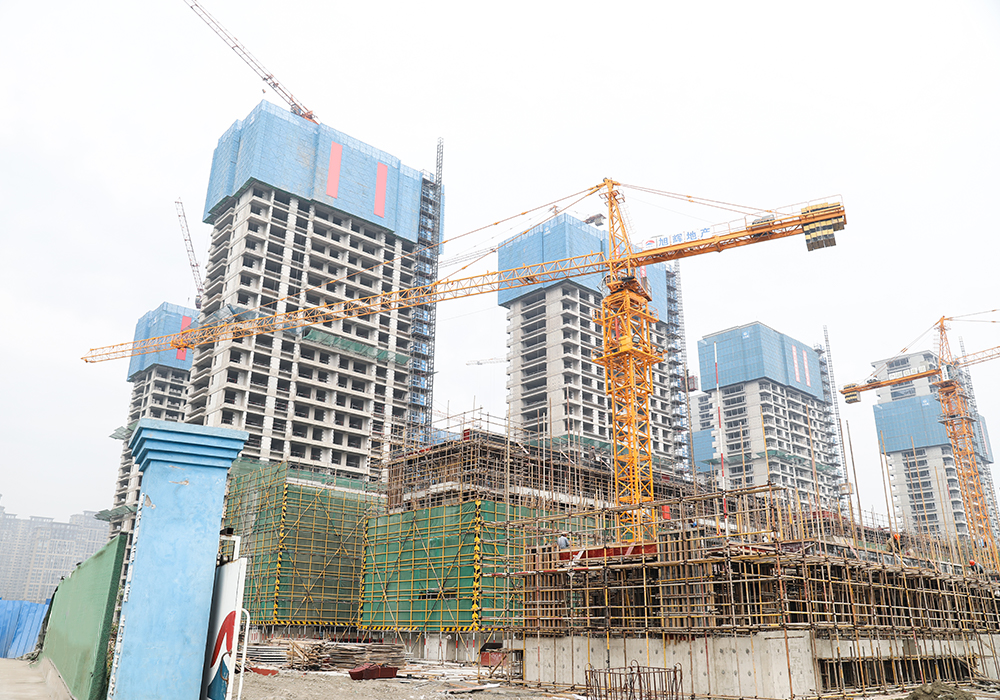
For taller buildings, the crane must climb. A hydraulic climbing frame is attached around the mast just below the slewing unit. Hydraulic rams push the entire upper structure upward by about 5 to 6 meters, creating a gap into which a new mast section is inserted and bolted. The process repeats, allowing the crane to reach final heights of over 300 meters on megatall projects. A single climbing operation typically takes between 45 and 90 minutes, and safety protocols require wind speeds to stay below 45 km/h during the procedure.
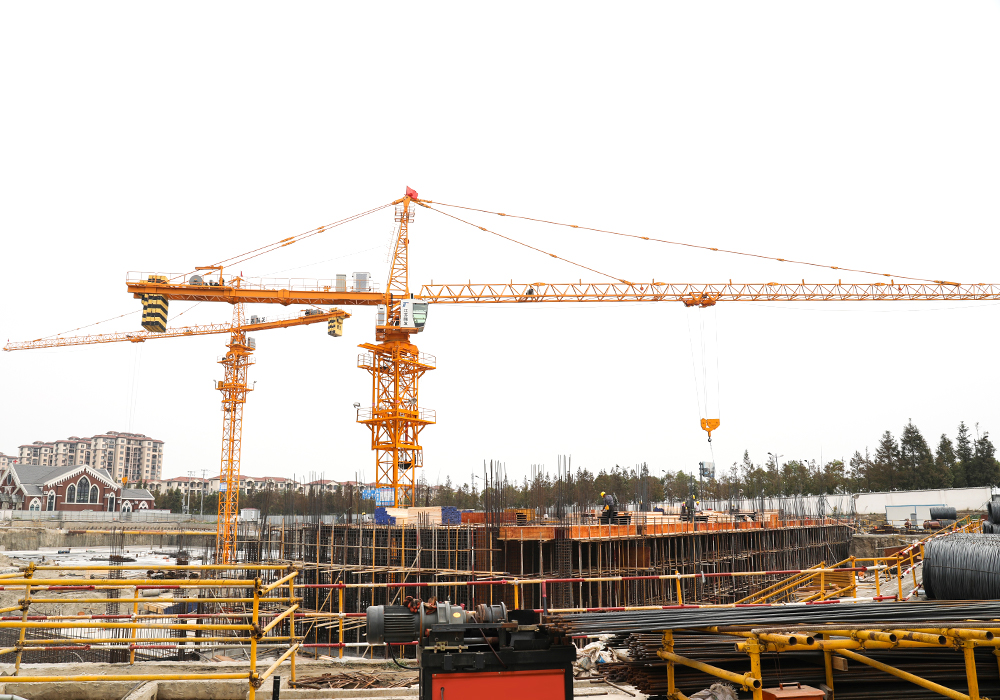
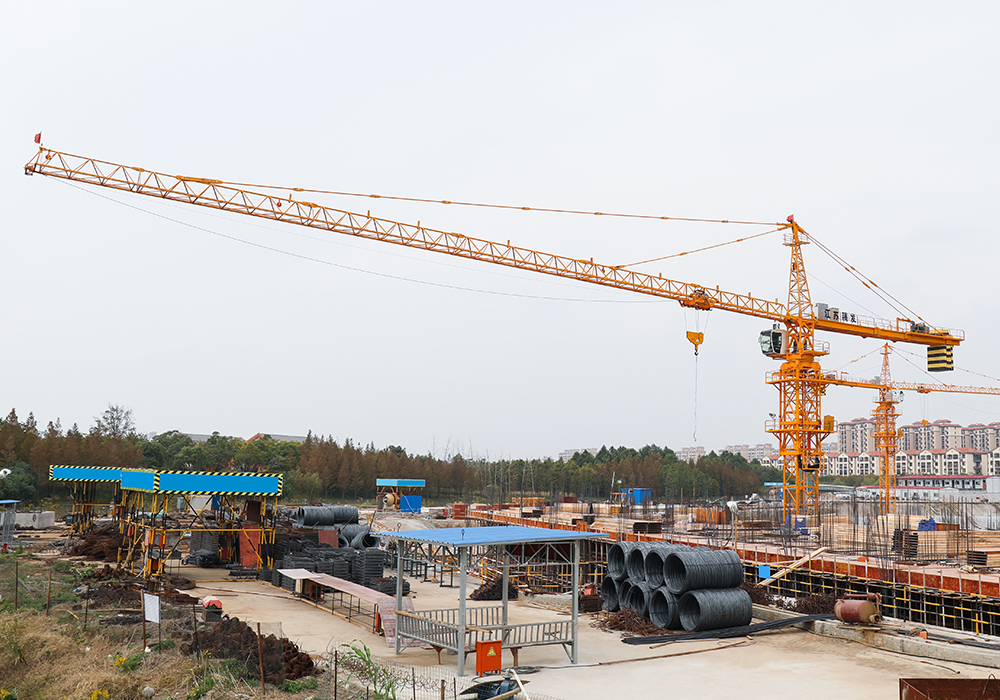
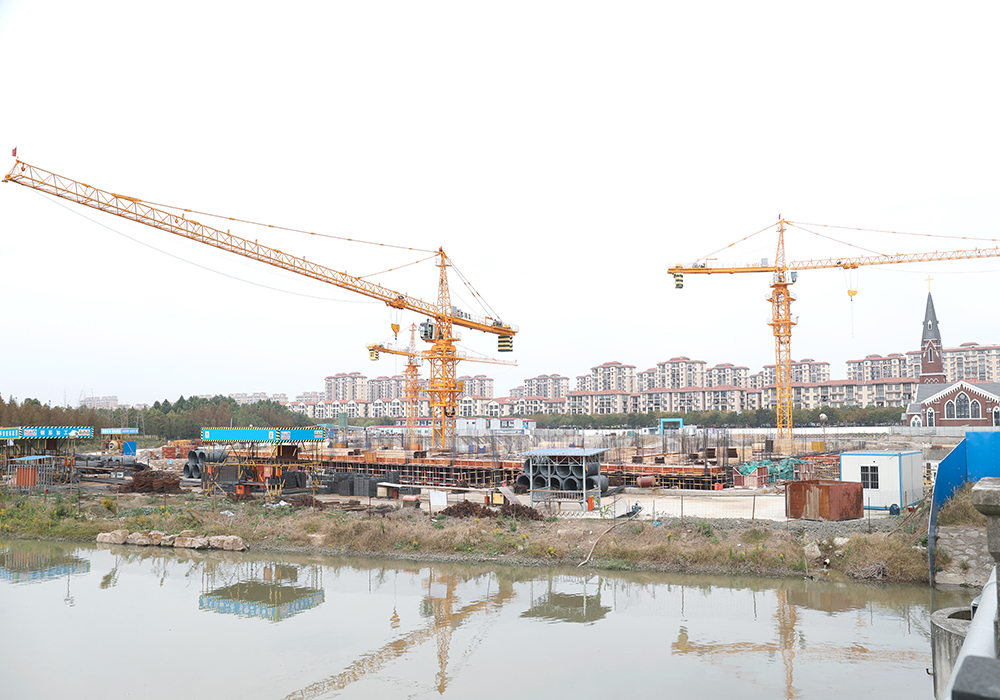
Tower crane erecting photos often show the mobile crane working in tight urban spaces. In a city, the logistics of crane erection demand road closures and overnight deliveries, since mast sections can weigh over 8 tons each and require specialized transport. For building construction projects, the crane's location is planned months in advance to maximize coverage of the site while staying clear of neighboring structures and power lines.
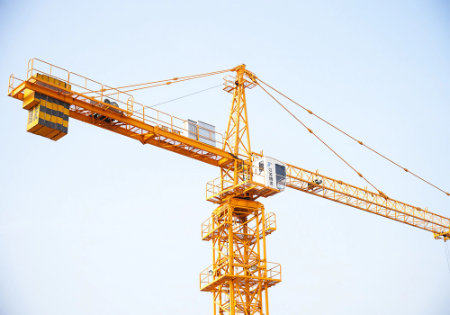
How Do Cranes Get on Top of Skyscrapers, and How Do You Move a Crane?
Cranes do not magically appear on skyscraper tops—they climb using one of two methods. External climbing, as described above, adds mast sections to raise the crane along the outside of the building. Internal climbing, common on supertall towers, places the crane inside the building's core. A climbing frame braces against the concrete floors, and hydraulic jacks push the crane up by several stories at a time. Steel collars at intermediate floors provide lateral support. Once the building is structurally complete, a smaller derrick crane dismantles the tower crane from the roof, lowering pieces down the building's exterior or through an elevator shaft.
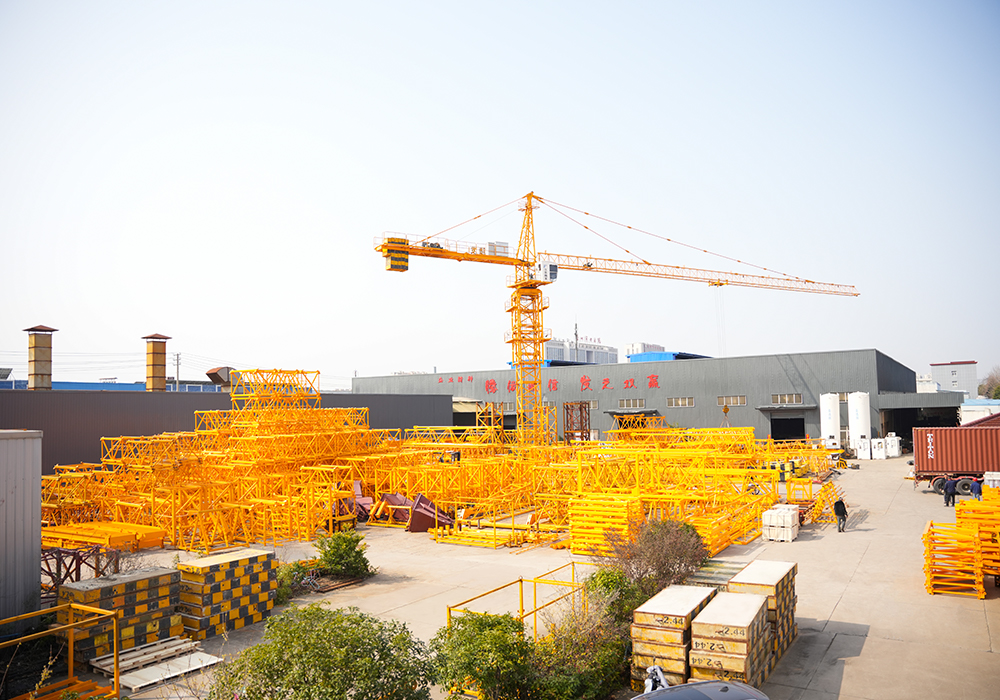
Moving a tower crane between construction sites is a major logistics exercise. The entire crane is dismantled in reverse order, and the components—mast sections, jib segments, counterweights, and the slewing platform—are transported on flatbed trucks. A typical 200 meter-tonne class crane requires 8 to 12 truckloads. On the new site, the same mobile crane reassembles everything. Some self-erecting tower cranes, used on smaller projects, can fold and unfold their own jibs and masts without a mobile assist, but these models are limited to heights under 40 meters.
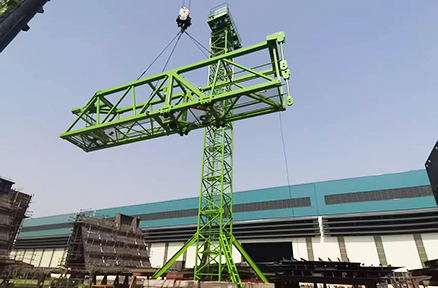
How Tall Is a Crane? The Highest Tower Crane in the World
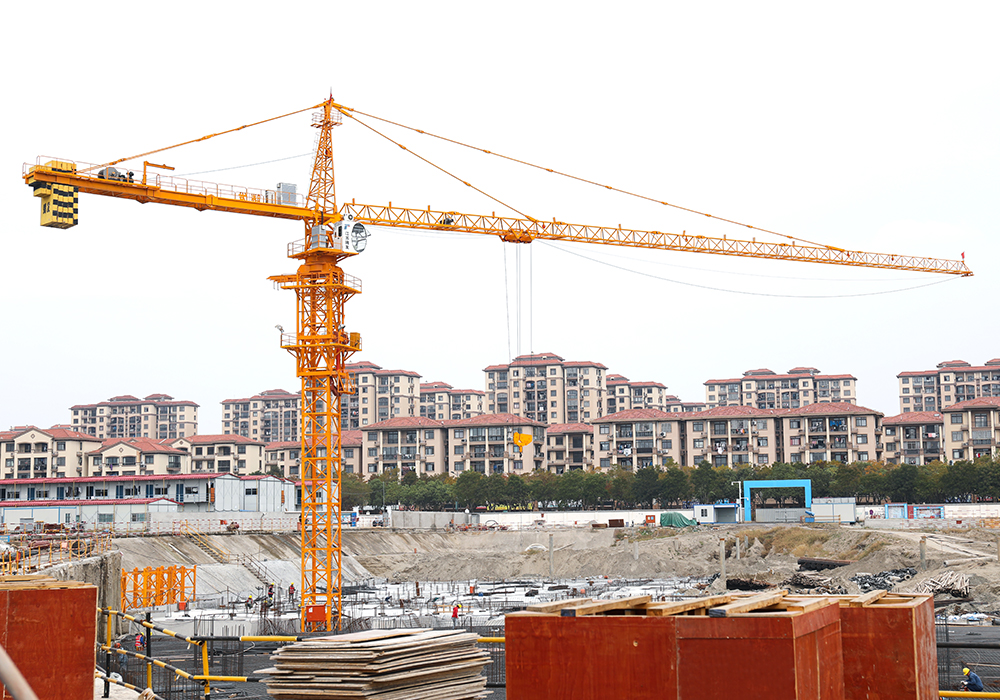
Tower crane heights vary enormously. A typical construction crane on a mid-rise building may have a hook height of 60 to 80 meters, while cranes on high-rise projects often reach 200 to 300 meters under hook when tied to the building. The maximum free-standing height for the largest hammerhead cranes approaches 100 meters, but once anchored to the structure, the possible height is limited only by the hoist rope length and tower structural capacity.
The title of the world's highest tower crane installation is constantly challenged by megatall projects. During the construction of the Burj Khalifa, a specially adapted luffing jib crane reached a record-setting over 700 meters above ground. More recently, tower cranes on the Jeddah Tower in Saudi Arabia were planned to surpass 1,000 meters under hook. The table below shows several notable high-reach tower crane installations and their approximate maximum working heights.
| Project / Crane Model | Approx. Max Hook Height | Climbing Method |
|---|---|---|
| Burj Khalifa (Dubai) – Special luffer | ~700 m | Internal climbing |
| Shanghai Tower – Multiple luffers | ~580 m | Internal climbing |
| Jeddah Tower – Planned installation | 1,000+ m (target) | Internal climbing |
| Typical freestanding hammerhead | 80–100 m | Freestanding (no ties) |
How Does a Crane Work, and How to Work With a Crane?
A tower crane works by balancing a load on the jib against a counterweight on the counter-jib, with the entire assembly rotating on the slewing ring. The operator controls three primary motions: hoisting the load up and down via a winch and wire rope, trolleying the hook in and out along the jib, and slewing the jib left and right. Modern electric tower cranes use variable frequency drives that allow acceleration and deceleration ramps, giving fine load positioning to within a few centimeters. The operator receives load moment data in real time, and if the load exceeds the crane's capacity at a given radius, the safety system locks out the hoist and trolley.
Working safely with a crane requires teamwork between the operator and rigging crew. Standard hand signals or two-way radio communication specify every lift. A designated signal person directs the operator, and daily pre-lift checks confirm that the crane's limit switches, anemometer, and anti-collision systems are functional. When cranes overlap on busy city sites, anti-collision software automatically prevents the jibs from intersecting, an essential safeguard in crane-dense city centers.
The crane machine's construction relies on high-strength structural steel for the mast and jib. Designing a crane boom involves calculating the materials needed to resist bending, shear, and fatigue. Engineers select tubular or angle sections of grade S355 or S460 structural steel and determine the exact quantity and size required so that the boom can safely handle the maximum load at full reach—often over 10 metric tons at 20 meters for a 200-tonne-meter class crane. These calculations must also account for in-service wind loads and dynamic amplification factors, ensuring the finished boom withstands millions of load cycles without failure.