

 English
 русский
 Español
 中文简体
中文简体
Content
What Is a Topkit Tower Crane?
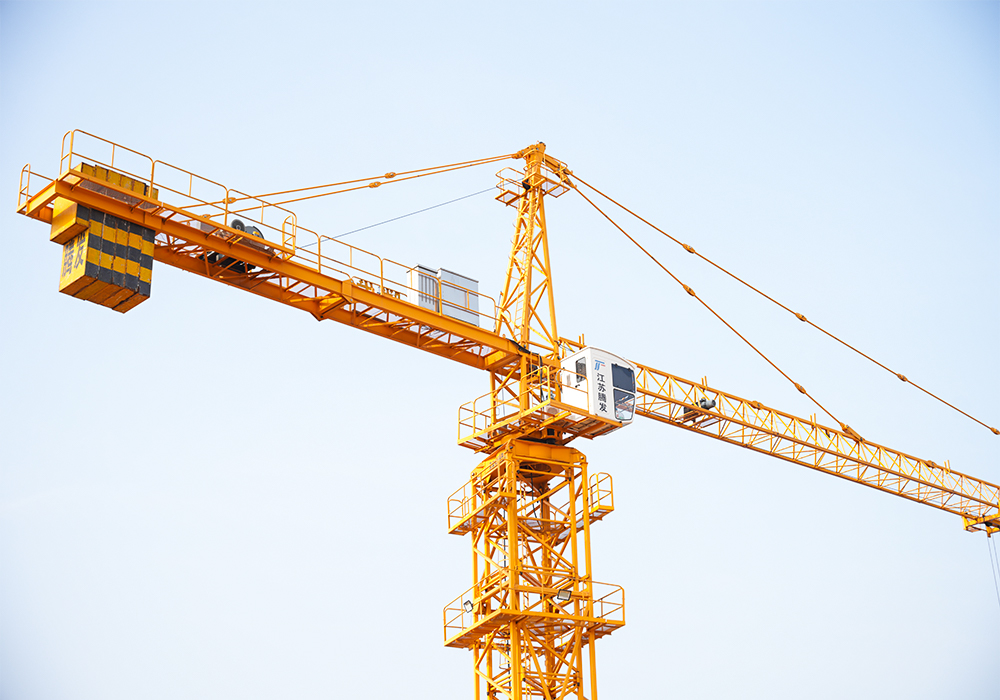
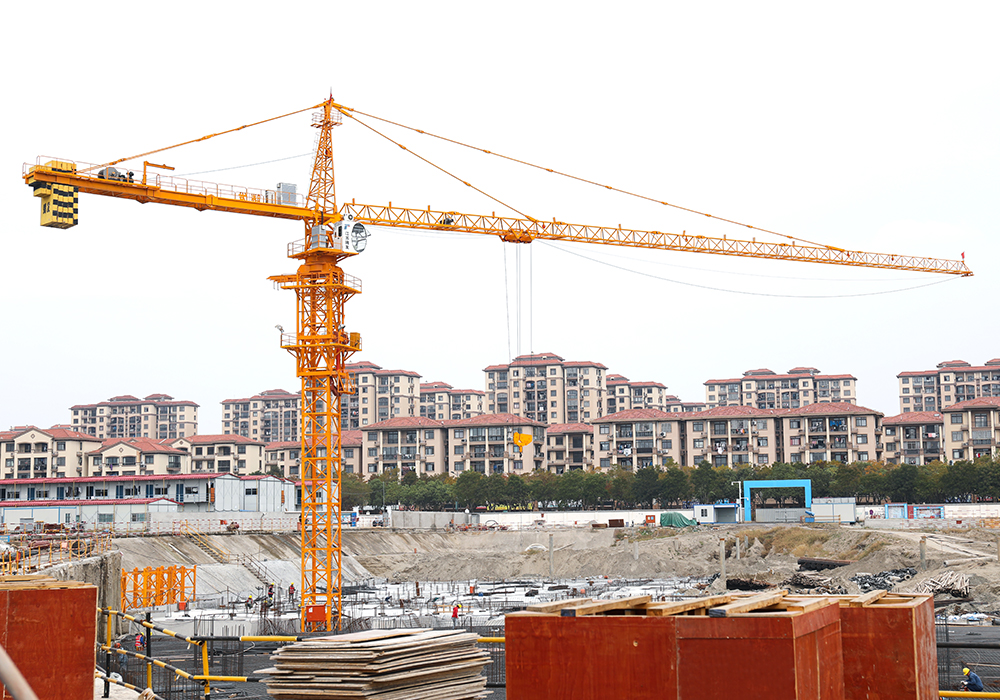
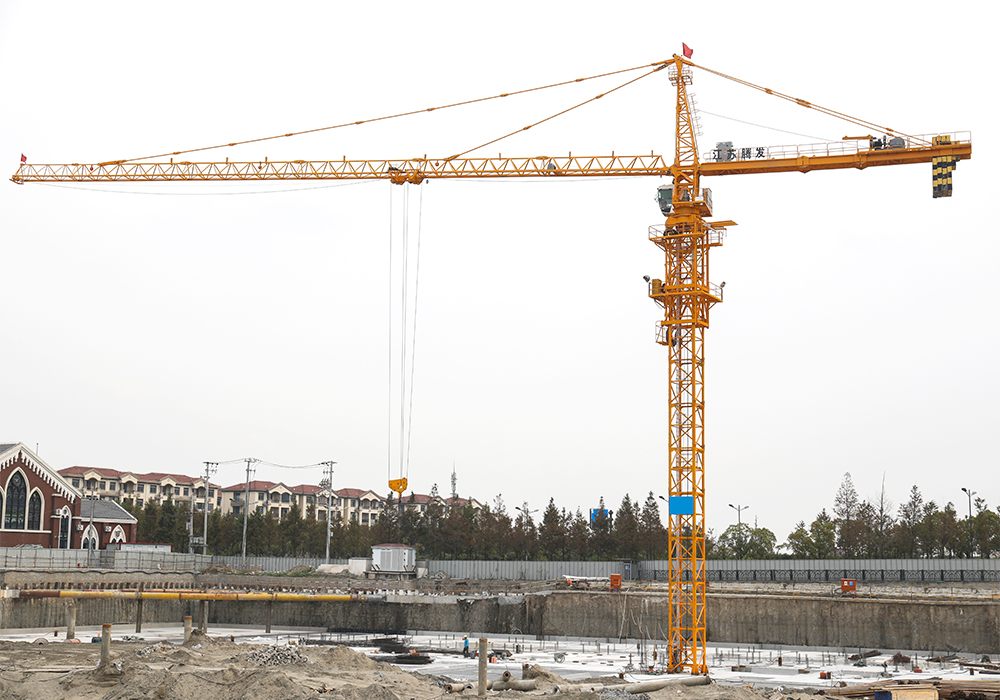
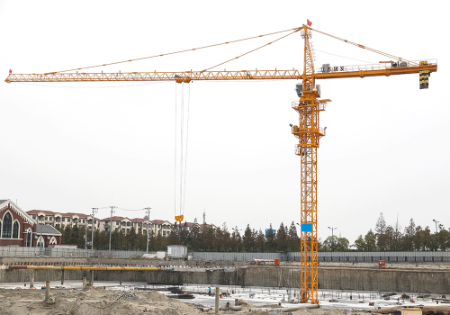
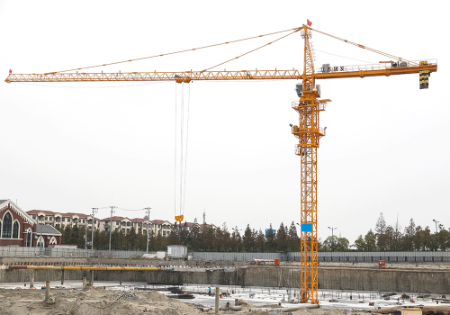
A topkit tower crane is a tower crane whose slewing mechanism sits at the very top of the tower, above the cab, with the jib and counter-jib mounted on top of that slewing ring. This "top-slewing" arrangement is what most people picture when they think of a tower crane — a tall mast topped by a horizontal jib that rotates as one assembly, with the operator's cab positioned just below the slewing platform.
The name "topkit" comes from the fact that the entire slewing unit, jib, counter-jib, and counterweight package form a modular kit that sits on top of the mast, distinct from a topless crane where the same components attach directly to the mast without a separate slewing tower section on top.
How a Topkit Tower Crane Works
A tower crane works by combining a fixed vertical mast with a rotating horizontal arm that carries the load-bearing trolley. The crane's working principle rests on three coordinated systems:
- Slewing mechanism: A large gear ring and motor at the top of the tower rotates the entire jib assembly, letting the crane swing the load through a full circle around the mast.
- Trolley and hoist: On a horizontal-jib topkit crane, a trolley runs back and forth along the jib to change the load's radius from the mast, while a separate hoist mechanism raises and lowers the hook.
- Counterweight balance: A fixed counterweight on the short counter-jib offsets the load moment on the working jib, keeping the crane in structural balance whether it's lifting maximum load at minimum radius or a lighter load out at maximum reach.
Because the slewing unit sits above the cab in a topkit design, the operator has a clear line of sight both up toward the jib and down toward the load, which is one practical reason topkit remains the default configuration for most standalone tower crane installations.
Topkit vs. Topless Tower Crane
The core difference between a topkit and a topless tower crane is whether the crane has a separate tower-top section carrying the slewing ring, or whether the jib and counter-jib bolt directly onto the top of the mast section itself. A topless crane removes that top tower unit entirely, which lowers the crane's overall height for a given hook height and makes it easier to operate multiple cranes close together on congested sites without their jibs colliding at different heights.
| Factor | Topkit Crane | Topless Crane |
|---|---|---|
| Top structure | Separate slewing tower above the cab | Jib mounts directly to the mast top |
| Overall height | Taller for the same hook height | Lower profile |
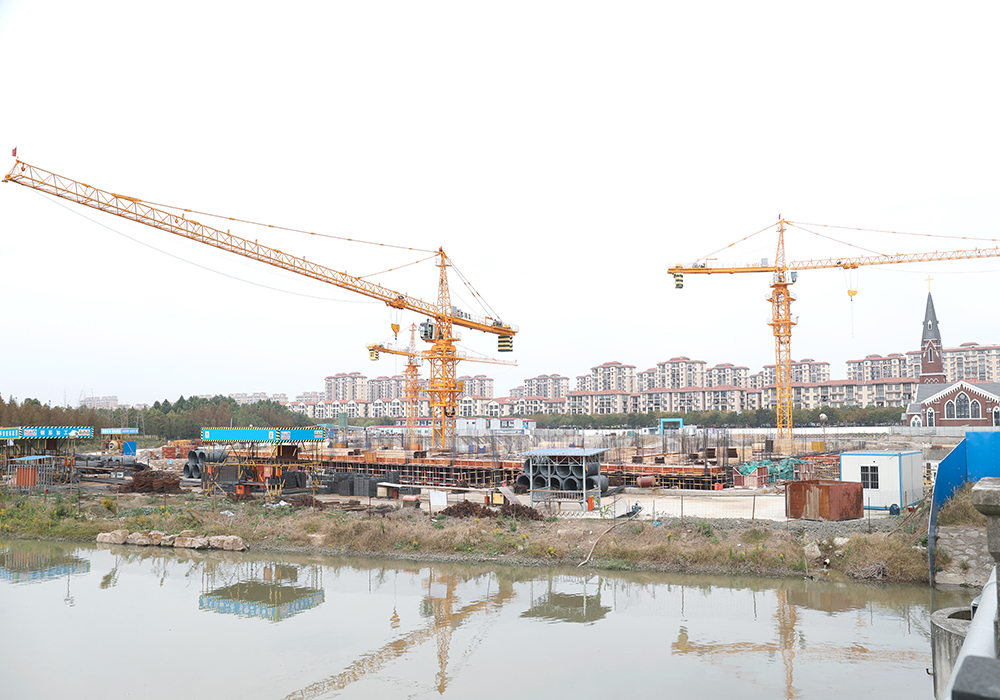
| Multi-crane job sites | Higher risk of jib collision at close spacing | Easier to stack multiple cranes at varying heights |
| Erection and climbing | Widely standardized, familiar to most crews | Can be lighter to erect at height but less common |
Types of Tower Cranes and Their Applications
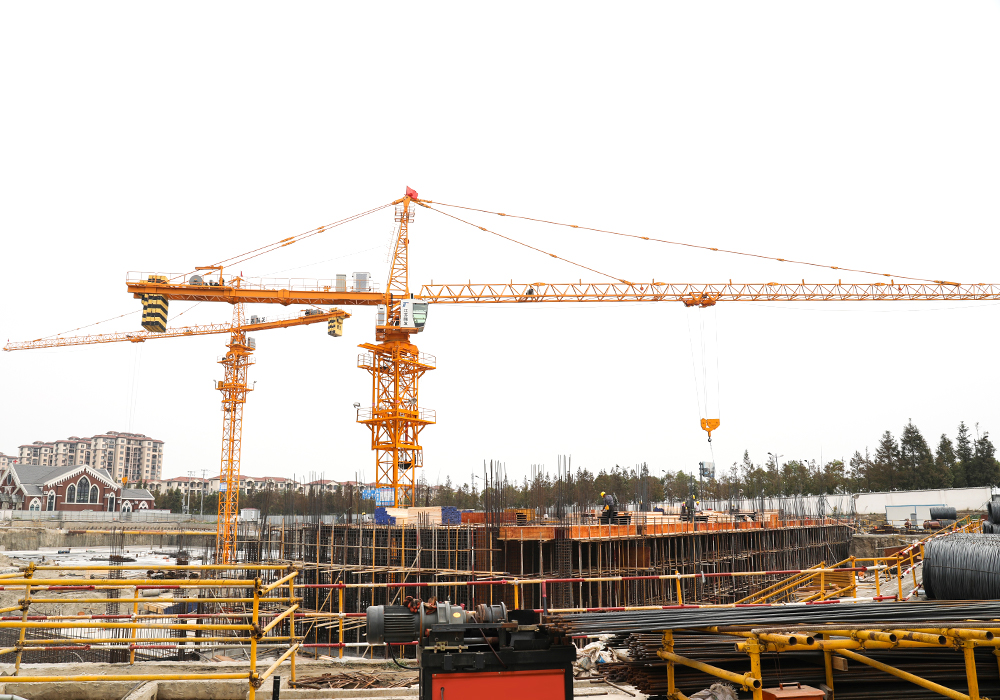
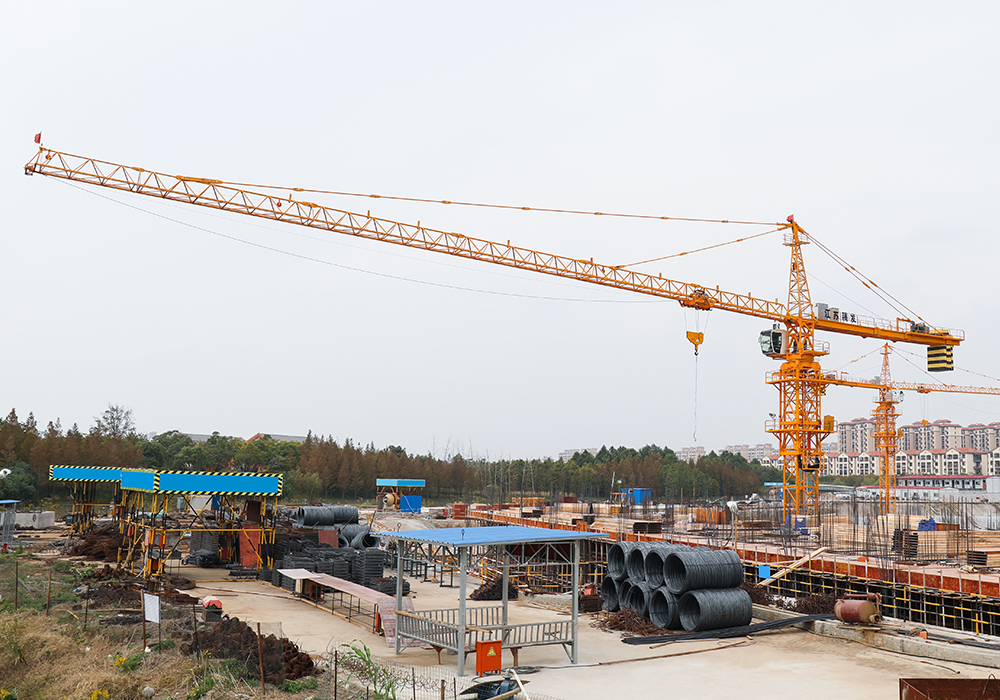
- Hammerhead (flat-top or horizontal jib) crane: A horizontal jib with a trolley running along it, used on most mid- to high-rise building projects for its precise radius control and efficient lifting across a wide working area.
- Luffing jib crane: The jib angle changes up and down rather than running a trolley along a fixed horizontal arm, letting the crane operate in a tighter footprint — the standard choice on dense urban sites where the jib can't safely swing over neighboring property.
- Self-erecting crane: A smaller crane that raises and lowers its own tower and jib without an external mobile crane for assembly, common on residential and smaller commercial projects where mobilization speed and cost matter more than maximum height or capacity.
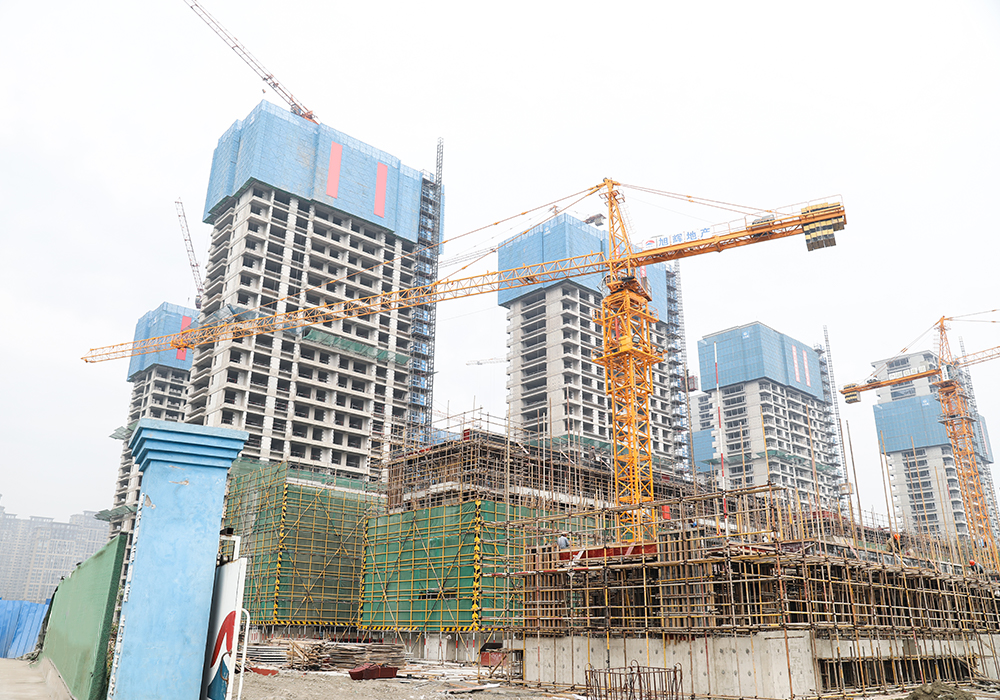
- Climbing (internal) crane: Mounted inside the building's core and climbed floor by floor as construction rises, used on tall buildings where an external tower crane would need an impractically tall free-standing mast.
Tower Crane Structure and Components
- Base/foundation: A reinforced concrete pad or embedded base section anchors the crane and transfers its full load, including overturning moment, into the ground.
- Mast (tower): Modular vertical sections bolted together to reach the required hook height, with additional sections added by climbing or self-erecting as the building rises.
- Slewing unit: The rotating platform and motor that allows the jib assembly to swing around the mast's vertical axis.
- Operator's cab: Positioned at the top of the mast, giving the operator visibility over the site and control of slewing, trolley, and hoist functions.
- Working jib and counter-jib: The working jib carries the load and trolley; the shorter counter-jib carries the counterweight and, often, the hoist machinery.
- Counterweights: Fixed concrete or steel blocks on the counter-jib that balance the load moment on the working side of the crane.
- Trolley, hoist, and hook block: The trolley sets the load's working radius, the hoist mechanism raises and lowers the wire rope, and the hook block connects to the rigging or lifting device on the load.
Tower Crane Lifting Capacity Explained
Tower crane lifting capacity isn't a single number — it's a load chart that decreases as the trolley moves farther out along the jib. A crane might lift 12 tons at a 20-meter radius near the mast but only 2–3 tons at its maximum jib length of 60–70 meters, because the load's overturning moment on the structure increases with radius even though the actual weight lifted goes down.
Three figures typically define a crane's capacity: maximum capacity (the heaviest single load the crane can lift, always at minimum radius), maximum radius (the farthest reach at reduced capacity), and tip load (capacity at the very end of the jib). Selecting a crane for a project means checking the load chart against both the heaviest single component to be lifted and the radius at which that lift needs to happen — a crane with plenty of maximum capacity can still be the wrong choice if that capacity doesn't hold at the radius the job actually requires.
Tower Crane Installation Process
- Site survey and foundation design: Soil bearing capacity, proximity to other structures, and the crane's maximum load and height determine the foundation design, whether that's a concrete pad, piled foundation, or an anchor into an existing structure.
- Foundation construction and curing: The base is poured and cured to design strength before any tower sections are erected on it — rushing this step risks foundation settlement once full crane load is applied.
- Base section and initial mast erection: A mobile crane sets the base section and the first several mast sections, building the tower to a stable starting height.
- Slewing unit, cab, and jib assembly: The slewing platform, operator's cab, working jib, counter-jib, and counterweights are lifted into place and secured in sequence.
- Climbing to final height: For self-climbing installations, a hydraulic climbing frame inserts additional mast sections from within the tower, raising the slewing unit and jib assembly incrementally until the crane reaches its planned operating height.
- Commissioning and load testing: Before the crane goes into service, it's tested under rated load at various radii, and all safety devices — load moment limiters, anti-collision systems, wind speed sensors — are verified.
- Ongoing inspection: Tower cranes require periodic structural and mechanical inspection throughout the project, plus reassessment any time the crane is climbed to a new height or the jib configuration changes.