

 English
 русский
 Español
 中文简体
中文简体
Content
- 1 The Evolution of Tower Crane Design: Why Flat Head Technology Dominates Modern Jobsites
- 2 Structural Engineering and Modular Advantages
- 3 Performance Comparison: Flat Head vs. Hammerhead vs. Luffing Jib
- 4 Optimizing Airspace: The Science of Over-Sailing
- 5 Operational Safety and Load Management
- 6 Maintenance and Long-Term Durability
- 7 Strategic Selection for Infrastructure Projects
- 8 FAQ
- 9 References
The Evolution of Tower Crane Design: Why Flat Head Technology Dominates Modern Jobsites
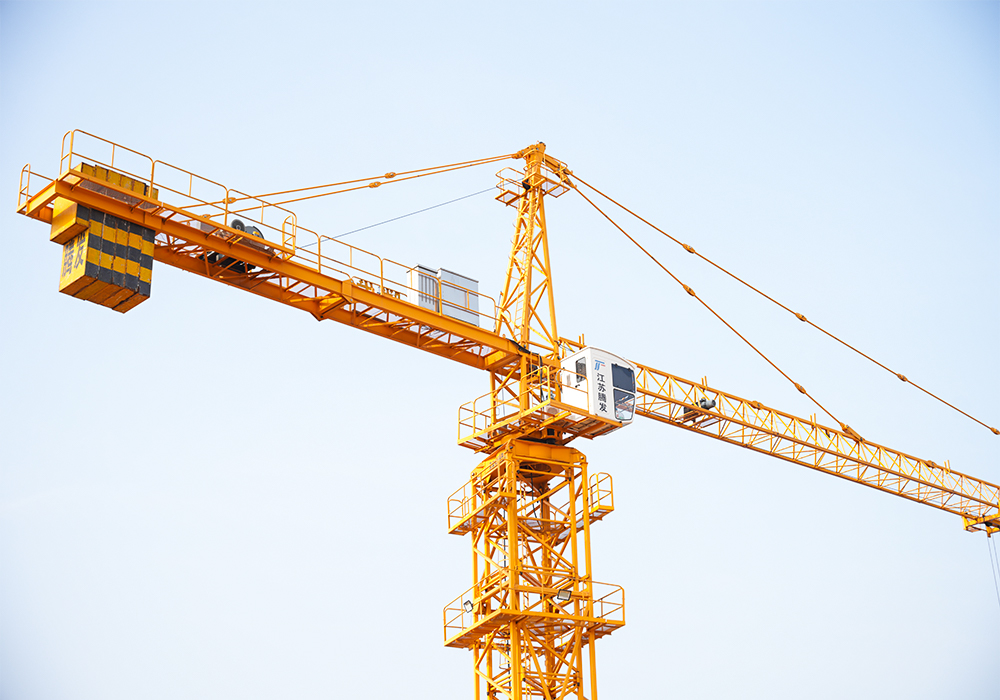
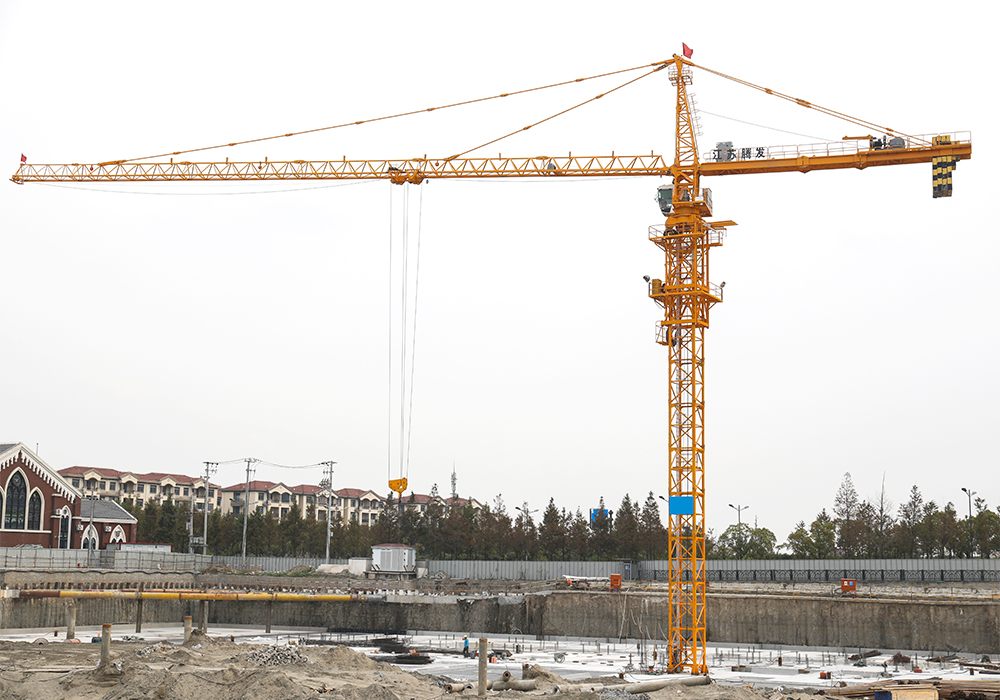
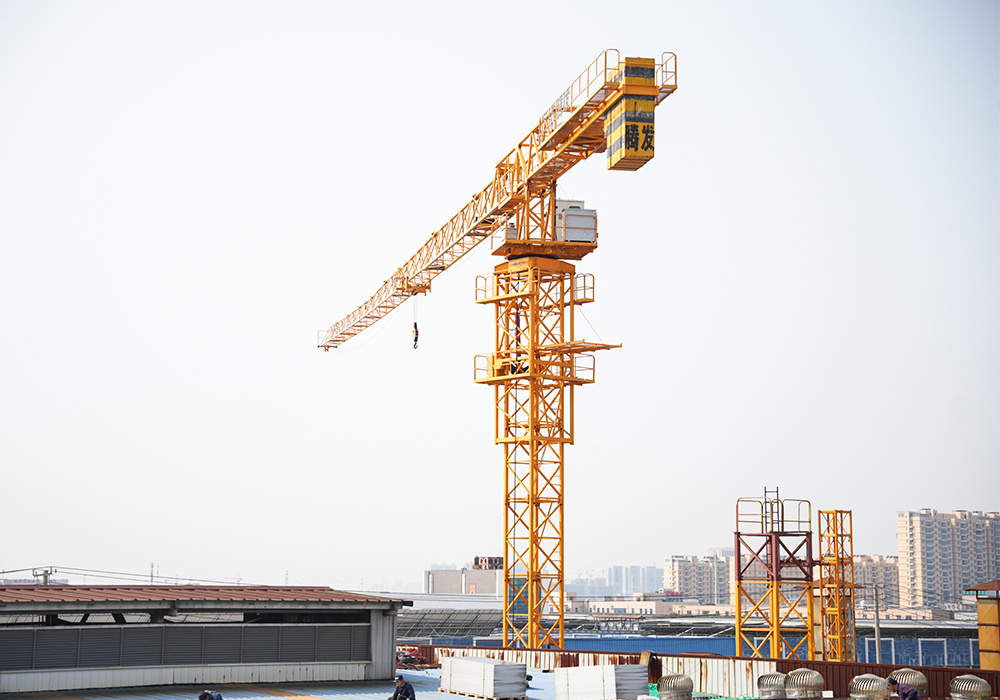
In the heavy-lifting and construction industry, the choice of machinery directly dictates project efficiency and safety. For decades, the hammerhead crane with its distinctive cat-head and tie-bars was the industry standard. However, as urban construction sites become more congested and complex, the Flat Head Tower Crane (also known as the Topless Tower Crane) has emerged as the preferred solution.
The primary structural distinction of a flat-head tower crane is the absence of the “top” or “cat-head” structure that sits above the jib on traditional cranes. By removing this apex and the associated pendant cables, manufacturers have created a streamlined, modular machine that addresses the specific challenges of 21st-century infrastructure. This article provides an in-depth exploration of how flat head cranes function, their mechanical advantages over traditional models, and why they are the strategic choice for large-scale, multi-crane environments.
Structural Engineering and Modular Advantages
The core engineering philosophy behind the flat head design is modularity. In a traditional hammerhead crane, the jib is supported by tie-bars connected to a central tower head. While this provides excellent tension support, it complicates the assembly process. A flat-head tower crane, conversely, utilizes a reinforced jib design that is self-supporting.
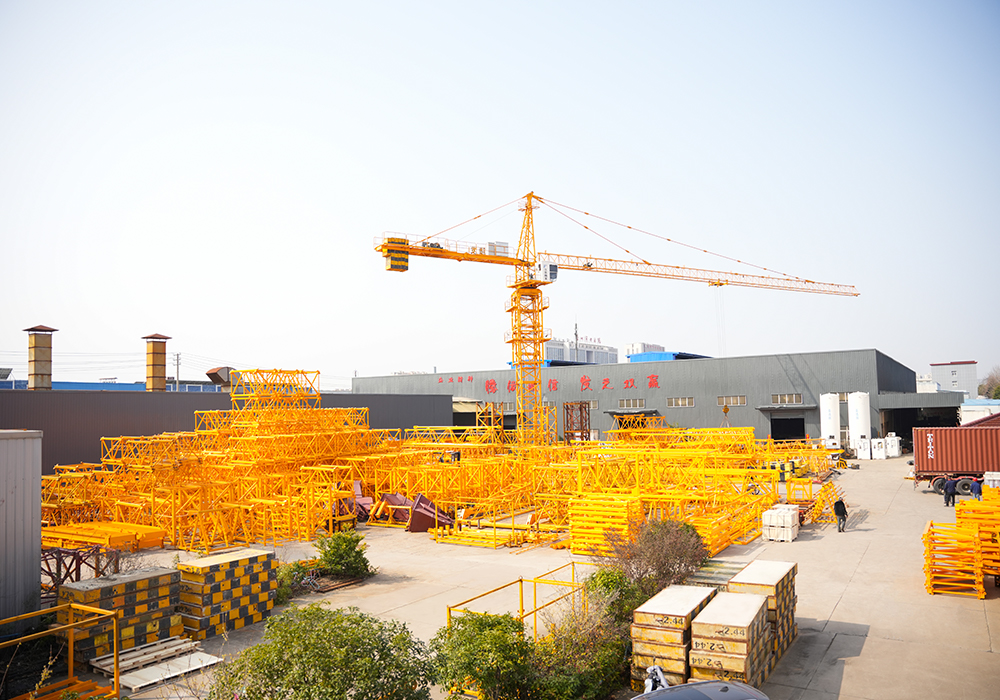
One of the most significant benefits of this design is the ease of assembly and disassembly. Because there are no tie-bars to connect, the jib can be installed in smaller, lighter sections. For contractors working in restricted urban areas where mobile crane space is limited, the ability to lift smaller components is a major logistical advantage. Furthermore, the modular nature allows for quick adjustments to the jib length, enabling the crane to adapt to the specific footprint of the construction site without a total overhaul of the system.
Performance Comparison: Flat Head vs. Hammerhead vs. Luffing Jib
When evaluating lifting equipment, it is essential to compare the flat head model against its two main competitors: the Hammerhead and the Luffing Jib crane.
| Feature | Flat Head Tower Crane | Hammerhead Tower Crane | Luffing Jib Tower Crane |
|---|---|---|---|
| Top Structure | No cat-head or tie-bars | High apex with tie-bars | No fixed horizontal jib |
| Overhead Clearance | Minimum required | Significant clearance needed | Variable (Jib moves vertically) |
| Assembly Speed | Fast (Modular design) | Moderate | Slow (Complex rigging) |
| Multi-Crane Sync | Excellent (Easy over-sailing) | Difficult (Collision risk) | Good (Narrow radius) |
| Stability | High (Rigid jib) | High (Tension supported) | Moderate (Wind sensitive) |
| Maintenance | Low (Fewer components) | Moderate (Check tie-bars) | High (Moving parts) |
While hammerhead cranes are often cited for their high maximum load capacity at long radii, the flat head crane closes this gap through advanced materials and reinforced steel structures. Luffing jib cranes are superior for extremely tight spaces where oversailing neighboring property is legally restricted, but they lack the horizontal trolley speed and simplicity of the flat head series.
Optimizing Airspace: The Science of Over-Sailing
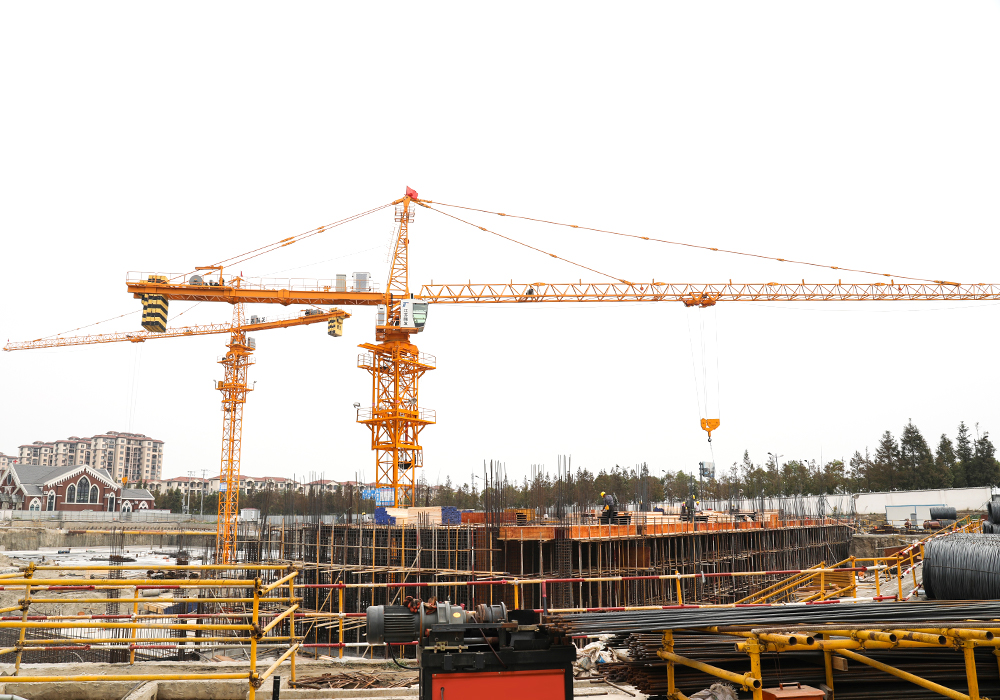
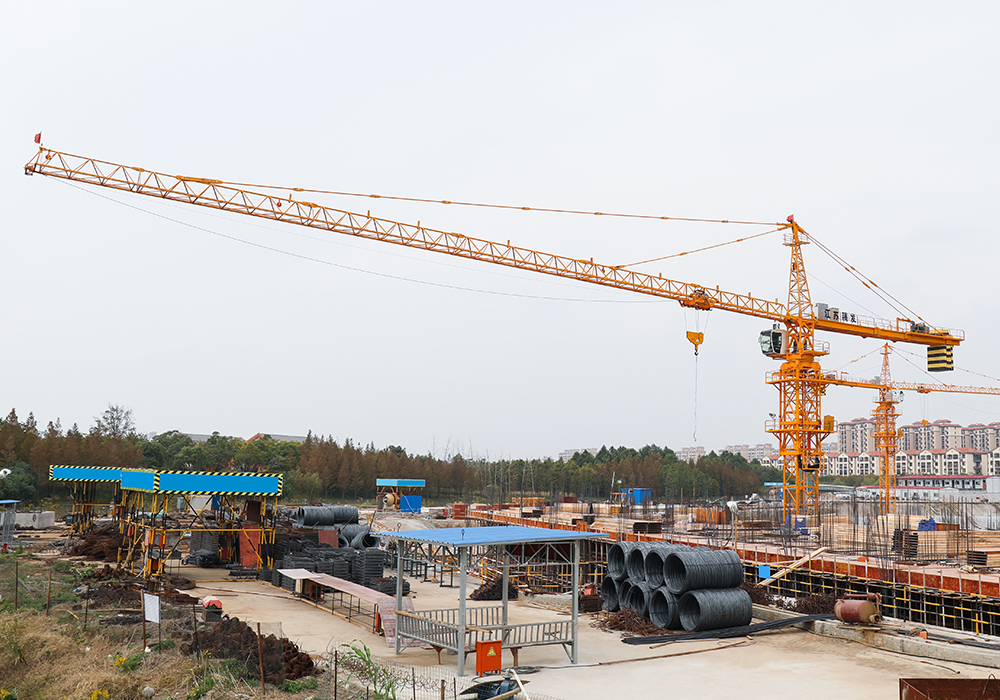
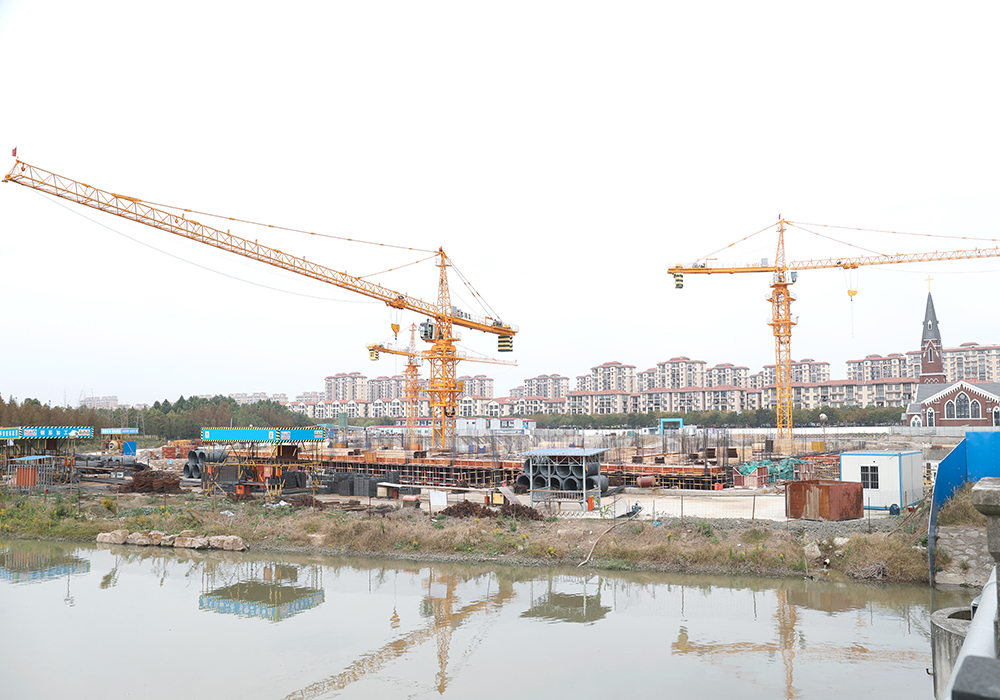
In modern large-scale developments, it is common to see three, five, or even ten cranes working in tandem. This is where the flat head design truly outperforms all other types. In a multi-crane configuration, cranes must “over-sail” each other, meaning one crane’s jib moves above or below another’s.
Traditional cranes require a significant vertical gap between them to account for the height of the cat-head. This forces the taller cranes to be erected at extreme, often unnecessary heights to maintain safety margins. Because flat head cranes have a low profile, the vertical distance between overlapping cranes can be reduced to as little as 2 or 3 meters. This lower overall height results in:
- Reduced Foundation Costs: Lower height means less stress on the base.
- Improved Stability: Lower centers of gravity enhance safety during high winds.
- Faster Cycle Times: Operators spend less time hoisting materials to excessive heights.
Operational Safety and Load Management
Safety in tower crane operation is not just about the weight on the hook; it is about the structural integrity of the machine under diverse conditions. Flat head cranes offer superior visibility for the operator. Without the visual obstruction of tie-bars and tower heads, the operator has a clearer line of sight to the trolley and the load.
Modern flat head series are equipped with sophisticated frequency conversion systems. These systems ensure smooth starting and braking, which minimizes the “pendulum effect” of the load. In traditional designs, the elasticity of the tie-bars can sometimes cause a slight “bounce” in the jib when a heavy load is released. The rigid, tie-bar-free design of the flat head jib eliminates this oscillation, providing a more stable platform for precision placement of steel beams or pre-cast concrete panels.
Maintenance and Long-Term Durability
From a manufacturer’s perspective, the reduction of moving parts and connection points is the key to longevity. Tie-bars on traditional cranes are subject to significant fatigue and require frequent inspection for corrosion or hairline fractures. By eliminating these components, flat head cranes simplify the maintenance schedule.
The streamlined design also reduces the wind surface area of the crane when it is “out of service” (weathervaning). During high-wind events, a flat-head crane experiences less drag than a hammerhead crane of similar size. This translates to less wear on the slewing rings and motors over the lifespan of the machine, ensuring a higher resale value and lower total cost of ownership for the construction firm.
Strategic Selection for Infrastructure Projects
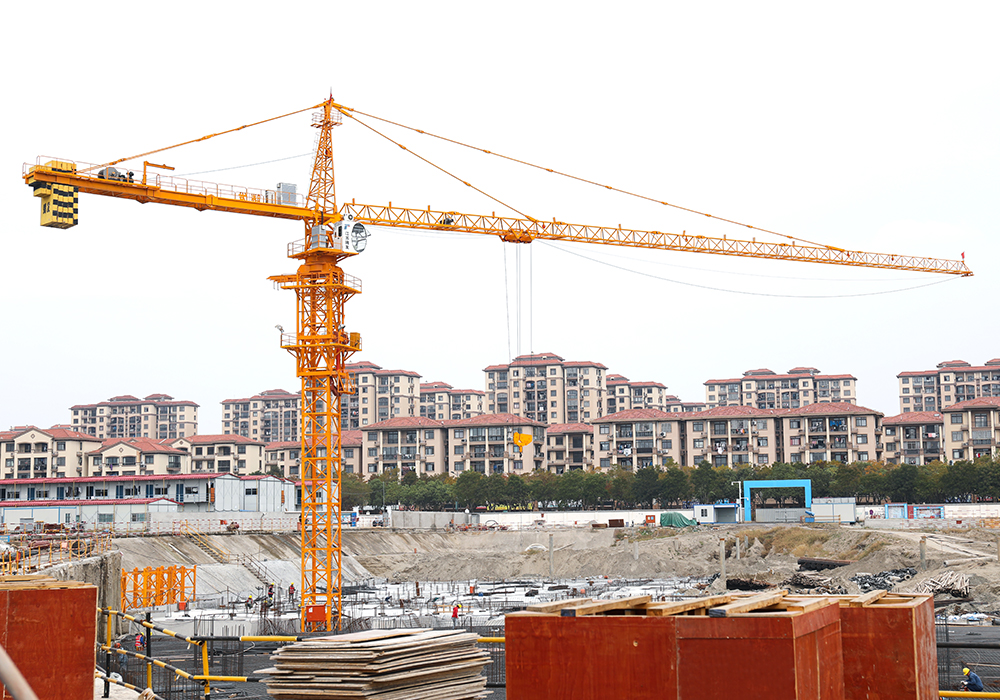
Choosing a flat-head tower crane is a strategic decision based on the specific parameters of the project. For bridge construction, power plant cooling towers, and airport terminals, the flat head’s ability to operate under height restrictions—such as those imposed by flight paths or existing overhead structures—is indispensable.
Furthermore, for developers focusing on “Green Building” initiatives, the efficiency of the flat head crane contributes to lower energy consumption during the assembly phase. The use of smaller assist cranes (mobile cranes) for the erection of a flat head model reduces the carbon footprint and the local traffic disruption associated with moving massive crane components through city streets.
FAQ
1. Is the lifting capacity of a flat-head crane lower than that of a hammerhead crane?
No. While early designs had limitations, modern flat-head tower cranes utilize high-tensile steel and reinforced jib sections that allow them to match or even exceed the lifting capacities of traditional hammerhead cranes.
2. Why is the flat head design better for sites with multiple cranes?
The lack of a tower head allows cranes to be positioned closer together vertically. This minimizes the total height needed for each crane to safely rotate over the others, reducing costs and increasing safety.
3. Does the lack of tie-bars make the jib less stable in the wind?
Actually, the design is very stable. Because the jib is built as a rigid box-frame or reinforced lattice without a high top, it often presents less surface area to the wind, reducing drag and stress on the slewing mechanism.
4. How much time can be saved during the assembly of a flat-head crane?
On average, a flat-head crane can be assembled 20% to 30% faster than a hammerhead crane. This is because the jib sections are connected directly without the need to rig and tension support cables or tie-bars at height.
5. Are flat head cranes suitable for high-rise residential projects?
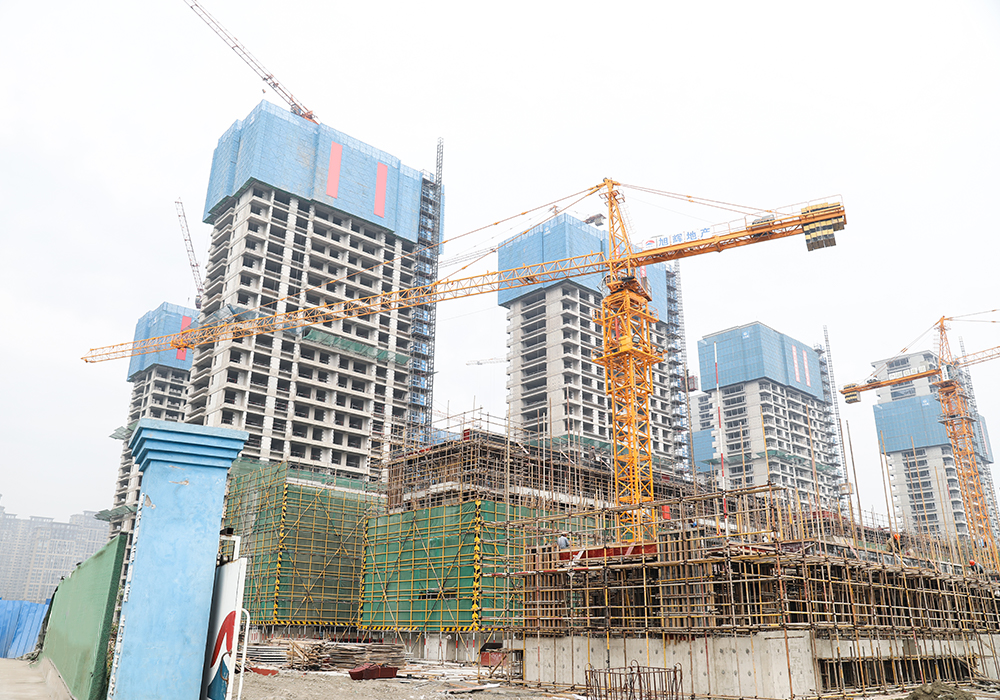
Yes, they are exceptionally suited for high-rise projects, especially when using internal climbing systems. Their modularity and ease of over-sailing make them the industry standard for dense urban residential developments.
References
- International Organization for Standardization (ISO) 4301-3: Cranes - Classification - Part 3: Tower cranes.
- Technical Manual for High-Rise Construction Machinery, European Federation of Materials Handling.
- Safety Standards for Tower Crane Design and Operation, Occupational Safety and Health Administration (OSHA).
- Modular Construction Efficiency: A Comparative Study of Topless vs. Hammerhead Cranes in Urban Environments.
- Structural Integrity and Wind Load Analysis of Flat-Top Crane Jibs, Journal of Construction Engineering.