

 English
 русский
 Español
 中文简体
中文简体
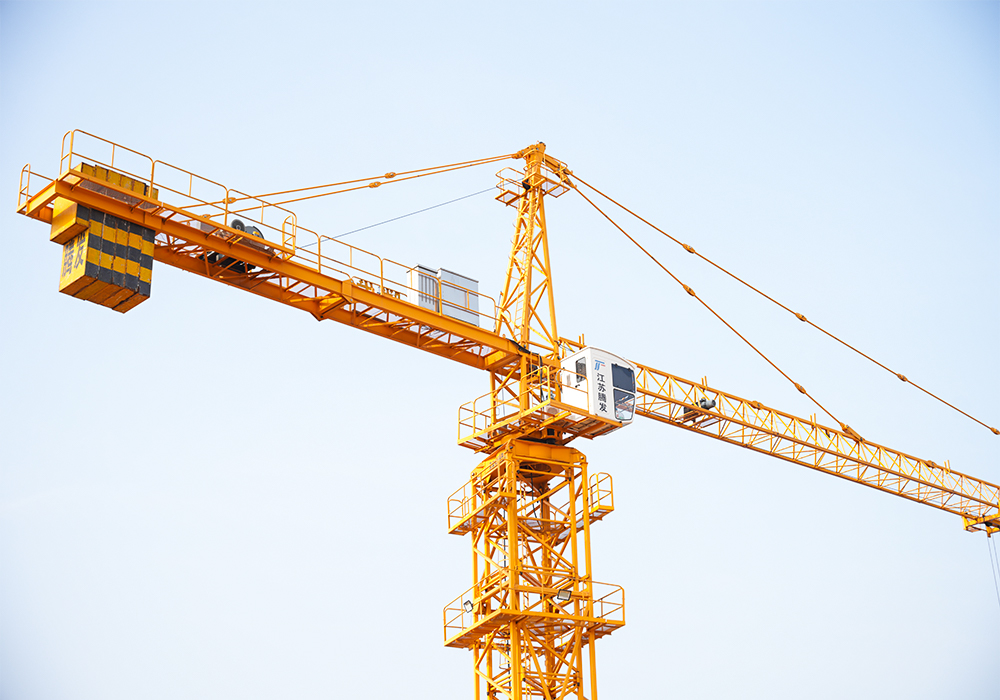
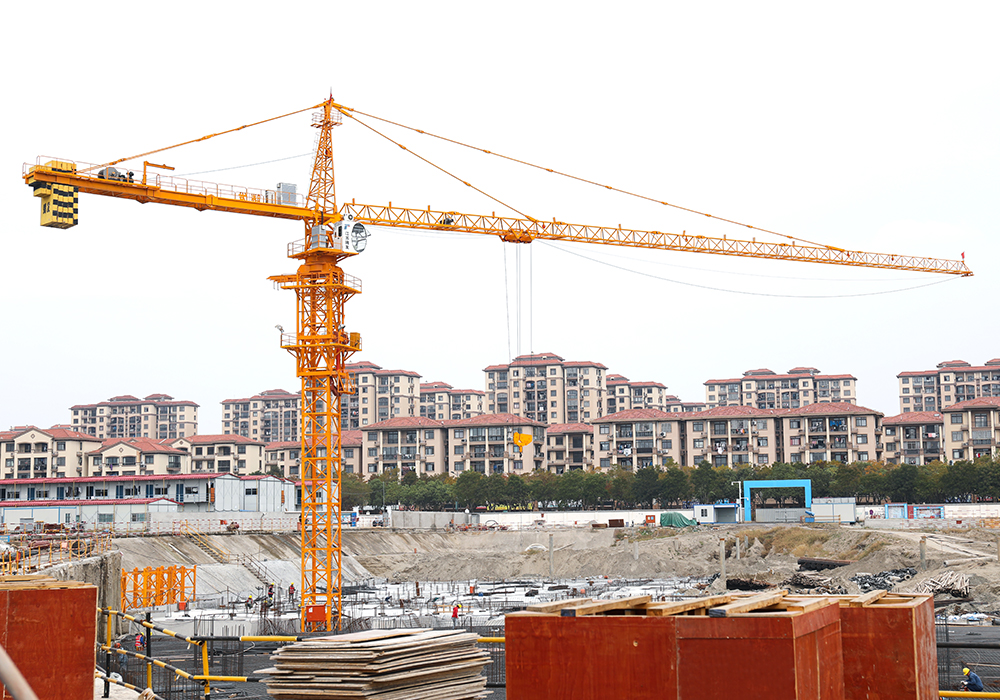
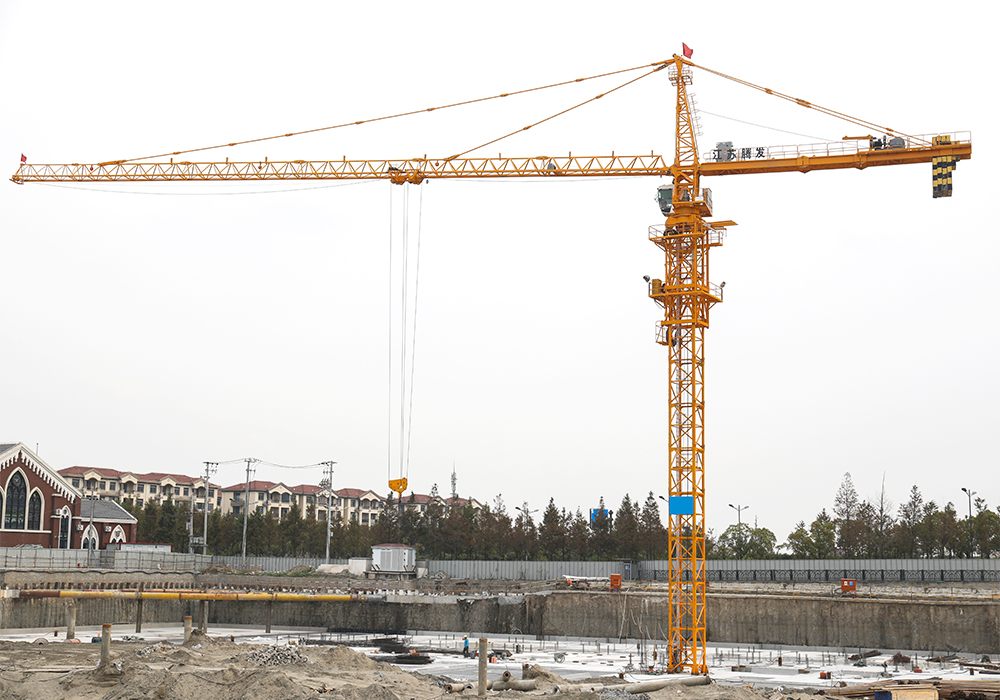
In the modern construction landscape, the skyline is increasingly dominated by a specific silhouette: the topless tower crane. Also known in technical circles as the flat-top crane, this design has revolutionized urban job sites where space is at a premium and multiple cranes must operate in close proximity. By removing the traditional "cat-head" and jib tie-bars, engineers have unlocked new levels of efficiency in assembly and overhead clearance. This article provides a deep dive into the structural mechanics, logistical advantages, and safety standards associated with this innovative lifting solution.
Content
- 1 1. Structural Comparison: Topless vs. Hammerhead Design
- 2 2. Managing Tower Crane Interference in Multi-Crane Sites
- 3 3. Modular Assembly and Logistics
- 4 4. Operational Safety and Load Capacity
- 5 5. Technical Specifications for Site Planning
- 6 Frequently Asked Questions (FAQ)
- 6.1 1. What is the main advantage of a topless tower crane?
- 6.2 2. Is a flat top tower crane advantages visible in load capacity?
- 6.3 3. How does tower crane interference affect site planning?
- 6.4 4. Is the topless tower crane assembly process safer?
- 6.5 5. Why is topless tower crane wind load resistance important?
- 7 Industry References
1. Structural Comparison: Topless vs. Hammerhead Design
The fundamental difference between a topless tower crane and a conventional hammerhead crane lies in the distribution of stresses across the jib. In a hammerhead model, the jib is supported by pendant bars (tie-rods) connected to a central apex or cat-head. In contrast, the flat top tower crane advantages stem from its reinforced jib sections that are designed to withstand cantilevered tension and compression forces without overhead support. This structural shift allows for a much lower total height of the crane mast, which is crucial when working under flight paths or near other tall structures. While hammerhead cranes are often lighter due to the pendant support, topless models offer unparalleled flexibility in configuration.
| Feature | Hammerhead Tower Crane | Topless Tower Crane |
| Structural Support | Pendant bars and Cat-head | Reinforced Cantilevered Jib |
| Total Height (Airdraft) | Higher due to apex | Lower (Minimal overhead profile) |
| Assembly Complexity | Complex (Requires pendant pinning) | Simple (Modular jib sections) |
2. Managing Tower Crane Interference in Multi-Crane Sites
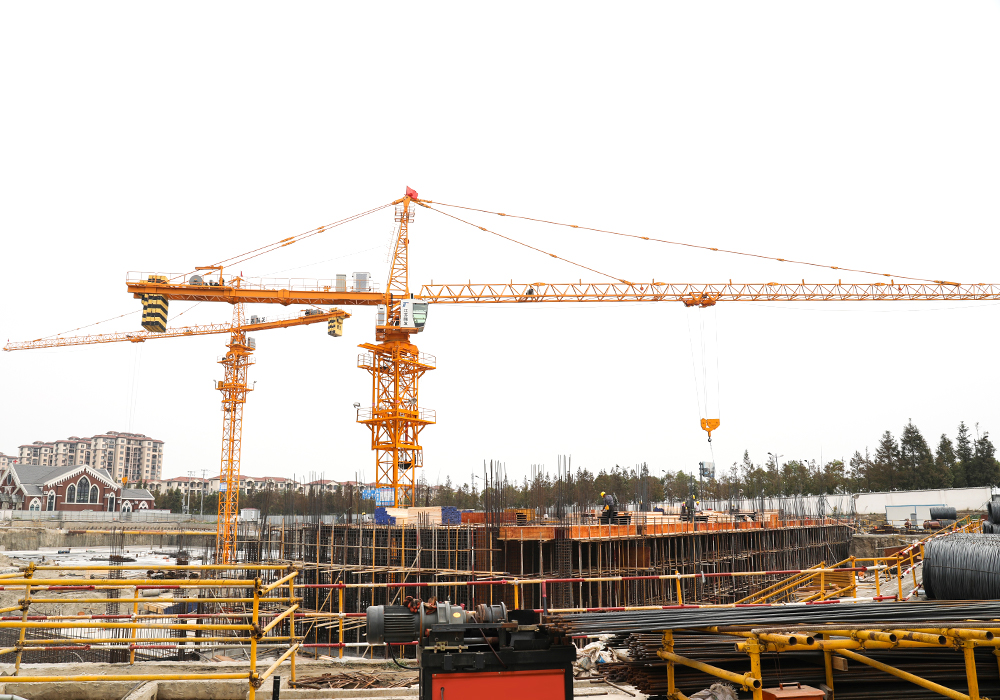
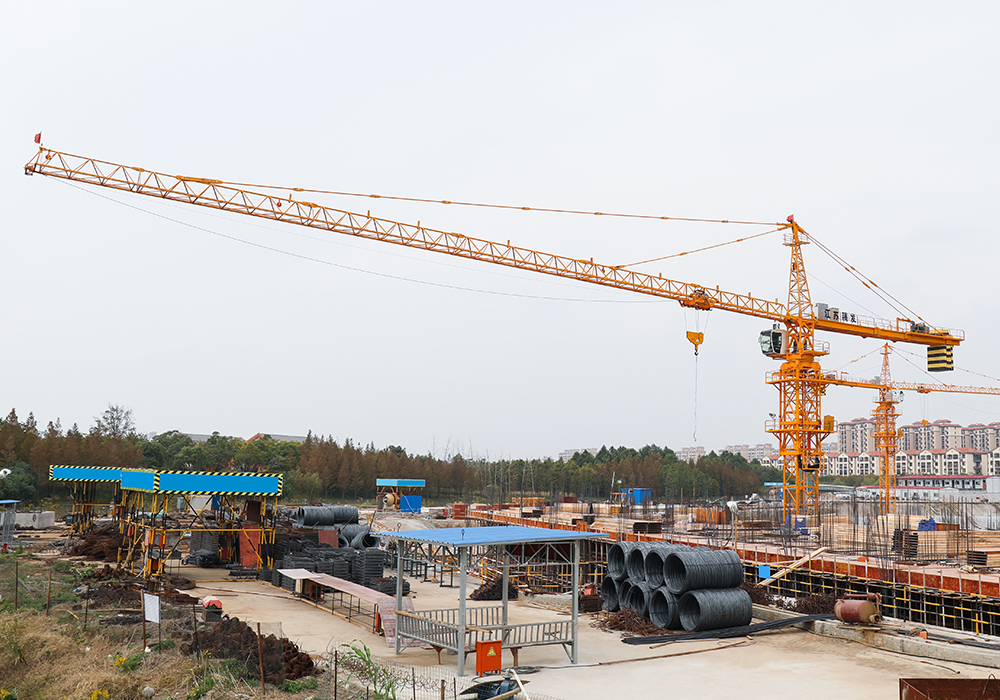
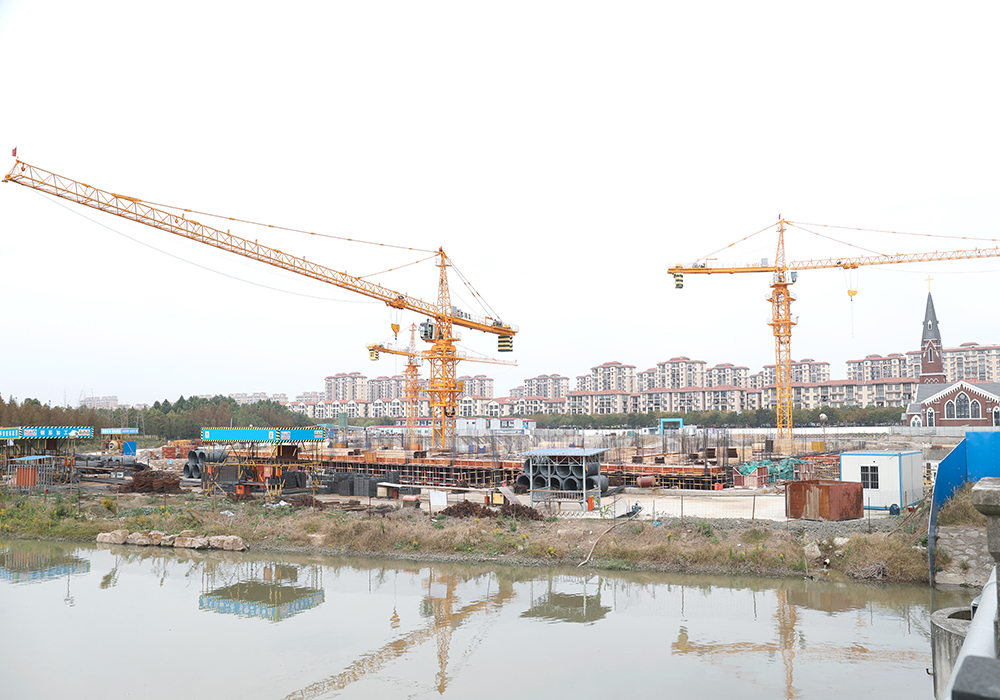
One of the most significant challenges on mega-projects is tower crane interference. When multiple cranes overlap, the "cat-head" of a traditional crane necessitates a large vertical gap between the jibs of adjacent units to prevent collisions. Because the topless tower crane has a flat upper profile, the vertical distance required between overlapping jibs can be reduced by several meters. This allows the overall height of the crane group to be lower, reducing the amount of mast sections needed and lowering the total wind load on the system. Engineers often specify a flat head tower crane for these scenarios to optimize the work radius without compromising safety.
3. Modular Assembly and Logistics
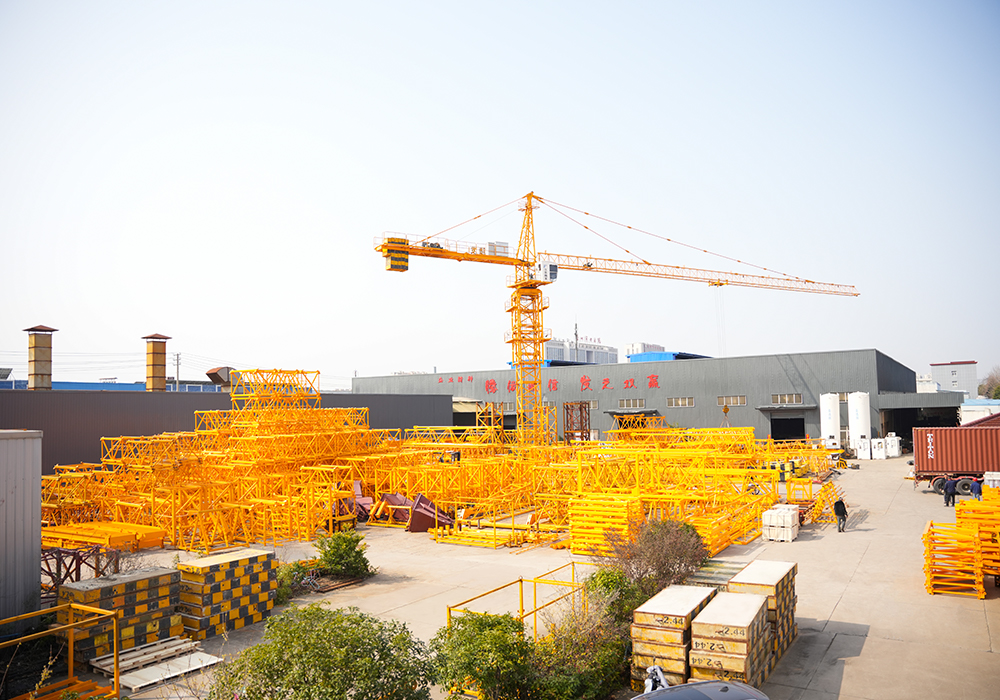
The topless tower crane assembly process is significantly faster and safer than that of pendant-style cranes. Since there are no tie-bars to install at height, the jib can be assembled section-by-section in the air or pre-assembled on the ground in larger chunks. This modularity is a key factor when considering the cost-benefit of topless tower cranes, as it reduces the required capacity of the assist crane and shortens the road closure times in busy cities. Furthermore, the topless tower crane jib design allows for easier maintenance access, as technicians do not need to navigate complex tensioning systems.
Comparison: Assembly Logistics and Requirements
The logistics of the topless design favor sites with limited ground space and tight schedules, as the lifting requirements for assembly are less restrictive.
| Logistical Factor | Conventional Crane | Topless Tower Crane |
| Assist Crane Capacity | High (To lift full jib and apex) | Moderate (Can lift jib in pieces) |
| Assembly Time | Standard (High man-hours) | Reduced (20-30% faster) |
| Transport Volume | Apex adds bulk | Compact (Uniform jib sections) |
4. Operational Safety and Load Capacity
There is a common misconception regarding the topless tower crane load capacity. Modern engineering ensures that these cranes are just as capable as their pendant-bearing counterparts. By using high-tensile steel and advanced box-girder jib designs, a topless tower crane can handle heavy lifting tasks while providing better stability in high winds. The topless tower crane wind load resistance is often superior because the removal of the cat-head reduces the surface area at the highest point of the crane, where wind speeds are greatest. This makes them the best tower crane for crowded jobsites located in coastal or high-altitude regions.
Key Technical Advantages:
- Precision Lifting: Reduced jib deflection compared to older designs.
- Durability: Fewer moving parts and connection points in the jib structure.
- Versatility: Jib lengths can be easily modified by adding or removing modular sections.
5. Technical Specifications for Site Planning
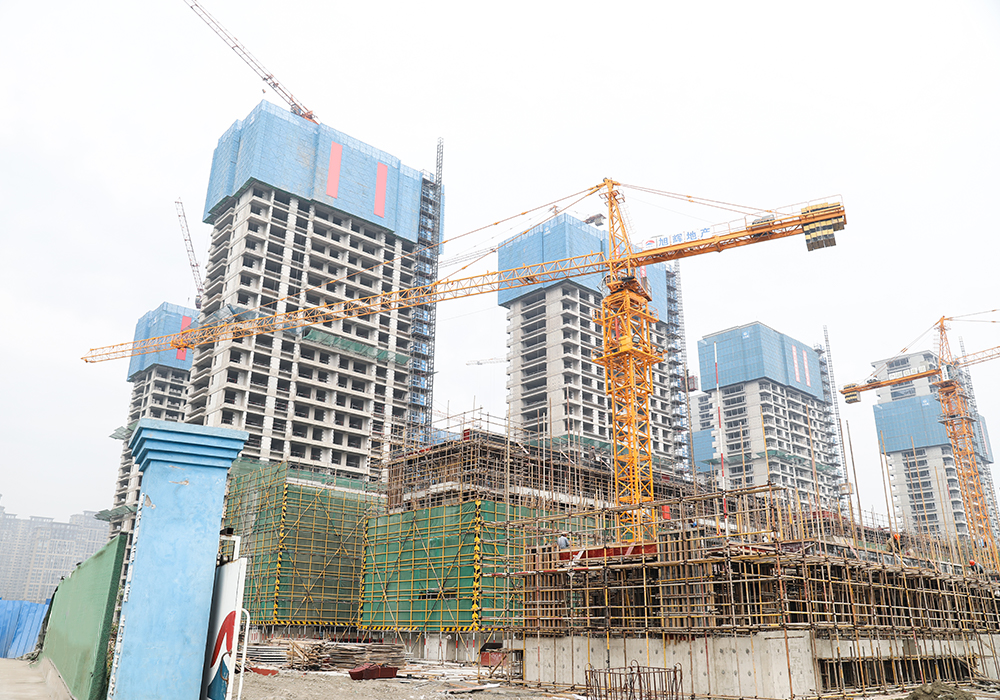
When selecting a topless tower crane for high-rise construction, engineers must evaluate the tower crane height clearance requirements. The lack of pendants allows the jib to operate just meters below another crane's jib or a bridge soffit. This is why why choose a topless tower crane has become the standard answer for airport-adjacent projects or dense urban cores. The mathematical reduction in "dead space" above the jib allows for more efficient site layouts and faster cycle times for the hook.
Frequently Asked Questions (FAQ)
1. What is the main advantage of a topless tower crane?
The primary advantage is its flat profile, which allows multiple cranes to overlap at closer vertical intervals, significantly reducing the total height of the crane group and simplifying the assembly process.
2. Is a flat top tower crane advantages visible in load capacity?
Yes, while the design looks different, the use of high-strength materials allows it to match or exceed the load capacity of traditional cranes while offering more modular jib length options.
3. How does tower crane interference affect site planning?
Interference occurs when the radii of two cranes overlap. Using topless models allows for a much smaller vertical gap (clearance) between overlapping jibs, which saves on mast sections and lowers the center of gravity of the cranes.
4. Is the topless tower crane assembly process safer?
Generally, yes. Because there are no pendant bars or tie-rods to be pinned together at extreme heights, the number of high-risk tasks for the assembly crew is reduced.
5. Why is topless tower crane wind load resistance important?
In high-wind areas, the reduced profile of a topless crane (due to the absence of the cat-head) results in less wind resistance, which improves the overall structural safety and reduces the stress on the tower mast and foundation.
Industry References
- ISO 4301-3: Cranes — Classification — Part 3: Tower cranes.
- CMAA Specification 70: Specifications for Top Running Bridge and Gantry Type Multiple Girder Electric Overhead Traveling Cranes.
- Safety Standards for Tower Cranes (ASME B30.3).
- Journal of Construction Engineering: Modular Design in Lifting Equipment.