

 English
 русский
 Español
 中文简体
中文简体
In the world of high-rise construction, the selection of the right lifting equipment is a critical decision that impacts project efficiency, safety, and feasibility. Two primary contenders dominate urban skylines: the luffing jib tower crane and the conventional tower crane (often referred to as a saddle jib or hammerhead crane). While they share the fundamental purpose of lifting heavy materials, their design philosophies and operational applications are distinctly different. Understanding these differences is essential for project managers, engineers, and site planners to optimize their construction strategy. This article delves deep into the mechanics, advantages, limitations, and ideal use cases of each crane type, providing a comprehensive comparison to guide your next project decision.
Content
1. Fundamental Design and Jib Mechanism
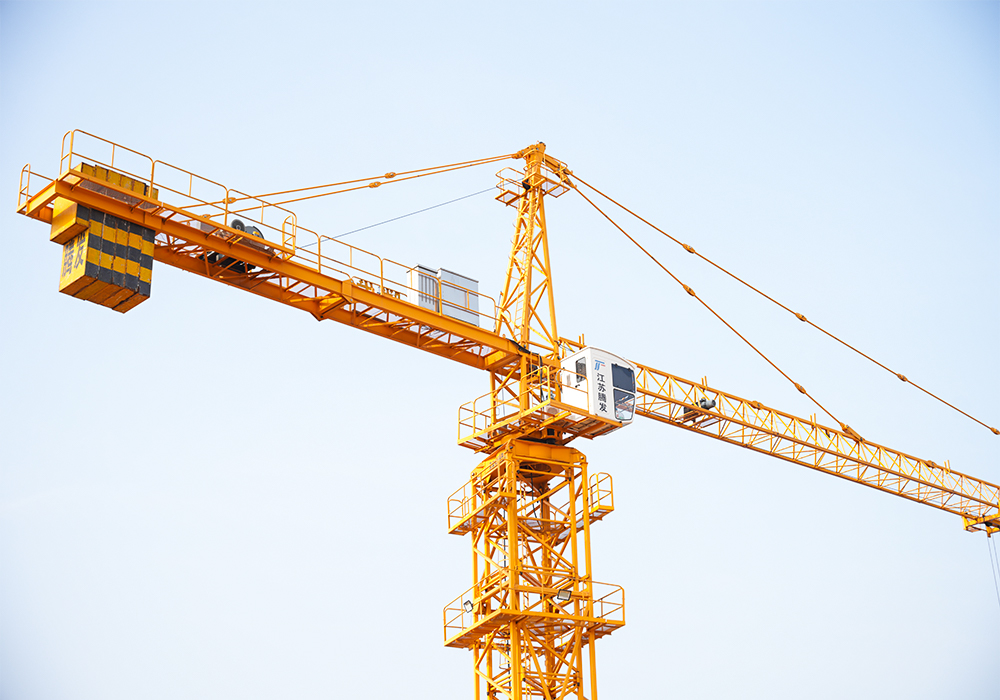
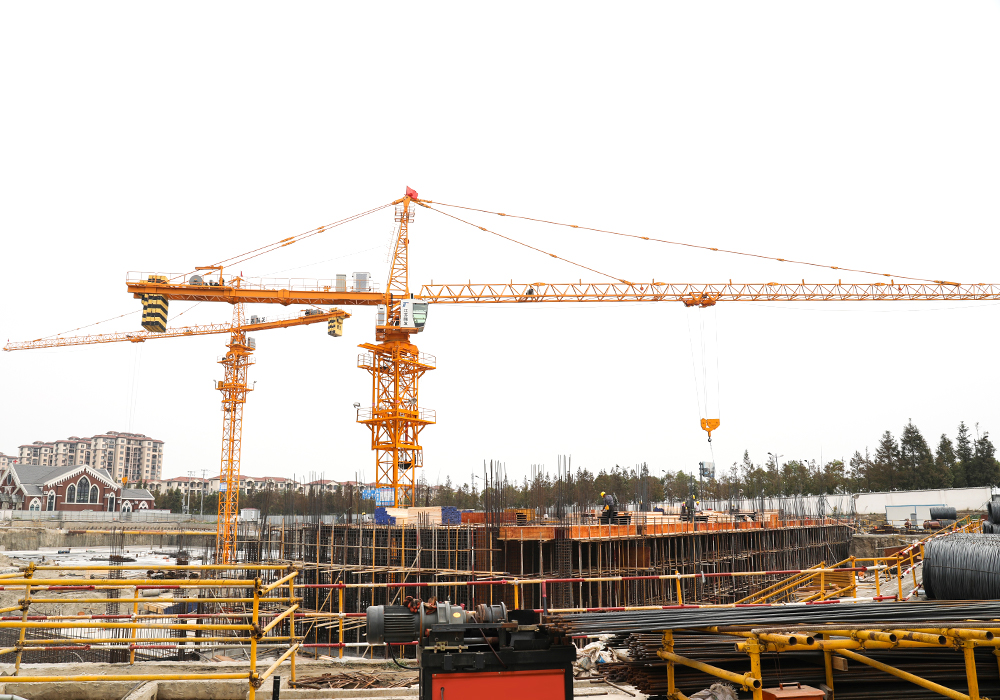
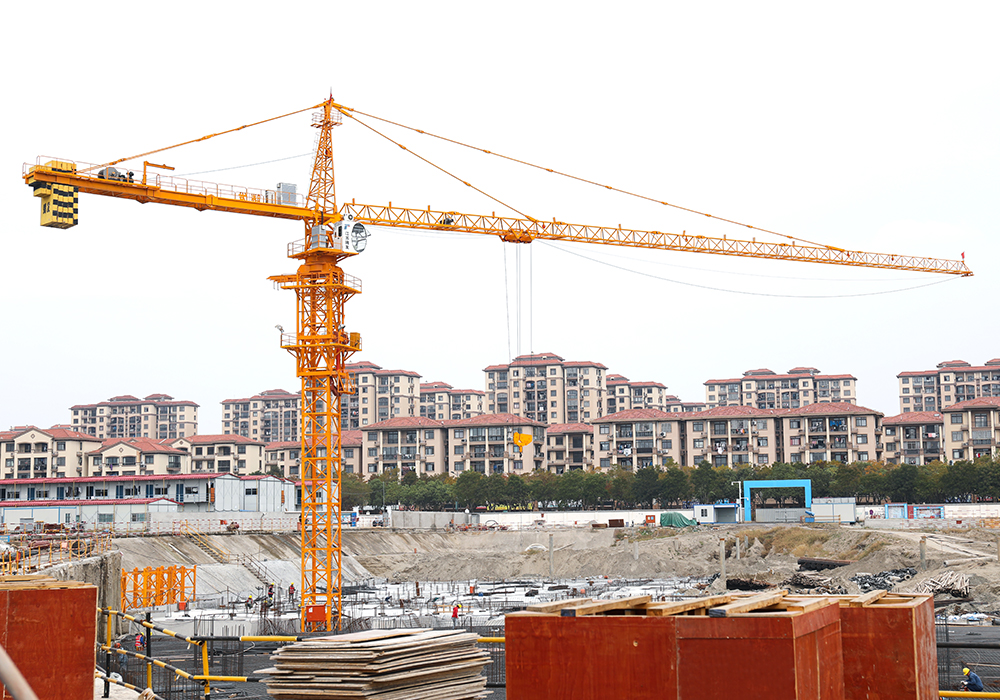
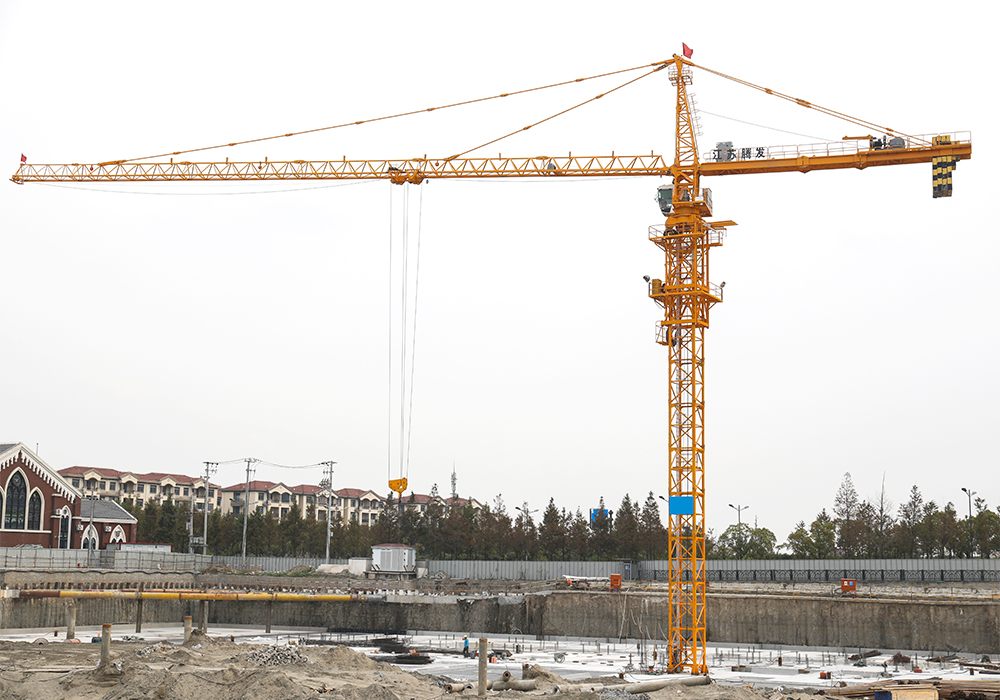
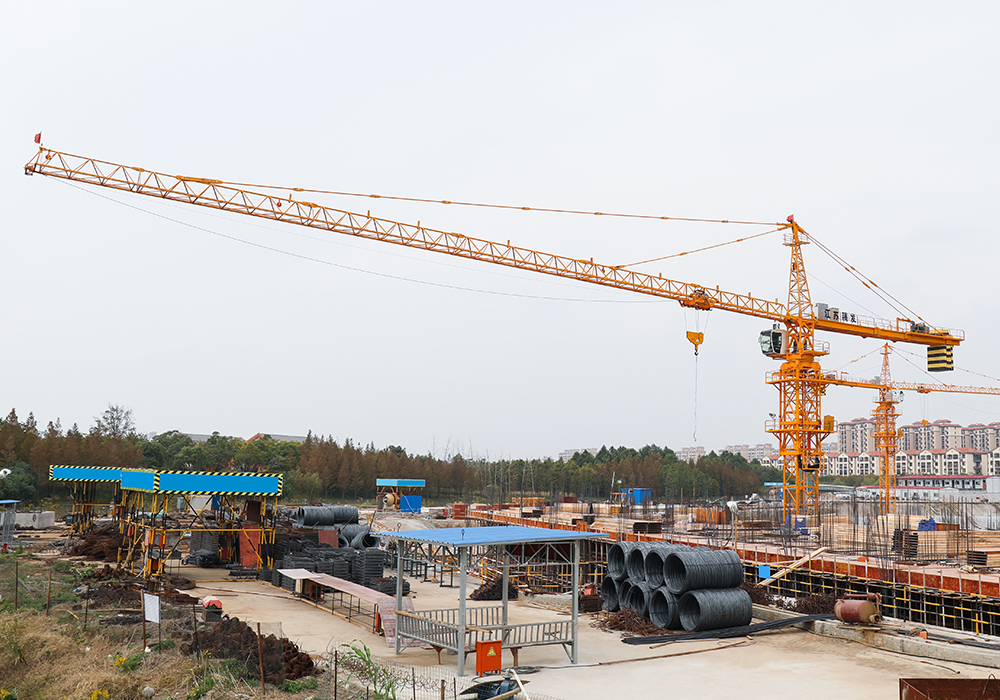
The most apparent and significant difference lies in the design and movement of the jib, the crane's horizontal working arm. This fundamental distinction dictates everything from the crane's footprint to its lifting capacity at various radii. A conventional tower crane features a fixed, horizontal jib with a trolley that runs along its length to move the load horizontally. In contrast, the defining feature of a luffing jib tower crane is its ability to "luff" – meaning its jib can be raised and lowered (changing its angle relative to the horizontal) to move the load in and out. This pivotal difference in mechanics creates a cascade of implications for their operation in constrained sites, a key reason why many search for information on luffing jib crane advantages in tight spaces.
- Conventional (Saddle Jib) Crane: Operates with a constant working radius. The trolley's position determines the load's distance from the mast. The counter-jib is typically fixed and balances the loaded jib.
- Luffing Jib Crane: The hook remains at the tip of the jib. The radius is altered by changing the jib's angle; raising the jib reduces the radius, lowering it increases the radius. This allows it to work in a constantly changing arc rather than a fixed circle.
1.1 Comparative Analysis of Working Ranges
To visualize the operational envelopes of both cranes, the following table contrasts their key working parameters. This is crucial for planning lifts and understanding why a luffing jib might be specified for a project with multiple closely-packed buildings or severe space restrictions on the ground. The ability to operate with a reduced tail-swing radius is a direct result of the luffing mechanism, as the jib can be raised to a near-vertical position to clear obstacles.
| Feature | Conventional Saddle Jib Crane | Luffing Jib Tower Crane | |
| Jib Movement | Fixed horizontal; trolley movement. | Vertical luffing (raising/lowering). | |
| Working Envelope | Full 360° circle of constant maximum radius. | Variable radius; creates a "doughnut" shaped envelope with a void directly under the jib. | |
| Tail Swing (Counter-Jib Clearance) | Large, fixed sweep area. | Minimal when jib is raised; greatly reduced tail-swing radius. | |
| Load Chart Complexity | Capacity primarily varies with trolley radius. | Capacity varies with both jib angle and hook radius. |
2. Site Suitability and Urban Construction Applications
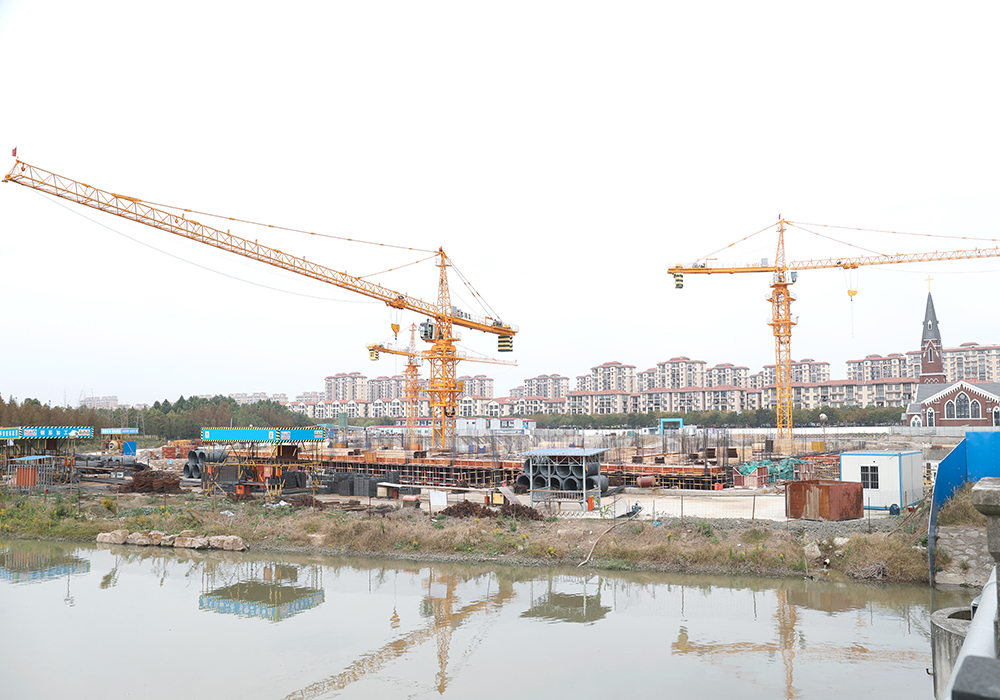
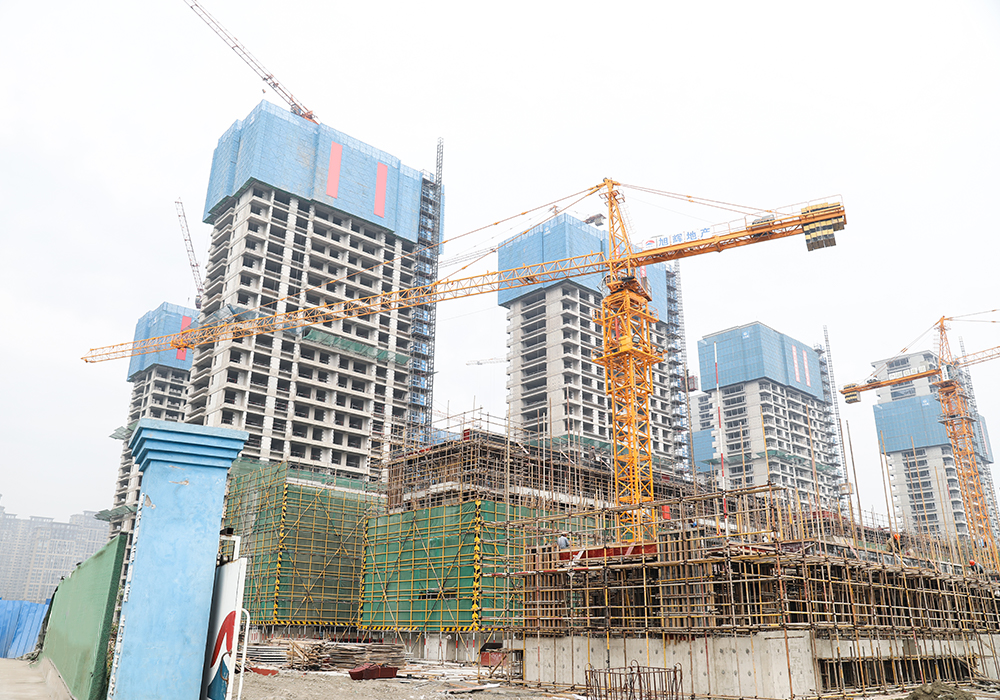
The choice between crane types is heavily influenced by the project's geographical and architectural context. In dense urban environments, where space is at a premium and neighboring structures are a constant concern, the luffing jib tower crane often becomes the default solution. Its unique ability to operate without infringing on adjacent airspace is a game-changer. For projects involving tower crane selection for high-rise buildings in cities like London, New York, or Hong Kong, the luffing jib's profile is a frequent sight. The crane can "fold" its jib up to weave between existing buildings, other cranes on a multi-tower site, or to avoid over-sailing sensitive properties—a legal requirement in many jurisdictions.
- Ideal for Conventional Cranes: Greenfield sites, large open plots, industrial complexes, and projects where a wide, constant lifting radius is beneficial and there are no airspace restrictions.
- Ideal for Luffing Jib Cranes: Constrained city-center sites, tight footprints, projects with multiple towers in close proximity, retrofitting or refurbishment work, and sites with strict "over-sailing" prohibitions.
- Critical Consideration: The decision process often involves a detailed tower crane load chart analysis for luffing jibs to ensure the crane can service all required pickup and drop-off points within its variable-radius, high-capacity envelope.
3. Lifting Capacity and Height Considerations
Both crane types can be engineered to reach tremendous heights and lift substantial loads, but their capacity profiles differ significantly. A conventional crane's capacity typically decreases as the trolley moves out along the jib. A luffing jib crane, however, often maintains a higher capacity at its maximum radius because the load is always at the jib tip, and the geometry of the luffing mechanism can be optimized for strength. Furthermore, when considering how luffing jib cranes improve safety on congested sites, their stability at great heights under wind loads is a major factor. The ability to raise the jib into a more streamlined, vertical position presents a smaller surface area to the wind, reducing wind-induced moment forces on the mast compared to a long, fixed horizontal jib.
- Capacity at Radius: Luffing jibs frequently offer superior lifting charts at the long radii needed for tall, slender buildings.
- Height Attainment: Both types can be climbed to great heights. However, luffing jibs are often preferred for the world's tallest structures due to their wind stability and precise load placement capabilities at extreme heights.
- Dynamic Load Handling: The luffing action allows for smoother load control in tight spots, as the load is moved radially by changing the jib angle rather than trolley acceleration/deceleration.
3.1 Cost-Benefit and Operational Efficiency Analysis
While the luffing jib tower crane offers distinct technical advantages, it comes with a different cost and operational profile. The initial capital cost, rental rates, and assembly/disassembly complexity are generally higher for a luffing jib crane. Its mechanical system for luffing is more complex than a simple trolley system. Therefore, the decision isn't just technical but also economic. Project planners must weigh the higher daily cost against the potential for enabling a project that would be impossible with a conventional crane, or against the risk and cost of delays from needing to negotiate over-sailing rights. Understanding the cost comparison of luffing jib vs hammerhead crane over the total project lifecycle is a vital part of the selection process.
| Aspect | Conventional Saddle Jib Crane | Luffing Jib Tower Crane |
| Initial/Rental Cost | Generally lower. | Significantly higher. |
| Operating Complexity | Simpler trolley operation. | More complex, requires skilled operator for simultaneous luffing/slewing/hoisting. |
| Erection & Dismantling | Standardized, often faster. | More complex due to luffing mechanism, potentially slower and more costly. |
| Site Enabling Value | Enables standard projects. | Enables high-value projects in impossible sites, justifying its premium. |
| Lift Cycle Time | Can be faster for repetitive lifts at fixed radii. | May be slightly slower due to compound motions, but offers unparalleled precision in tight spaces. |
FAQ
What is the main advantage of a luffing jib tower crane?
The primary and most critical advantage is its significantly reduced tail-swing radius and the ability to work in extremely confined spaces. By raising its jib to a steeper angle, the crane minimizes the swept area of its counter-jib, allowing it to be placed very close to adjacent buildings or other cranes. This makes it indispensable for dense urban construction where over-sailing neighboring properties is prohibited or physically impossible. Furthermore, its variable radius allows for precise load placement in complex site geometries.
Are luffing jib cranes safer than conventional tower cranes?
Both crane types are extremely safe when operated correctly within their design parameters. However, luffing jib cranes improve safety on congested sites in specific ways. Their reduced swing radius lowers the risk of collision with nearby structures or other plant equipment. Their superior stability in high winds, due to the ability to present a smaller profile, reduces the risk of wind-related incidents. Additionally, the luffing mechanism can allow for more controlled load movement in tight gaps. Safety is ultimately dependent on proper planning, operator training, and adherence to load charts, but the luffing jib's design inherently mitigates certain spatial risks.
Why are luffing jib cranes more expensive?
The higher cost stems from greater mechanical complexity and manufacturing precision. The luffing jib crane advantages in tight spaces come from a sophisticated system of hydraulics or cables and sheaves to raise and lower the heavy jib, which is more intricate than the trolley and track system on a conventional crane. This complexity extends to a more robust slew ring, stronger jib design, and advanced control systems. Consequently, the capital investment, maintenance requirements, and technical expertise needed for erection and operation all contribute to a higher total cost of ownership, which is a key part of any cost comparison of luffing jib vs hammerhead crane.
How do I decide which type of crane my project needs?
The decision requires a detailed tower crane selection for high-rise buildings analysis. Key factors include: 1) Site Footprint: Plot size and proximity to boundaries/other buildings. 2) Airspace Restrictions: Legal or physical over-sailing limitations. 3) Building Geometry: The shape, height, and required lifting radii. 4) Load Requirements: Conduct a thorough tower crane load chart analysis for luffing jibs and conventional cranes to see which can service all critical points. 5) Project Budget: Weighing the higher cost of a luffing jib against the value and feasibility it unlocks. A consultation with a lift planning engineer is highly recommended for complex projects.
Can a luffing jib crane lift more than a conventional crane?
Not universally, but often at the critical maximum radii. While both types come in a vast range of capacities, a luffing jib tower crane typically has a more favorable load chart at longer radii. On a conventional crane, capacity drops steadily as the trolley moves out. On a luffing jib, because the load is always at the tip and the jib is in pure compression (rather than bending from a trolley), engineers can design it to maintain high capacities even at its maximum working radius. For a tall, slender building requiring heavy lifts at the far edges of the structure, the luffing jib is often the only viable option.