

 English
 русский
 Español
 中文简体
中文简体
Content
- 1 Introduction to Heavy Lifting in Modern Infrastructure
- 2 Structural Variations: Hammerhead vs. Luffing Jib
- 3 Technical Performance Comparison Table
- 4 Load Moment and Stability Engineering
- 5 Precision Control and Inverter Systems
- 6 Essential Safety Systems for Heavy Operations
- 7 Foundation and Base Configurations
- 8 Maintenance and Inspection Protocols for Longevity
- 9 FAQ
- 10 References
Introduction to Heavy Lifting in Modern Infrastructure
The evolution of modern architecture, characterized by increasing verticality and complex structural designs, has placed unprecedented demands on lifting equipment. Heavy construction tower cranes serve as the backbone of these large-scale projects, responsible for the precise placement of precast concrete, structural steel, and heavy machinery. Selecting the appropriate crane configuration is not merely a logistical decision but a critical engineering calculation that impacts site safety, operational efficiency, and structural integrity. This guide provides an in-depth technical analysis of tower crane varieties, focusing on their mechanical advantages and application-specific performance.
Structural Variations: Hammerhead vs. Luffing Jib
The primary distinction in the tower crane market lies between the hammerhead (horizontal jib) and the luffing jib configurations. Each design offers unique mechanical properties suited for different site constraints.
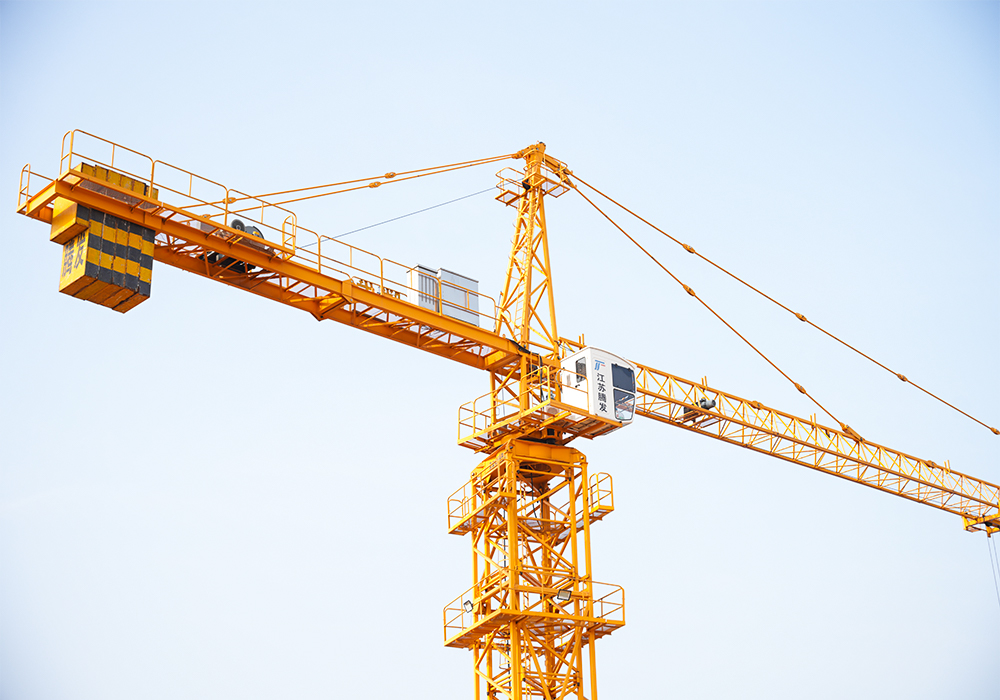
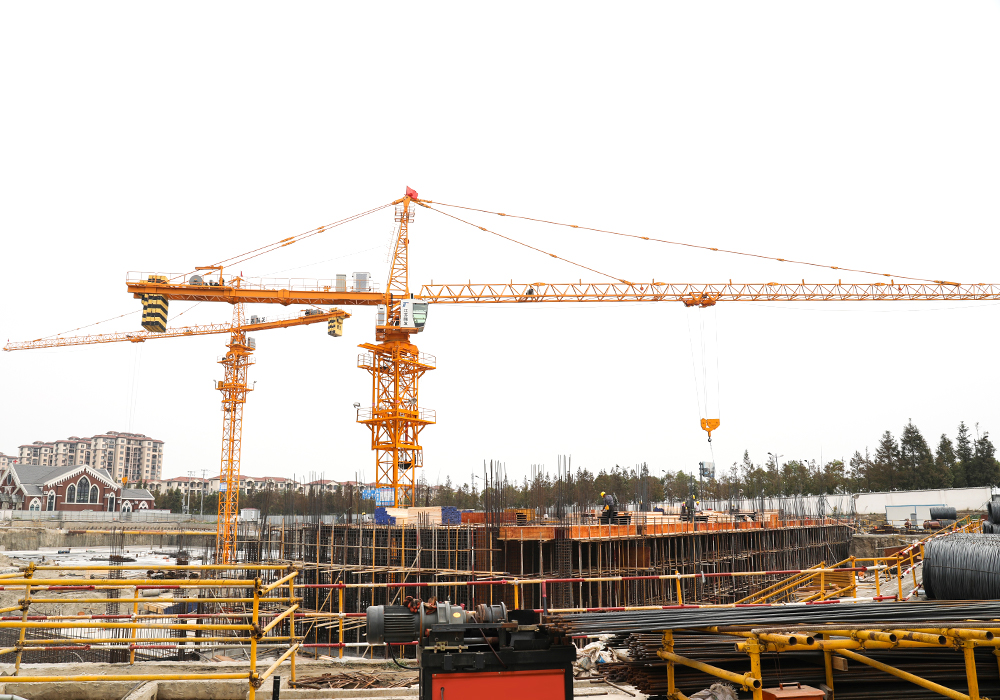
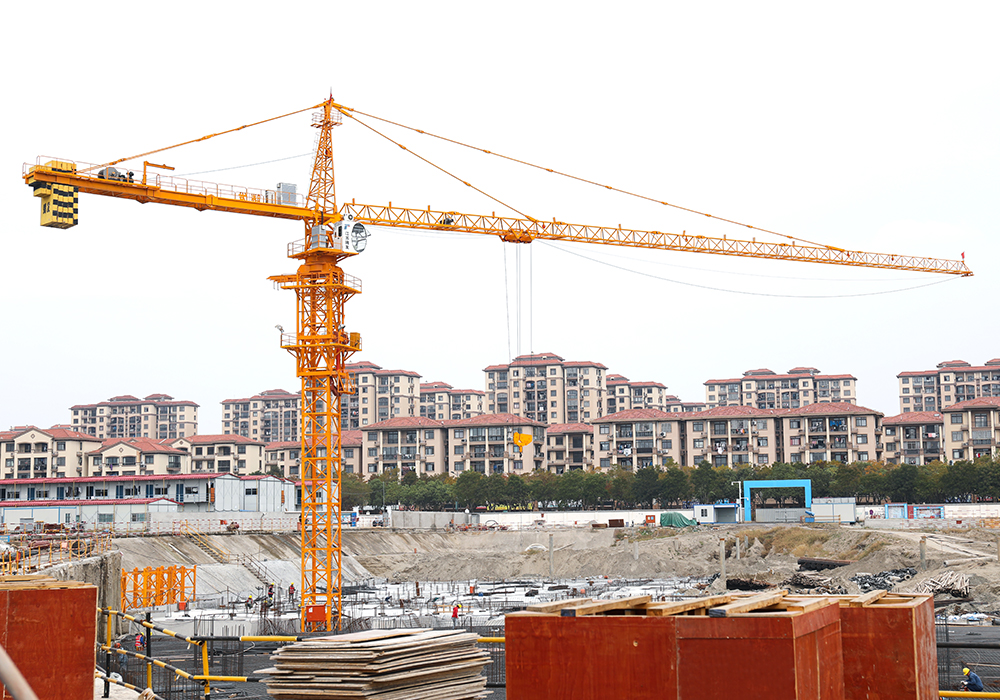
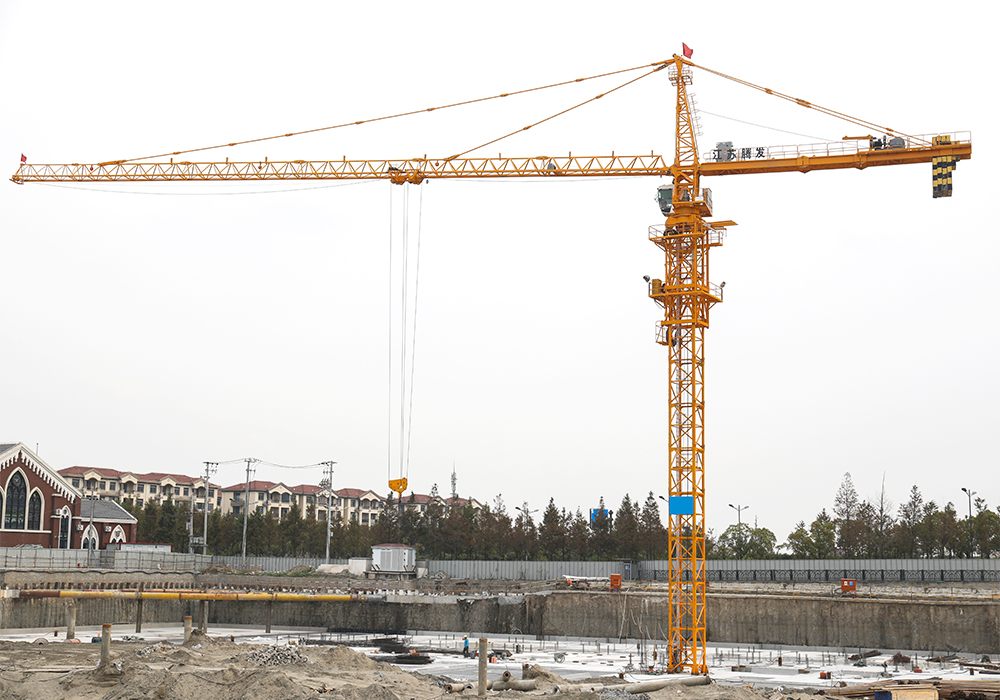
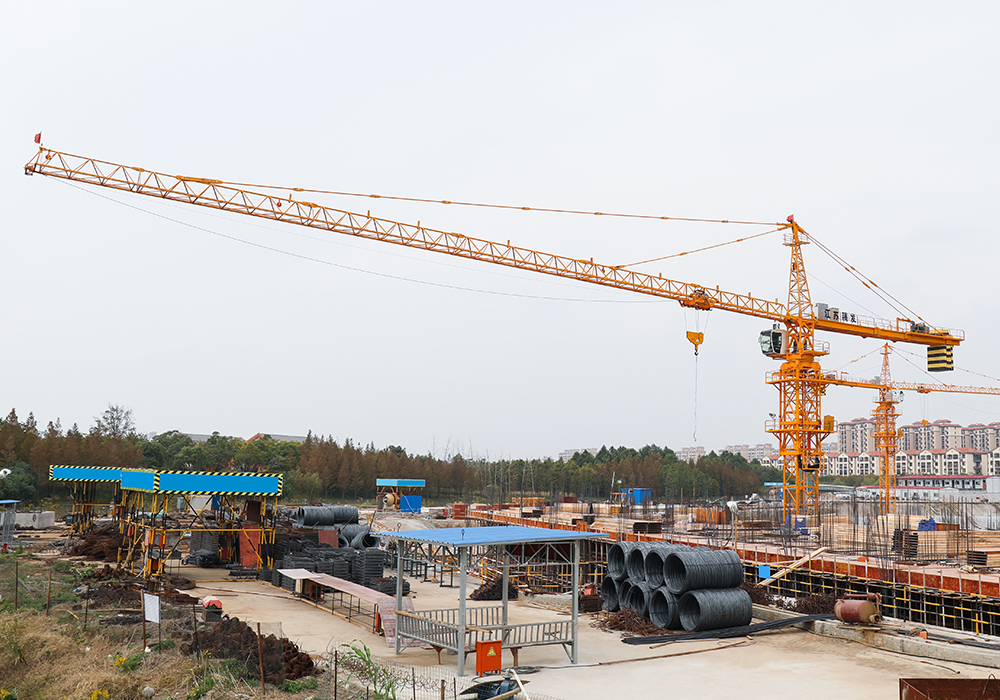
The hammerhead tower crane, often referred to as a horizontal jib crane, utilizes a trolley that travels along the jib to position the load. This design is highly valued for its speed and precision in open construction sites. Its simplified mechanical structure allows for faster lifting cycles and easier maintenance of the trolley and hoist systems. Within this category, engineers often choose between A-Frame and Flat-Top models. A-Frame cranes use pendant bars to support the jib, allowing for higher load capacities over longer reaches, while Flat-Top cranes eliminate the overhead “top,” making them ideal for sites where multiple cranes must overlap at different heights.
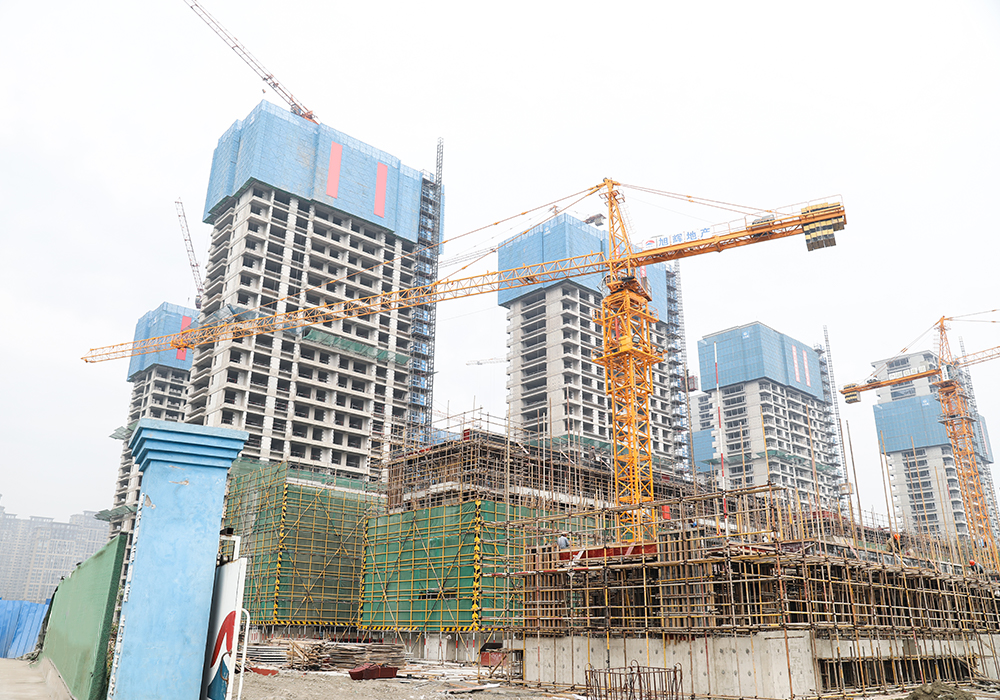
In contrast, the luffing jib tower crane is the specialized solution for congested urban environments. Instead of a moving trolley, the entire jib is raised or lowered to change the radius of the hook. This movement, known as luffing, allows the crane to operate within a very narrow slewing radius, effectively avoiding neighboring buildings or other cranes. While the mechanical complexity of luffing mechanisms is higher, their ability to provide high lifting capacities at steep angles is unmatched in high-density high-rise construction.
Technical Performance Comparison Table
To better understand the operational differences, the following table compares the typical specifications and performance metrics of heavy-duty hammerhead and luffing jib cranes.
| Feature | Hammerhead Tower Crane | Luffing Jib Tower Crane |
|---|---|---|
| Primary Movement | Horizontal Trolley Racking | Vertical Jib Pivoting (Luffing) |
| Space Requirement | Large (Fixed Jib Length) | Minimal (Variable Jib Angle) |
| Lifting Speed | Generally Faster (Stable Trolley) | Moderate (Dependent on Luffing Speed) |
| Max Capacity | High (Balanced by Counter-Jib) | Extremely High (at short radii) |
| Oversailing Risk | High (Jib always horizontal) | Low (Jib can be raised to clear obstacles) |
| Setup Complexity | Standard Modular Assembly | Higher (Luffing winch and rope system) |
Load Moment and Stability Engineering
The stability of a heavy construction tower crane is governed by the Load Moment Indicator (LMI) and the structural counter-weighting system. Every lift is a balance between the weight of the load, the distance from the mast (the radius), and the counter-ballast located on the counter-jib.
In heavy-duty applications, the crane’s mast must withstand significant bending moments and torsional forces. Manufacturers utilize high-strength Q345B or Q460 steel to ensure the mast sections can support the vertical load while resisting wind-induced oscillation. For projects exceeding 200 meters, the crane is typically anchored to the building structure using internal or external climbing frames. This transition from a free-standing to a tied-in configuration requires precise structural engineering to ensure the building can support the lateral forces exerted by the crane during peak lifting operations.
Precision Control and Inverter Systems
Modern heavy tower cranes have moved away from traditional contactor-based controls to sophisticated Variable Frequency Drive (VFD) and PLC-integrated systems. These inverter systems allow for “micromovement” or “inching” control, which is essential when positioning heavy precast components within millimeters of their final location.
The integration of T-Torque slewing mechanisms ensures smooth rotation, eliminating the “pendulum effect” that occurs when a crane starts or stops its rotation abruptly. By utilizing digital encoders and real-time feedback loops, the control system can automatically compensate for wind drift and load sway, significantly reducing the physical strain on the operator and increasing the overall safety of the lift cycle.
Essential Safety Systems for Heavy Operations
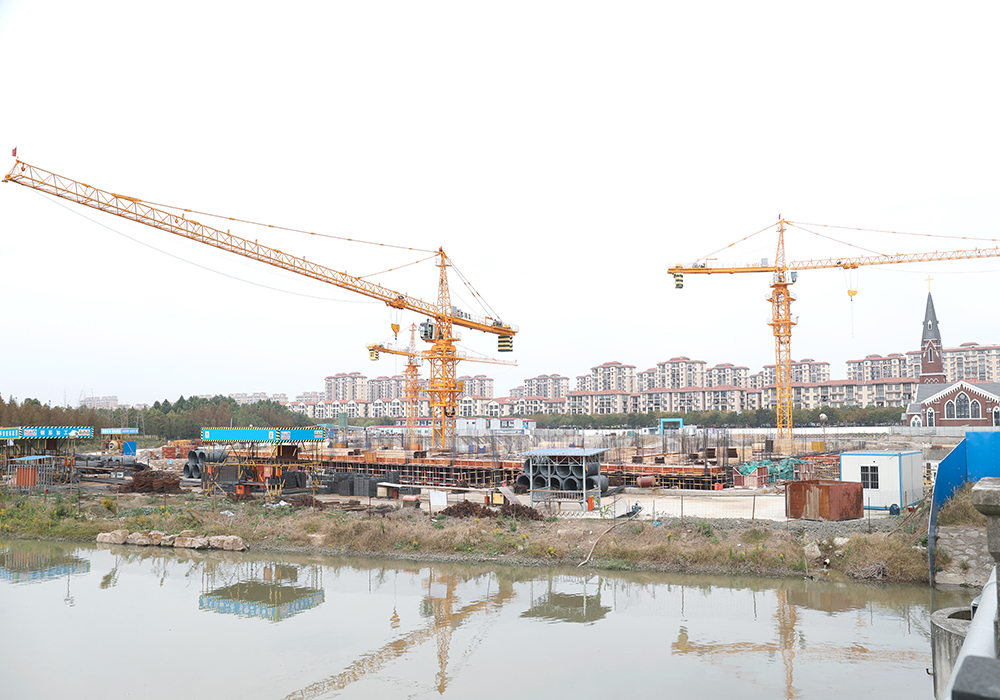
Safety in tower crane operation is a multi-layered approach involving mechanical limits and electronic monitoring. Every heavy construction crane must be equipped with a suite of safety devices to prevent structural failure or site accidents.
- Anti-Collision Systems (ACD): In sites with multiple overlapping cranes, ACD sensors track the position of every jib and trolley in real-time. If two cranes enter a trajectory that risks a collision, the system automatically slows or halts movement.
- Anemometers and Wind Alarms: High-altitude wind speeds can differ significantly from ground level. Integrated wind sensors trigger alerts when speeds exceed safe operating limits (typically 15-20 m/s), mandating that the crane be placed in “weathervane” mode.
- Hoisting and Trolley Limit Switches: These mechanical switches prevent the hook block from striking the jib (two-blocking) or the trolley from over-traveling the jib ends.
- Electronic Load Moment Limiters: These systems continuously calculate the actual load versus the rated capacity for the current radius, preventing the operator from attempting a lift that could tip or collapse the crane.
Foundation and Base Configurations
The foundation is the most critical part of the tower crane installation. Depending on the soil conditions and project duration, several base types are utilized:
- Concrete Foundation Cross: A permanent or semi-permanent reinforced concrete block that provides maximum stability for the highest free-standing heights.
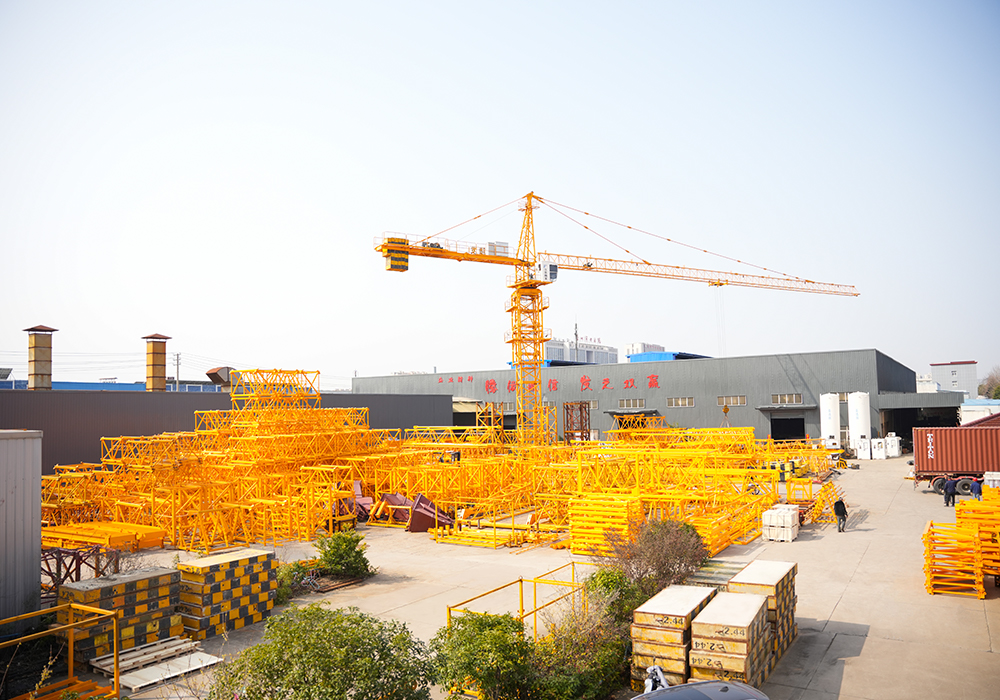
- Ballast Base (Chassis): Utilizes heavy concrete weights placed on a steel frame. This is preferred for projects where the crane needs to be moved or where excavation for a permanent foundation is not possible.
- Fixing Angles: These are embedded directly into the building’s foundation or a specialized concrete pad, offering a compact footprint for tight sites.
Maintenance and Inspection Protocols for Longevity
To maintain the performance of heavy construction tower cranes, rigorous inspection schedules must be followed. This includes non-destructive testing (NDT) of critical weld joints, ultrasonic testing of the slew ring bolts, and regular lubrication of the wire ropes and sheaves. Given the extreme loads handled by these machines, even minor wear in the hoist drum or gearbox can lead to significant downtime. Utilizing synthetic lubricants and galvanized wire ropes can extend the service life of components in harsh environments, such as coastal or high-humidity regions.
FAQ
1. What is the difference between a Top-Slewing and a Bottom-Slewing tower crane?
Top-slewing cranes have the rotation mechanism at the top of the mast, allowing the jib to rotate while the tower remains stationary. This is the standard for heavy construction. Bottom-slewing cranes rotate the entire tower from the base and are typically smaller, self-erecting models used for low-rise projects.
2. When should I choose a Flat-Top crane over an A-Frame crane?
Choose a Flat-Top crane when you have multiple cranes operating in close proximity at different heights, as the lack of a tower head reduces the required vertical clearanceen cranes. A-Frame cranes are generally preferred for maximum reach and heavy-duty lifting capacity due to the structural support provided by the tie-bars.
3. How do tower cranes “climb” as a building grows taller?
Cranes use a “climbing frame” or “climbing cage” that fits around the mast. The frame uses hydraulic jacks to lift the top part of the crane (jib and cab) upward, creating a gap where a new mast section can be inserted and bolted into place.
4. What are the standard safety wind speeds for tower crane operation?
While it varies by model and local regulations, most cranes must stop lifting operations when wind speeds reach 15-20 m/s (approx. 34-45 mph). In storm conditions, the crane must be released to “weathervane” (rotate freely with the wind) to reduce structural wind load.
5. How is the maximum lifting capacity calculated for different radii?
This is determined by the Load Chart provided by the manufacturer. As the trolley moves further away from the mast (increasing the radius), the lifting capacity decreases to maintain the balance of the load moment against the counterweights.
References
- ISO 4302: Cranes - Wind Load Assessment. International Organization for Standardization.
- FEM 1.001: Rules for the Design of Hoisting Appliances. European Federation of Materials Handling.
- Safety of Tower Cranes: Best Practices Guide. Construction Plant-hire Association (CPA).
- Structural Analysis of Top-Slewing Tower Cranes. Journal of Construction Engineering and Management.
- Tower Crane Foundation Design and Engineering. Technical Manual for Civil Infrastructure.