

 English
 русский
 Español
 中文简体
中文简体
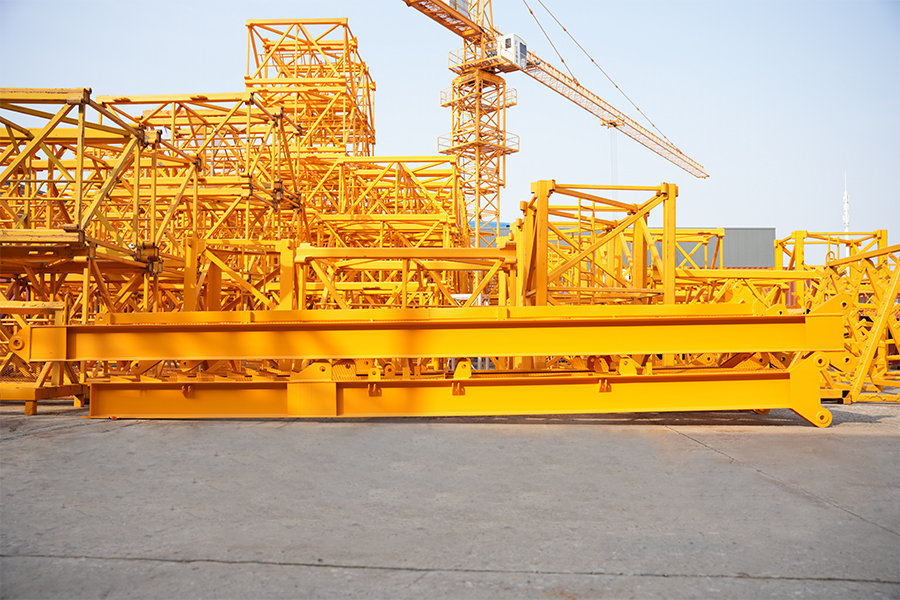
All heavy lifts with a tower crane depend on one metric: the available capacity at the required radius. A crane rated at 64 tonnes maximum may only lift 11 tonnes at the tip of an 80-meter jib. For heavy construction projects—power plants, industrial facilities, high-rise cores—the first decision is to select a tower crane whose load chart delivers the heaviest component at the farthest hook reach, with reserve for rigging weight. A heavy construction tower crane in the 500 to 1000 tonne-meter class is typically the starting point.
Content
Tower Crane Configurations for Heavy Construction
The three primary configurations each offer distinct benefits for heavy lifts. The choice often comes down to site space, required reach, and the weight of the single heaviest piece.
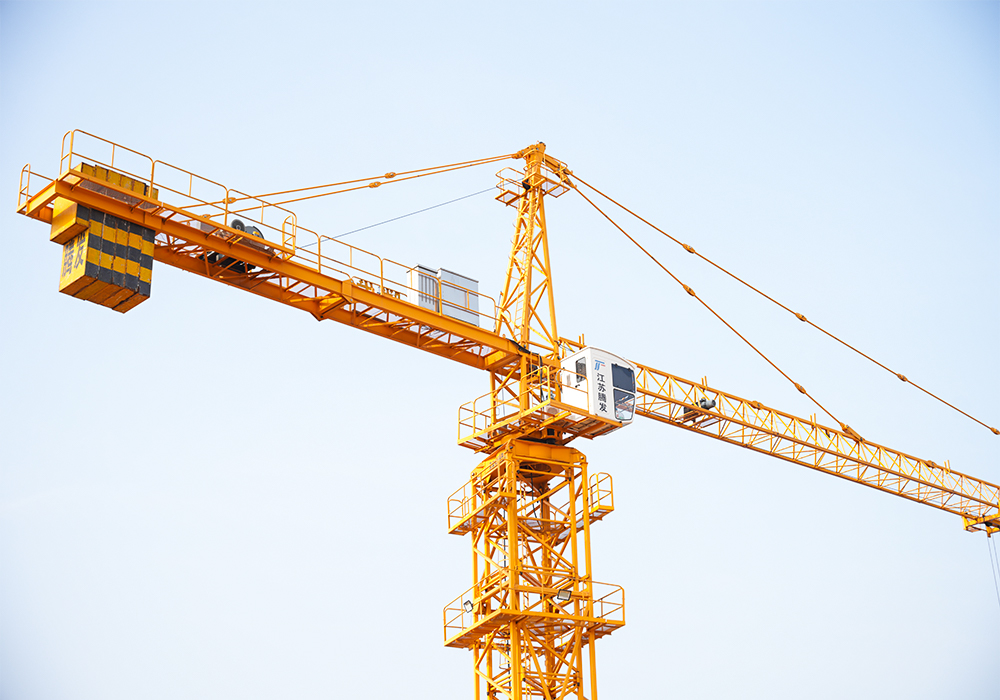
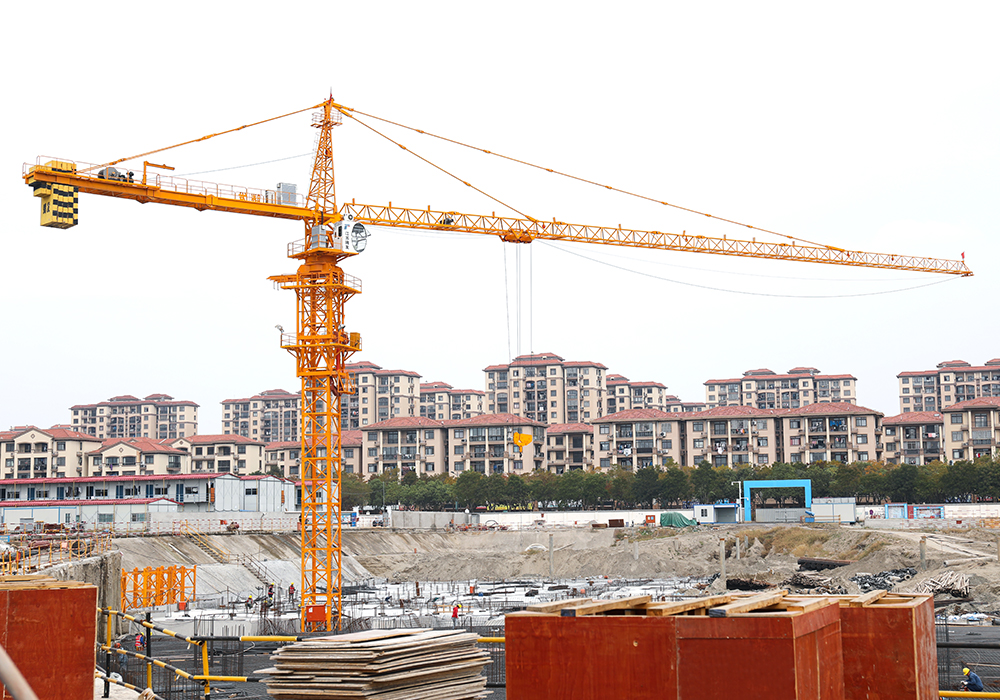
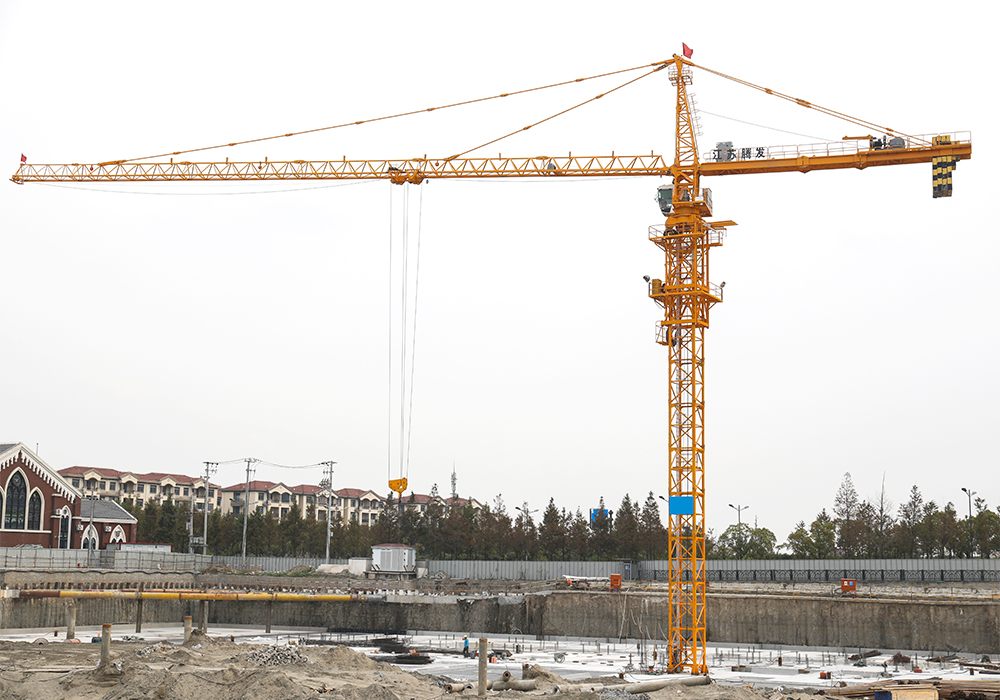
- Hammerhead: A horizontal jib with a trolley provides fast load handling. Heavy-duty versions with reinforced jibs and counter-jibs can lift up to 64 tonnes at 30 meters but lose capacity quickly at longer radii.
- Luffing jib: The jib angle adjusts, which increases clearance on congested sites and can offer higher lifting capacity at mid-radius. Luffers in the 450 to 900 tonne-meter class are often the first choice when multiple cranes must oversail each other.
- Flat-top: Modular tops allow easier erection and dismantling, and heavy-lift flat-top models now deliver up to 125 tonnes maximum capacity with 100-meter reaches, making them competitive with hammerhead cranes for industrial construction.
For lifts exceeding 50 tonnes at 25 meters or more, luffing jib and high-capacity flat-top cranes are the default engineering choices.
Defining the Critical Lift: Load Charts and Radius
A tower crane is selected based on its load moment rating, expressed in tonne-metres. This is the product of the lifted weight and the radius. However, the load chart is never linear; capacity falls off sharply at the tip. The table below illustrates how capacity changes from maximum to full reach on three typical heavy construction tower cranes.
| Crane Model | Max. Capacity (t) | Max. Radius (m) | Tip Load at Max. Radius (t) | Load Moment (tm) |
|---|---|---|---|---|
| Liebherr 630 EC-H 40 | 40 | 81 | 6.0 | 630 |
| Potain MD 1100 | 64 | 80 | 11.8 | 1100 |
| Liebherr 1000 EC-H 125 | 125 | 100 | 12.5 | 1250 |
Lift planning must add rigging weight and dynamic factors to the component weight. If a vessel weighs 52 tonnes and the rigging adds 2 tonnes, a 64-tonne crane that can only provide 54 tonnes at the required radius will be rejected. The project’s lift director defines the study for each critical lift with a planned radius, boom angle, and matching capacity.
Foundation and Tie-In Engineering for Heavy Cranes
A high-capacity tower crane imposes enormous overturning moments and vertical loads. The foundation must transfer these loads into the ground without exceeding settlement limits.
Reinforced Concrete Foundations
For a crane in the 600 to 800 tonne-meter class, a typical cast-in-place foundation block measures 18 meters by 18 meters, 2.5 meters deep, and weighs over 1,600 tonnes. The design accounts for the fully-loaded crane under full wind, plus the moment arm from the tower base. Anchor chairs cast into the concrete receive the mast section, and the permissible concrete bearing stress under factored loads often dictates the block dimensions.
Tie-In Collars and Climbing Forces
When the building itself supports the crane, tie collars transfer horizontal reactions up to 120 tonnes per connection into the slab edge or structural core. Each tie level must be analysed with the worst-case out-of-service wind and the lift condition. Miscalculating these reactions can damage the structure or overload the tower mast.
Erection and Climbing on Congested Sites
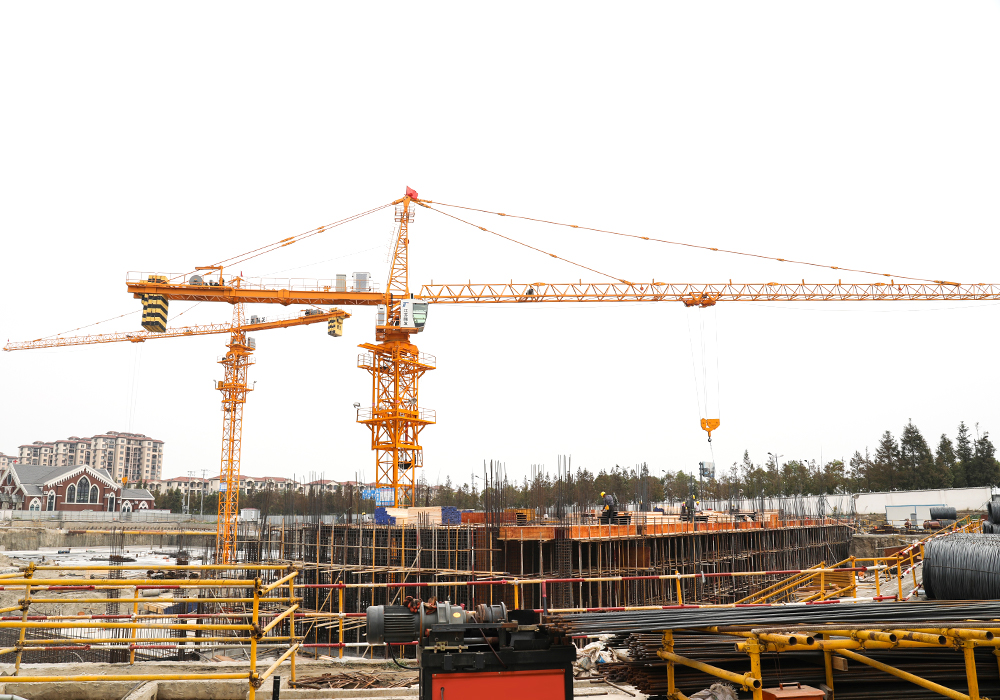
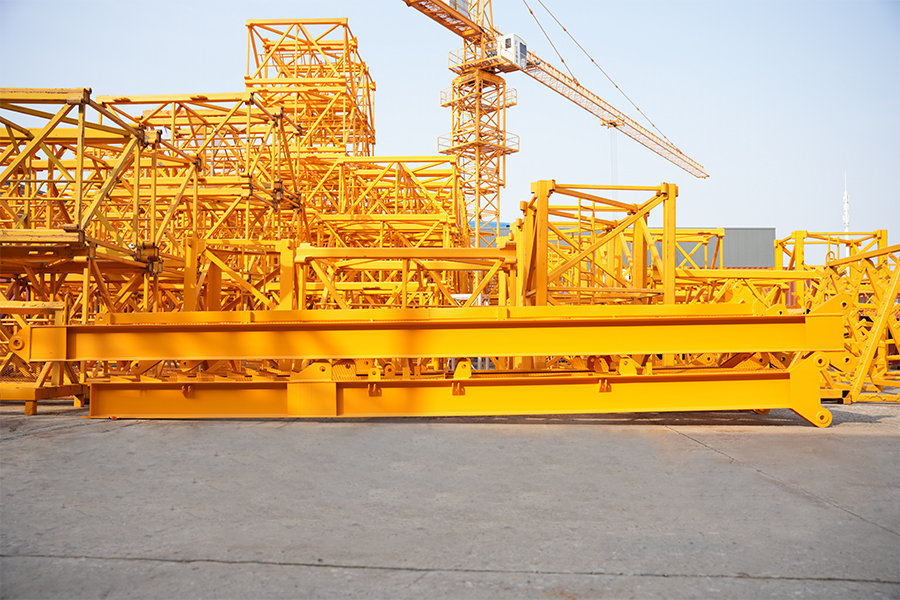
Heavy construction tower cranes rarely arrive fully assembled. They are erected with the help of a mobile crane of equal or greater reach. Luffing jib cranes can self-assemble part of their jib, but the base tower, slewing unit, and counter-jib require a large assist crane. A typical erection for a 64-tonne capacity luffer demands a 500-tonne all-terrain crane to place the mast sections and top unit.
Climbing or jacking the crane upward inside a building core is a critical operation. The climbing collar must be anchored securely, and the sequence must stay within the crane manufacturer’s climbing envelope. On a heavy industrial project, a single climbing jump can take 12 to 16 hours of continuous work, requiring a dedicated crew and a detailed method statement.
Wind, Stability, and Operational Limitations
Wind is the dominant environmental load on a heavy tower crane. In service, the crane must stop when wind speed at the jib tip reaches the limit specified in the load chart, typically 20 meters per second (72 km/h). Out of service, the slew brake is released so the crane weathervanes freely, but the out-of-service design wind speed can be 42 meters per second or higher depending on the region.
Anemometers fitted at the tower top and jib peak provide real-time data. Many heavy-lift programs incorporate a wind speed interlock that prevents hoisting when gusts exceed the safe threshold, protecting the crew and the structure during critical lifts.
Operator and Rigging Crew Competence
A heavy construction tower crane is only as safe as the team controlling it. Operators assigned to lifts above 50 tonnes must be certified on the specific crane type and demonstrate experience with high-capacity load charts. The rigging crew consists of a designated lift director, signal person, and qualified riggers who inspect all hardware before each shift.
A pre-lift meeting covering radius, load weight, wind conditions, and communication protocol is mandatory. When a lift exceeds 75 percent of the crane’s rated capacity, it is classified as a critical lift, requiring a written plan and a trial lift with the load suspended just clear of the ground to verify stability and chart accuracy.